
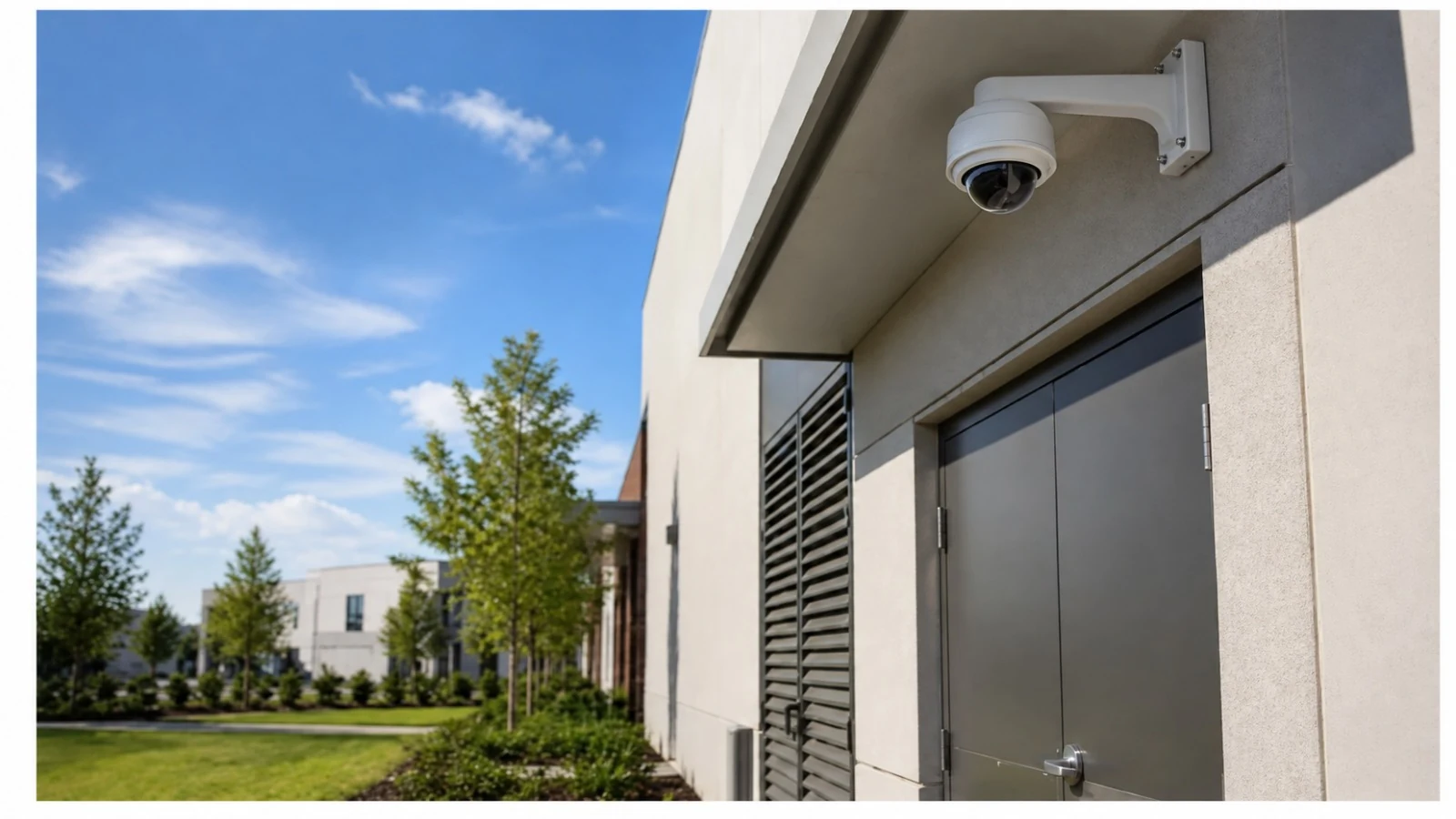
Purpose Before Products
Define the view and response need first.
COMMERCIAL SECURITY AND LOW-VOLTAGE PLANNING
Data Pro Communications coordinates camera coverage, IP video, analytics, recording, upgrades and troubleshooting for commercial and managed properties.
Use this hub to choose the next useful service or educational path, then confirm property-specific requirements before implementation.
Define the view and response need first.
Assign PoE, segmentation and access ownership.
Protect occupied operations during cutovers.
Transfer names, accounts, tests and exceptions.
Work is provided under FL License #EC13016138.
PROJECT DETAILS
New coverage, platform design, recording, analytics, upgrades and repair are different decisions. The right starting point depends on whether the property needs a new operating plan, a verified technical change or diagnosis of an existing failure.
CORE CAPABILITIES
Plan fixed views, mounting, cabling, PoE, recording and authorized access around a commercial property's actual operating needs.
Coordinate IP cameras, switching, segmentation, recording, health monitoring and incident export with the responsible IT team.
Evaluate supported analytics against a defined scene and workflow, including lighting, positioning, configuration and human review.
Define recording capacity, retention decisions, accounts, remote access, cybersecurity ownership and export procedures.
Assess accepted reuse, transition risks, temporary coverage, compatibility and phased cutover for existing systems.
Document symptoms, affected areas, power, cabling, network, recording and credentials before repair or replacement.
COMMERCIAL USE CASES
Plan identification and context views around actual arrival workflows.
Separate vehicle, pedestrian and building-transition needs.
Coordinate delivery, vendor and after-hours operations.
Account for distance, lighting, mounting and broad exterior routes.
Phase work around guest, staff, parking and service operations.
Respect privacy boundaries while covering authorized common areas.
TECHNICAL PLANNING
Match detail to distance and scene width.
Test day, night and transition conditions.
Calculate load, ports, uplinks and reserve.
Model bitrate, storage and retention from accepted settings.
Assign customer-controlled roles and remote-access policy.
Verify views, recording, time, export, labels and ownership.
ORLANDO SERVICE CONTEXT
Commercial properties in the Lakehurst service area include hospitality, offices, retail, managed communities, warehouses and active construction. Each requires a distinct mix of public, staff, vehicle, service and technology workflows.
PROJECT DETAILS
Labeled and tested device links.
PoE, segmentation and uplinks.
Door events and credential workflows.
PROJECT PROCESS
State the area, detail, users and response need.
Verify lighting, mounting, pathways, network and recording.
Coordinate access, sequencing, configuration and cutover.
Verify accepted views, recording, export and ownership.
FAQ
Start with the operational problem. New coverage usually begins with a site survey; existing failures need troubleshooting; aging systems need an upgrade assessment; and recording or remote-access concerns need an NVR and network review.
A survey reviews property areas, intended views, lighting, mounting, pathways, power, PoE, switching, bandwidth, recording, retention, authorized users, work windows and acceptance criteria.
IP video surveillance includes the network, addressing, PoE, segmentation, recorder or platform, health monitoring, accounts and export workflow supporting the cameras.
Analytics are appropriate only when the scene, lighting, camera position, supported platform and response workflow can be verified. They do not guarantee detection or a security outcome.
Possibly. Compatibility, licensing, capacity, firmware, storage health, camera support, cybersecurity ownership and export requirements must be checked first.
Remote viewing depends on authorized accounts, secure connectivity, platform support, licensing, network policy, bandwidth and customer-controlled cybersecurity requirements.
Reuse requires testing cable type, route, length, termination, environment and supported performance. Accepted reuse and known exceptions should be documented.
Separate overview, vehicle context, pedestrian transition and identification needs. Verify lighting, weather exposure, mounting height, obstructions and maintenance access.
Not automatically. A PTZ can look in one direction at a time and may depend on an operator or preset. Fixed cameras often remain necessary for continuous views.
Storage depends on camera count, resolution, frame rate, compression, bitrate, activity, recording mode and retention decisions. It should be calculated from the accepted design.
No. Cameras support defined operational goals but cannot guarantee prevention, identification, continuous recording or a particular outcome.
The findings become a scope defining accepted views, infrastructure, responsibilities, equipment requirements, phasing, testing and handoff before implementation is authorized.
Bring the property address, operating concerns, current-system details, network contacts and project timing.