
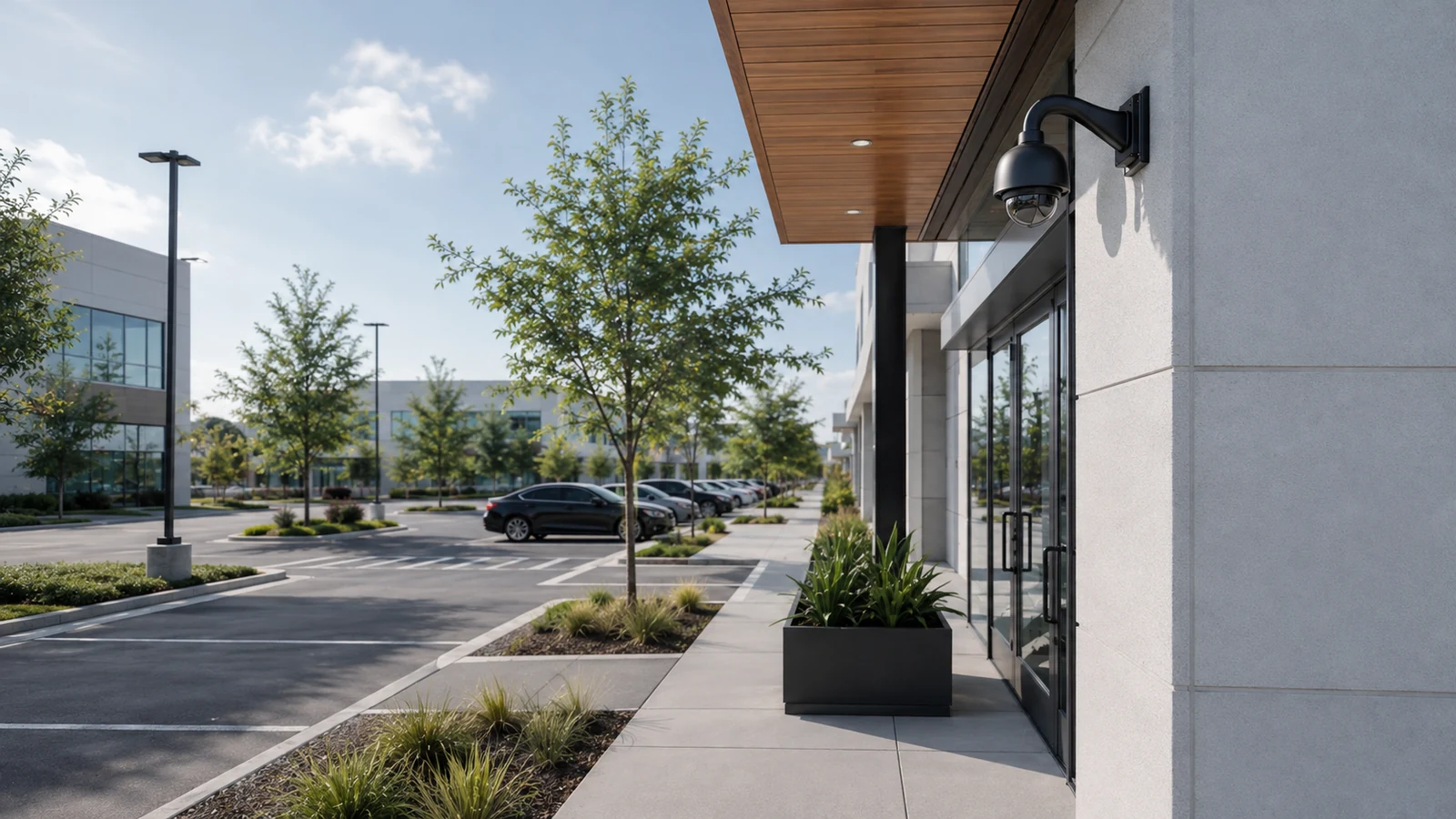
Managed-community gate approaches Coverage Planning
The survey treats managed-community gate approaches as a distinct scene, with the detail, lighting and response role defined before a device is selected.
PLANNED CAMERA COVERAGE FOR MANAGED AND PROFESSIONAL PROPERTIES
Data Pro Communications plans and installs commercial security camera systems for professional offices, schools, houses of worship, neighborhood retail, managed communities and selected estate-scale residential projects in Windermere. The work begins with the views, operating routines and infrastructure the property actually needs.
The site survey connects camera purpose to lighting, mounting height, cabling, PoE, recording, authorized access and maintenance. Select mounting locations that preserve useful identification views without making landscaping or architecture an obstruction. Test pathway length, power and network reach before committing to remote perimeter devices.
The survey treats managed-community gate approaches as a distinct scene, with the detail, lighting and response role defined before a device is selected.
Gate, camera and amenity devices need clear ownership across the main network and remote property structures.
Work must respect occupied areas, member or resident schedules, landscape access and finished architectural surfaces.
Long approaches, detached structures and finished landscapes require early pathway, power, surge and service-access decisions, with labels and test records retained for future service.
Data Pro Communications provides the accepted camera and low-voltage scope under FL License #EC13016138, with property policy and system use remaining with the customer.
SERVICE OVERVIEW
Windermere includes professional offices, schools, houses of worship, neighborhood retail, managed communities and selected estate-scale residential projects. A useful system plan separates public arrival, staff access, vendor movement, parking, service areas and technology ownership so each camera has a defined purpose and an accountable user.
Windermere projects in this page are framed around larger managed, gated and high-finish properties with detached structures or remote perimeter points. Planning follows owner or manager privacy, visitor entry, authorized service access and activity along long landscaped approaches, then resolves camera purpose, entry workflow, pathway, network ownership and acceptance testing for the people who operate the property.
PROJECT DETAILS
Activity around managed-community gate approaches varies with low-light perimeter approaches. Survey and acceptance testing should occur during representative operating periods so the final view matches actual lighting, movement and staff response.
Community and vendor entries requires clear separation of coordinate vehicle gates, visitor calls, service access and authorized property staff, including who responds at each opening and who may review the related video.
Distributed buildings affects camera distance, obstruction and context around professional office entries; one wide overview should not be expected to provide every required detail.
Access and work sequencing must account for aesthetic installation requirements. Work must respect occupied areas, member or resident schedules, landscape access and finished architectural surfaces.
Long cable pathways makes network responsibility part of the design: gate, camera and amenity devices need clear ownership across the main network and remote property structures.
Limited maintenance access should be recorded with field conditions, the responsible decision-maker and the test used to accept work around estate-scale perimeter transitions.
CORE CAPABILITIES
Use separate camera purposes for managed-community gate approaches and professional office entries, including the distance, lighting and response context each view must provide.
Size recording and user roles around activity at school arrival areas, expected retention and the team authorized to search or export video.
Build serviceable cabling for house-of-worship parking and neighborhood retail service doors; long approaches, detached structures and finished landscapes require early pathway, power, surge and service-access decisions.
Coordinate switching, PoE, uplinks and accounts because gate, camera and amenity devices need clear ownership across the main network and remote property structures.
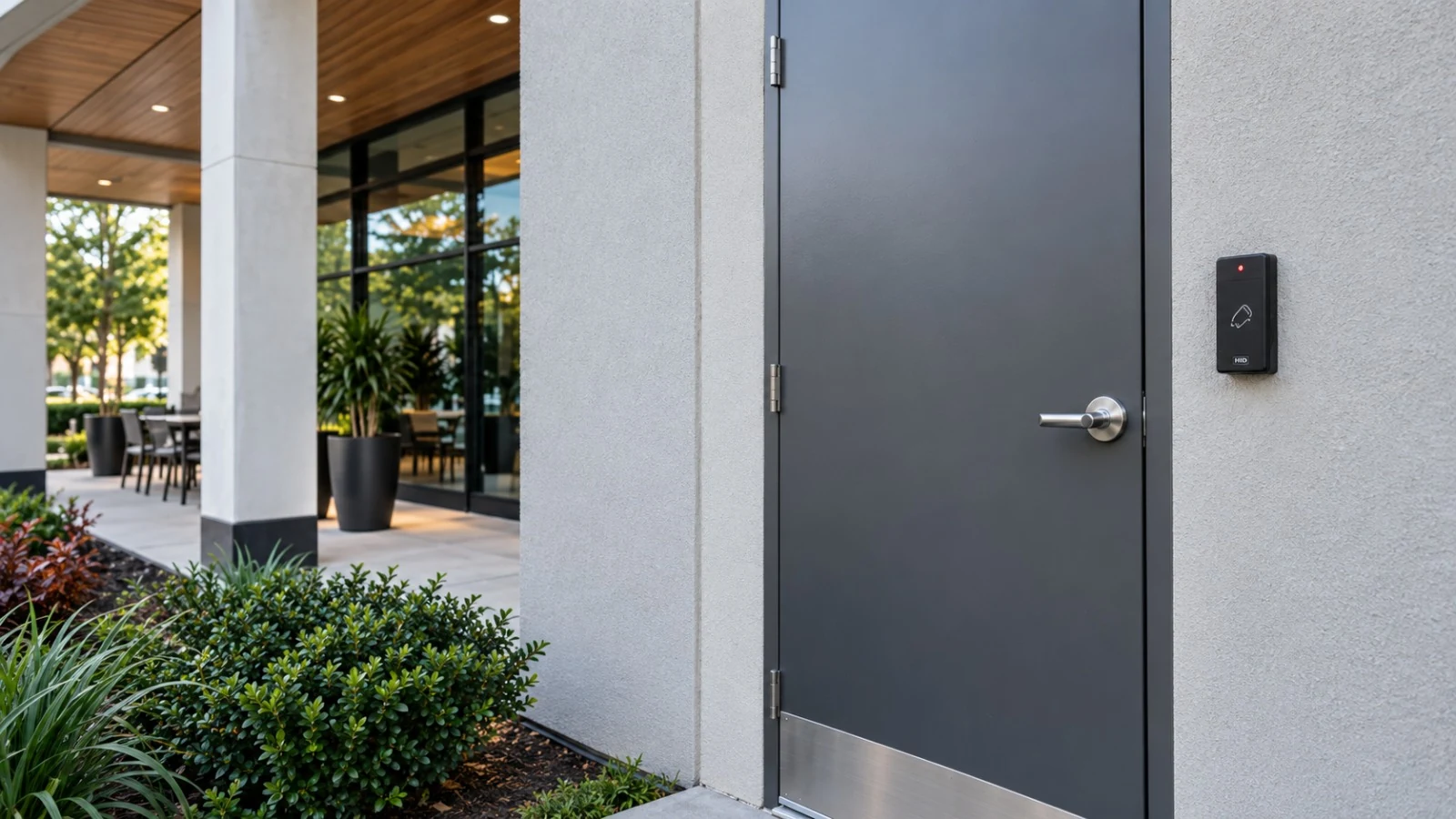
Apply access control only to approved doors or gates within coordinate vehicle gates, visitor calls, service access and authorized property staff, with schedules and administrative ownership defined.
Evaluate existing devices and pathways against long-drive, low-light and landscaped approach conditions; accepted reuse, replacement and unresolved conditions belong in the scope.
COMMERCIAL USE CASES
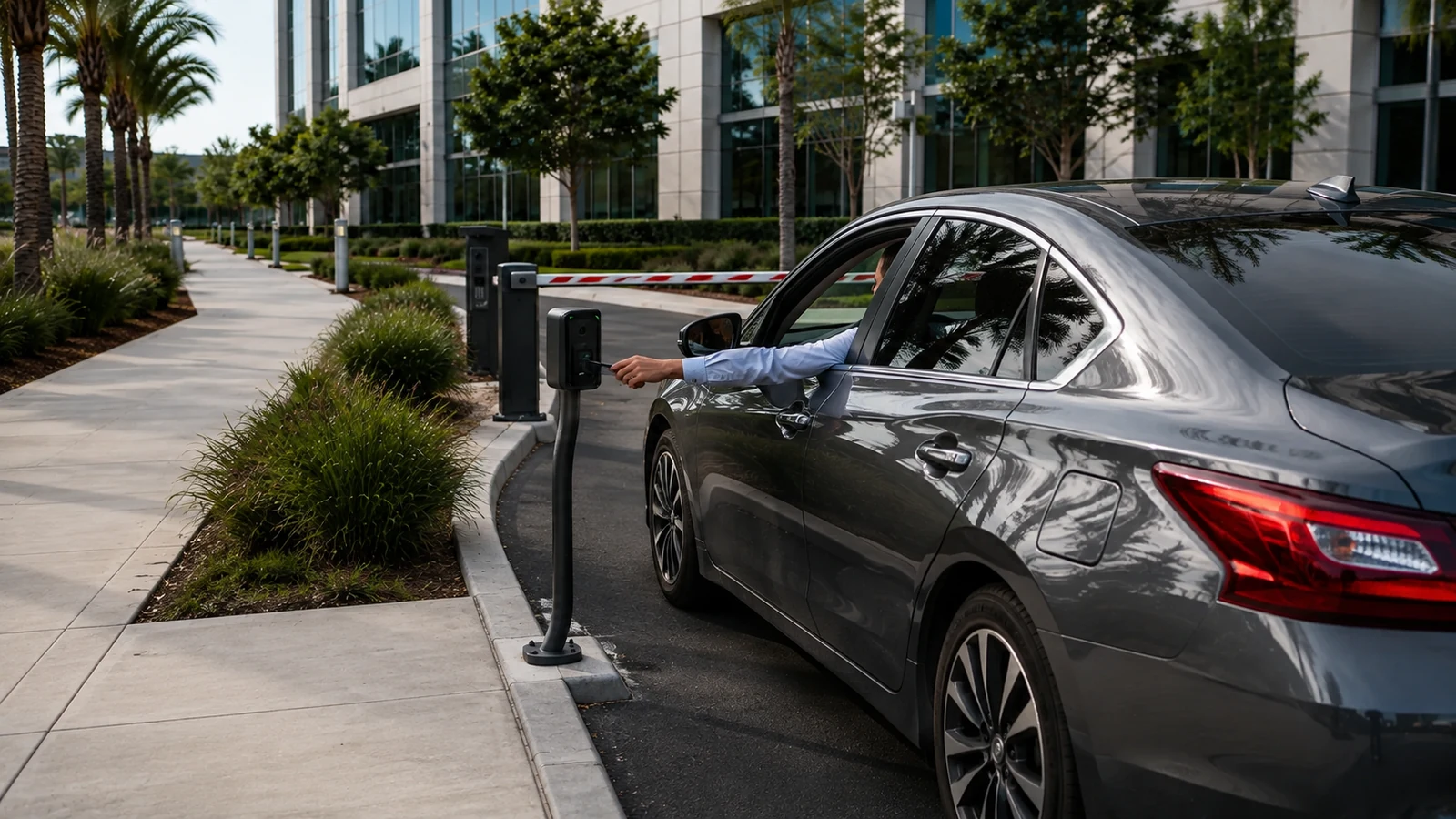
At managed-community gate approaches, choose a view that supports the responsible team during long-drive, low-light and landscaped approach conditions without relying on unrelated background coverage.
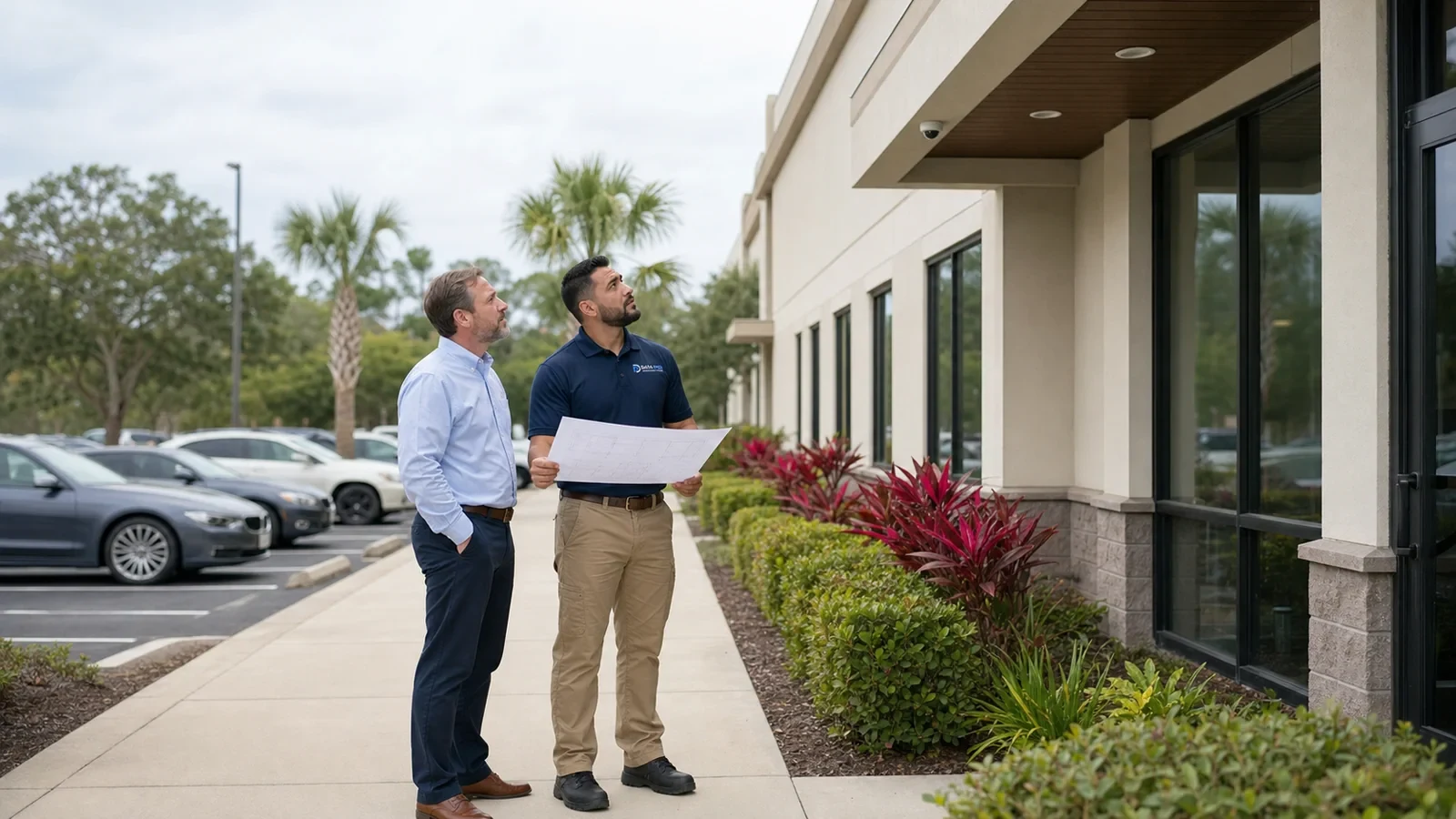
For professional office entries, separate broad situational context from the closer detail needed at entrances, lanes or pedestrian transitions.
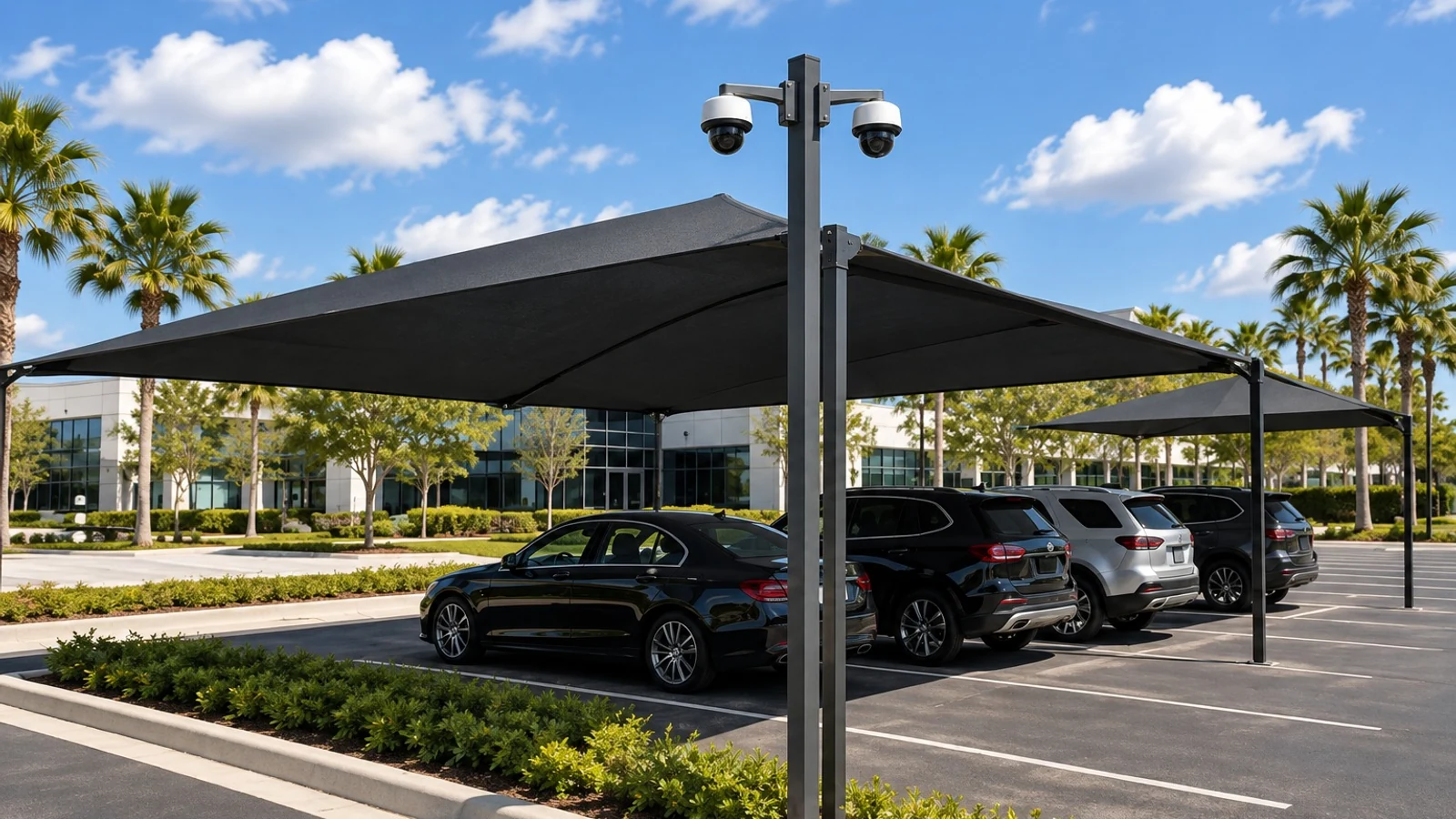
Coverage around school arrival areas should follow coordinate vehicle gates, visitor calls, service access and authorized property staff and identify which staff or management role responds.
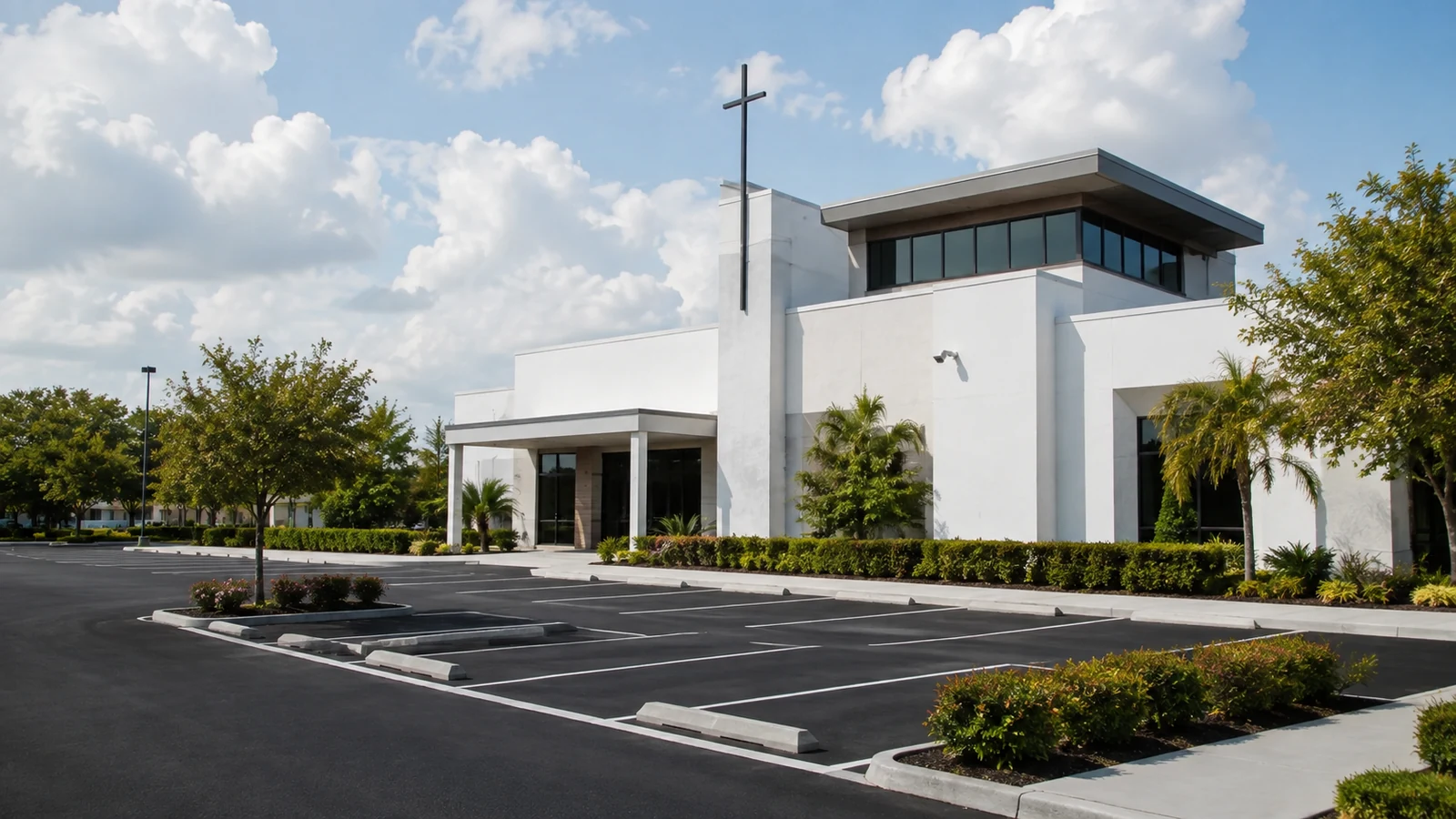
Plan house-of-worship parking around work must respect occupied areas, member or resident schedules, landscape access and finished architectural surfaces, including temporary conditions and the point at which each phase is accepted.
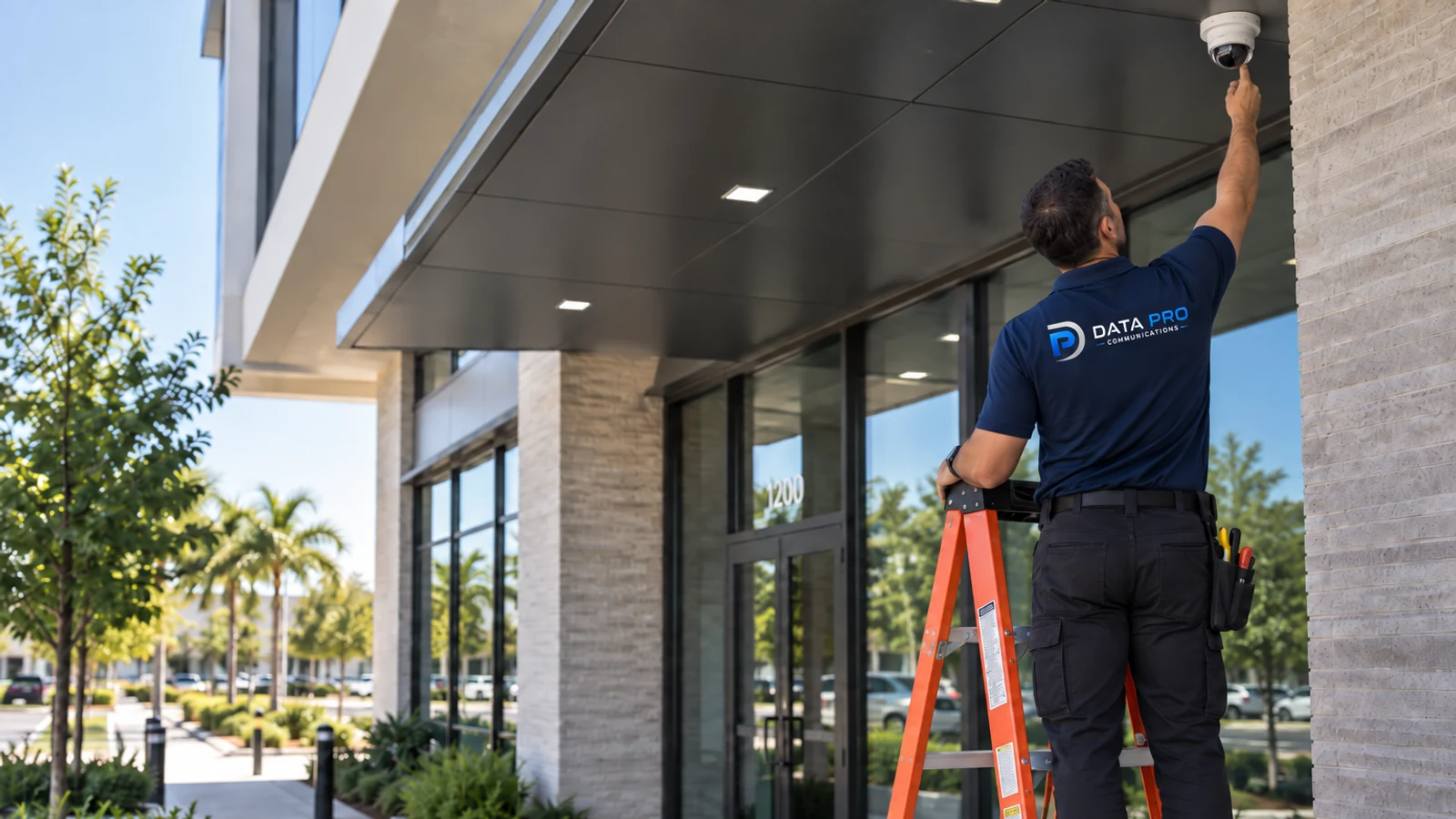
Infrastructure for neighborhood retail service doors should reflect that long approaches, detached structures and finished landscapes require early pathway, power, surge and service-access decisions, with power and network responsibility recorded.
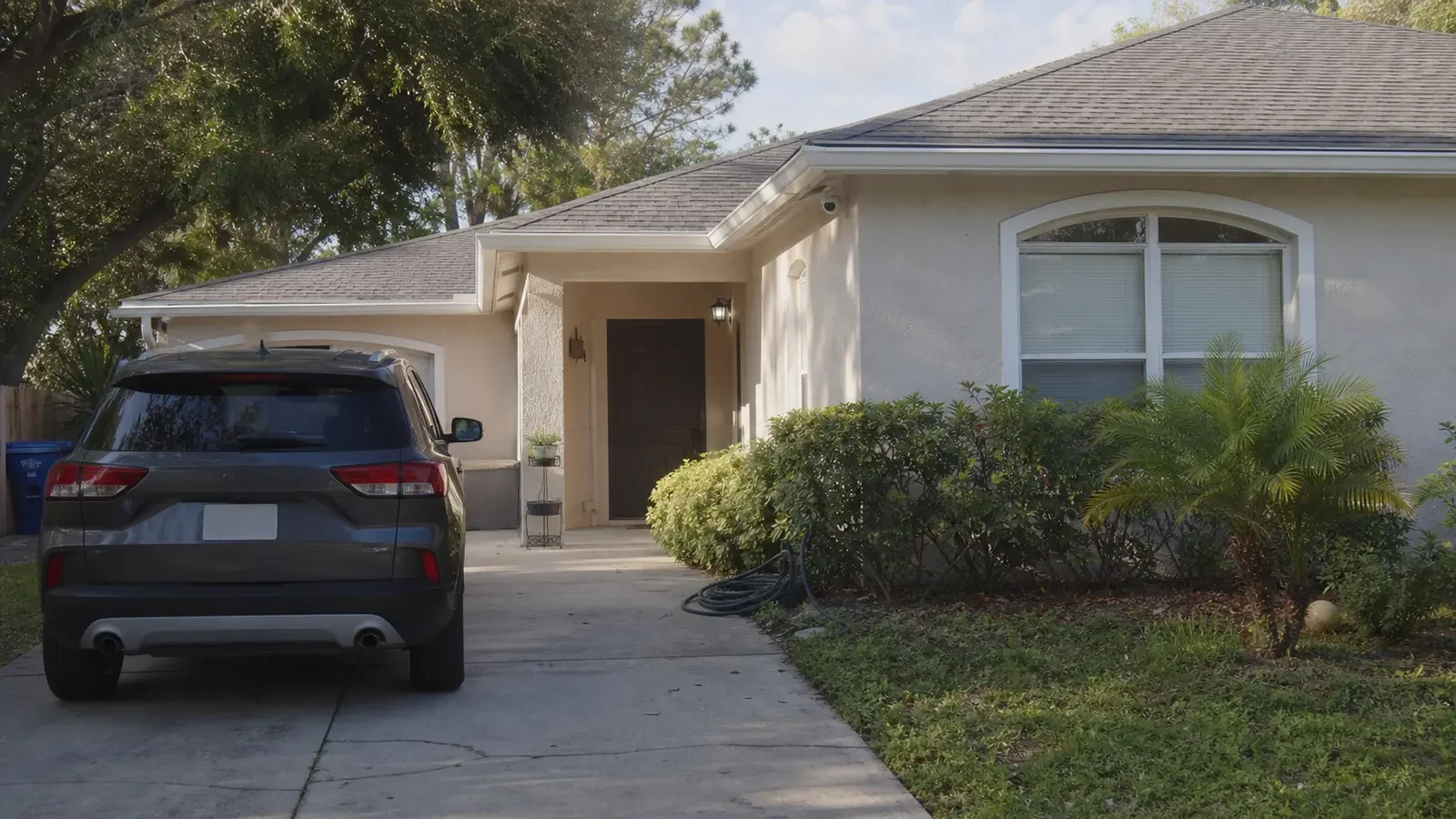
At estate-scale perimeter transitions, verify fiber is often the stable option for long gate runs or detached buildings; supported wireless backhaul requires clear line-of-sight and maintenance ownership; document the accepted link, labels, equipment boundary and maintenance access.
TECHNICAL PLANNING
Protect privacy and finish quality while defining usable views for vehicle gates, visitor call points, owner-approved service routes and detached-building approaches. Distance, lighting and response purpose are accepted for each location.
Long Drives, Gates and Detached-Structure Links
Infrastructure planning must address that long drives, gates, finished interiors and detached structures require early choices for pathway, power, surge protection, fiber and maintenance access.
Main-Building, Gate and Amenity Connectivity
Network responsibility is explicit: the property manager or owner representative must assign gate, main-building, amenity and detached-structure connectivity to accountable administrators.
Installation sequencing should protect occupied areas, custom finishes and landscape work while coordinating builder, automation and property-management access.
Acceptance testing should recreate owner or manager privacy, visitor entry, authorized service access and activity along long landscaped approaches and record the view, recording path, connected function and known exception.
CONNECTED SYSTEMS
Align authorized door or gate events with nearby video where supported, using coordinate vehicle gates, visitor calls, service access and authorized property staff as the operating boundary.
Define gate and entry call routing, release authority and fallback before selecting equipment; document release authority and fallback before integration is included.
Coordinate time, device status, alerts and accounts because gate, camera and amenity devices need clear ownership across the main network and remote property structures.
Assign responsibility for cameras, doors or gates, networks, credentials, recording, property policy and ongoing service across gated, estate-scale and professionally managed properties.
ORLANDO SERVICE CONTEXT
Select mounting locations that preserve useful identification views without making landscaping or architecture an obstruction.
Test pathway length, power and network reach before committing to remote perimeter devices.
Long drives, gates, finished interiors and detached structures require early choices for pathway, power, surge protection, fiber and maintenance access. The property manager or owner representative must assign gate, main-building, amenity and detached-structure connectivity to accountable administrators. Final testing should reflect owner or manager privacy, visitor entry, authorized service access and activity along long landscaped approaches.
RELATED SERVICES
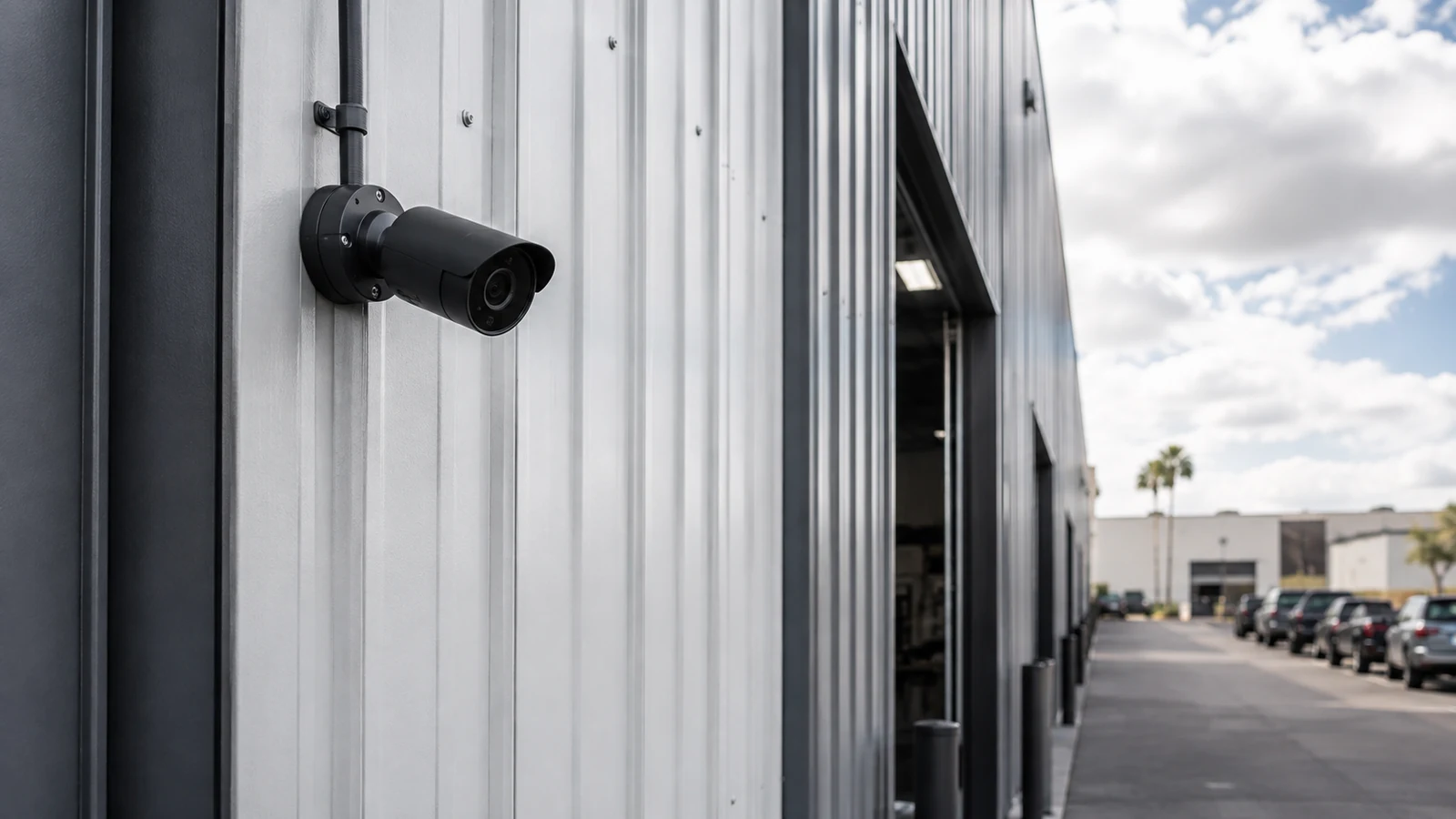
Camera planning assigns a purpose to views at vehicle gates, visitor call points, owner-approved service routes and detached-building approaches instead of relying on one broad scene to serve unrelated operations.
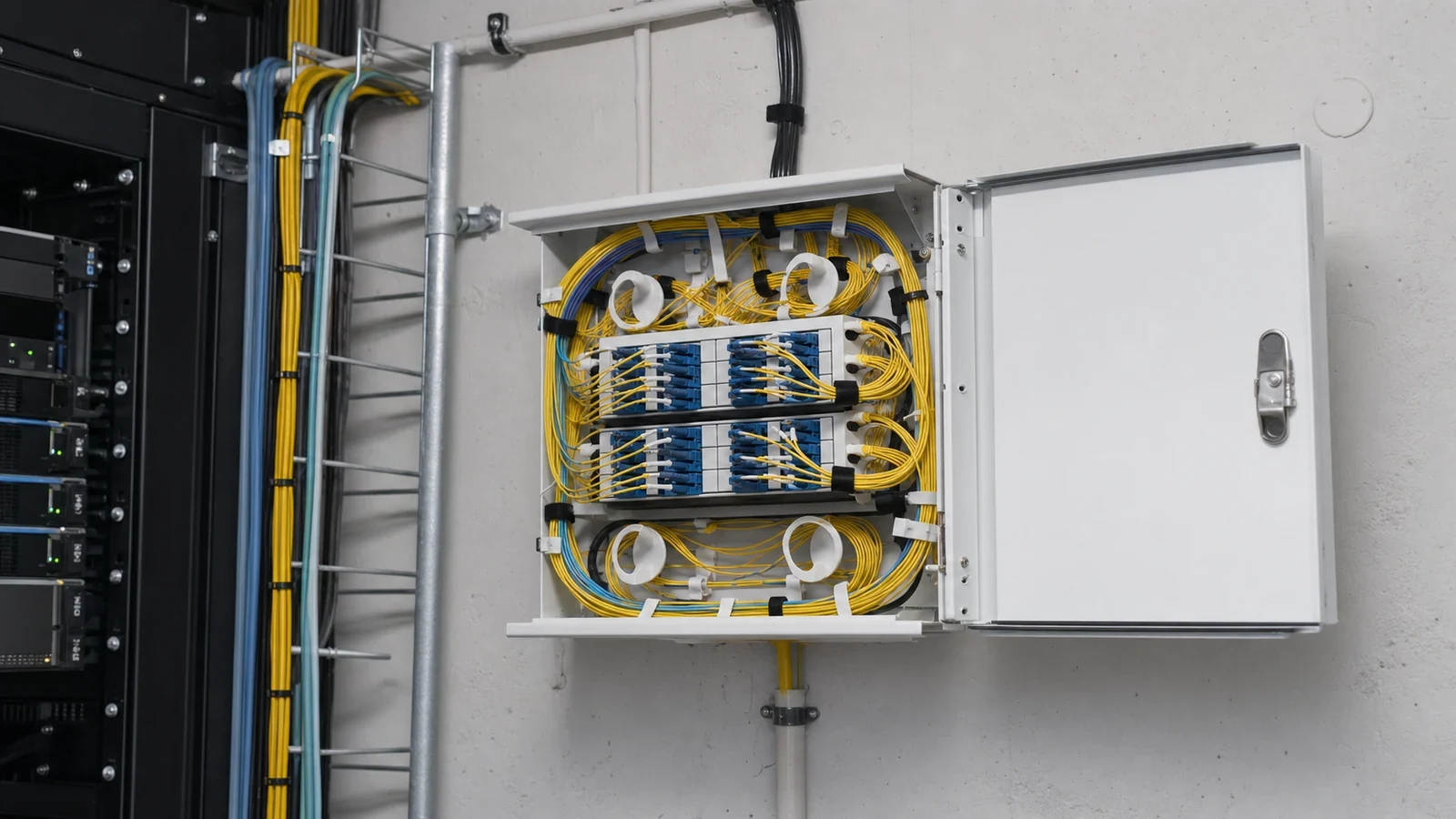
Structured Cabling
Structured cabling supports the accepted views and connected devices while accounting for this site condition: long drives, gates, finished interiors and detached structures require early choices for pathway, power, surge protection, fiber and maintenance access.
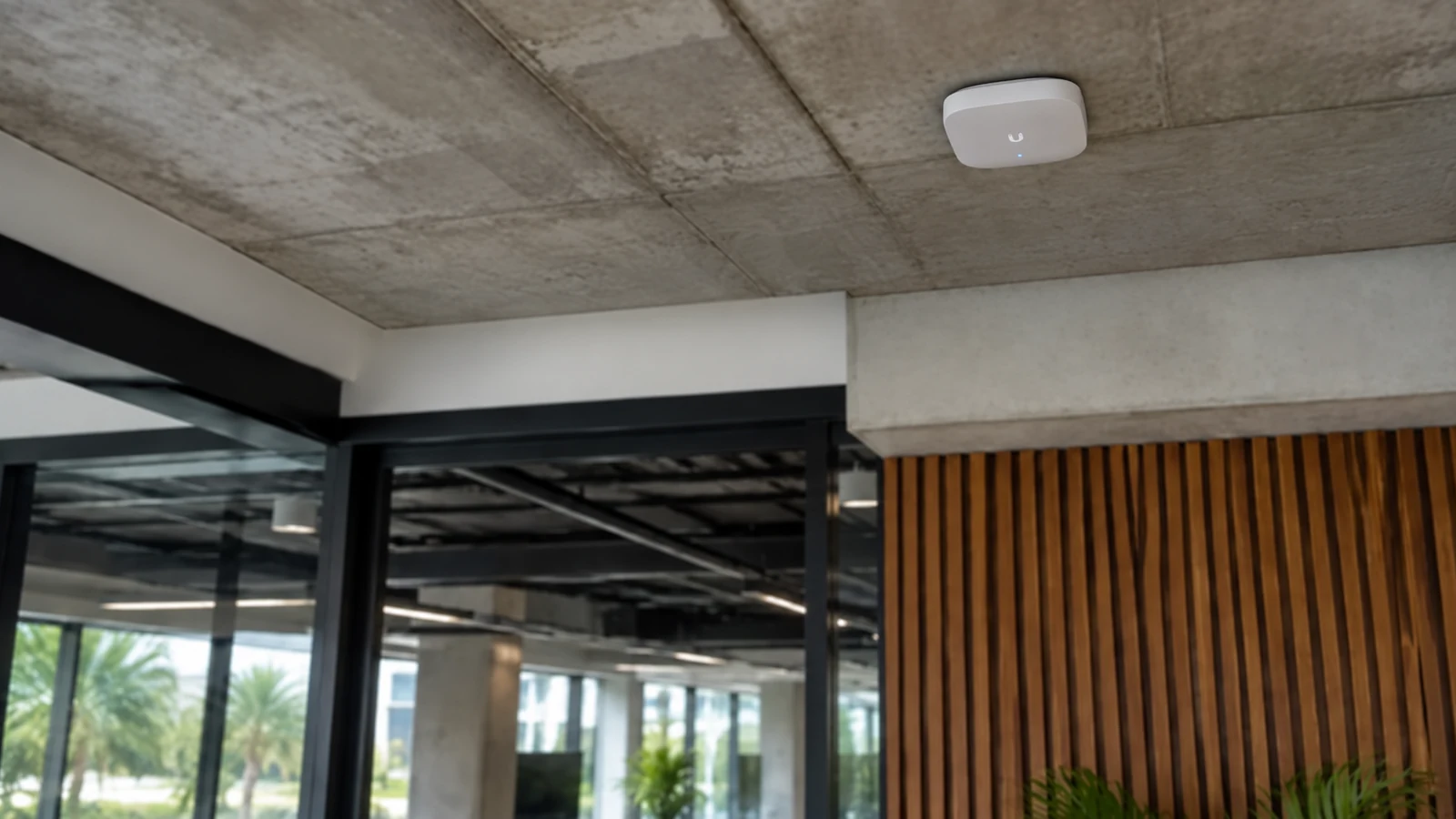
Network Infrastructure
Network infrastructure is scoped around this ownership model: the property manager or owner representative must assign gate, main-building, amenity and detached-structure connectivity to accountable administrators.
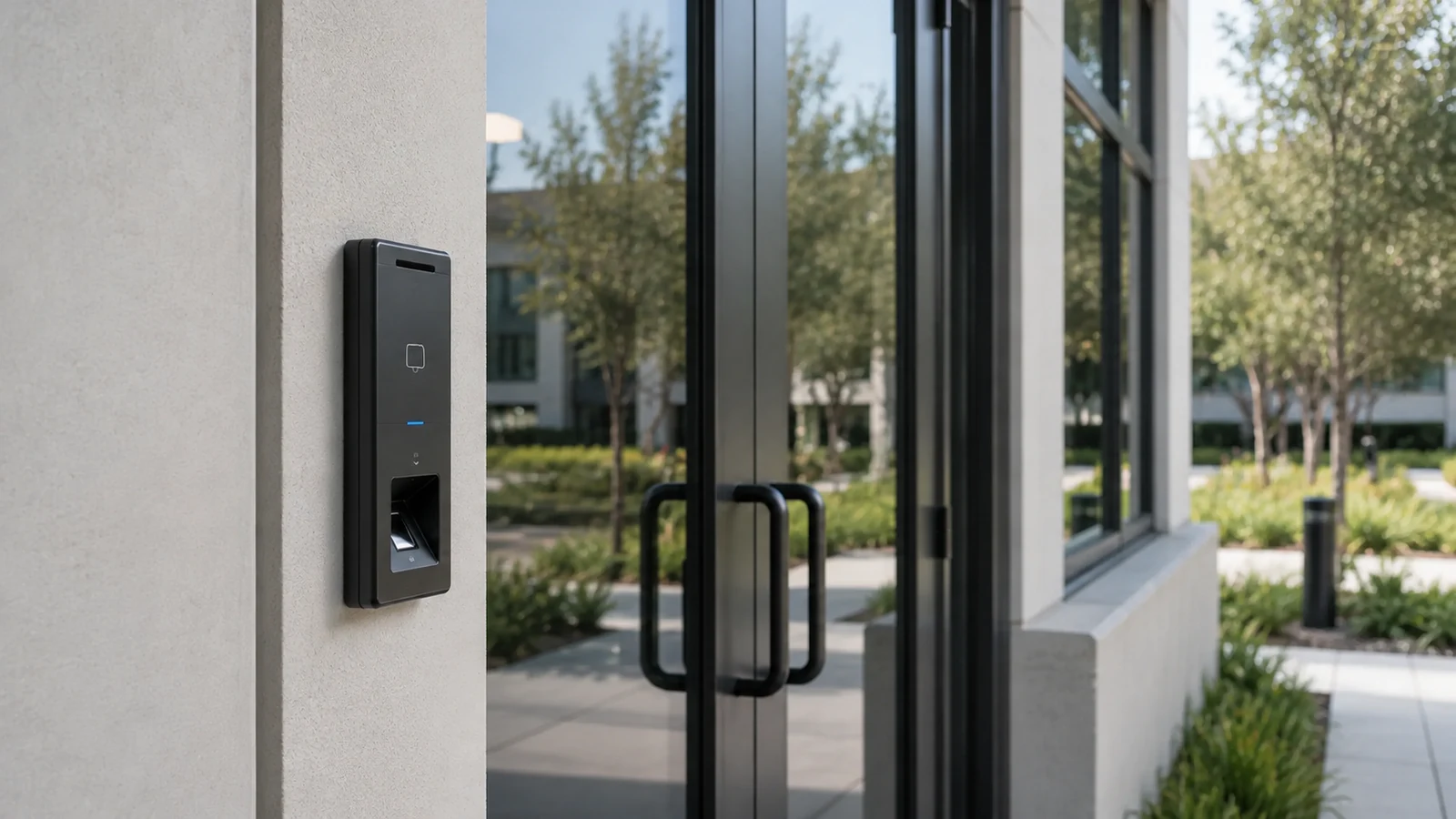
Access control is relevant where approved users, schedules and release authority must be managed across vehicle gates, visitor call points, owner-approved service routes and detached-building approaches.
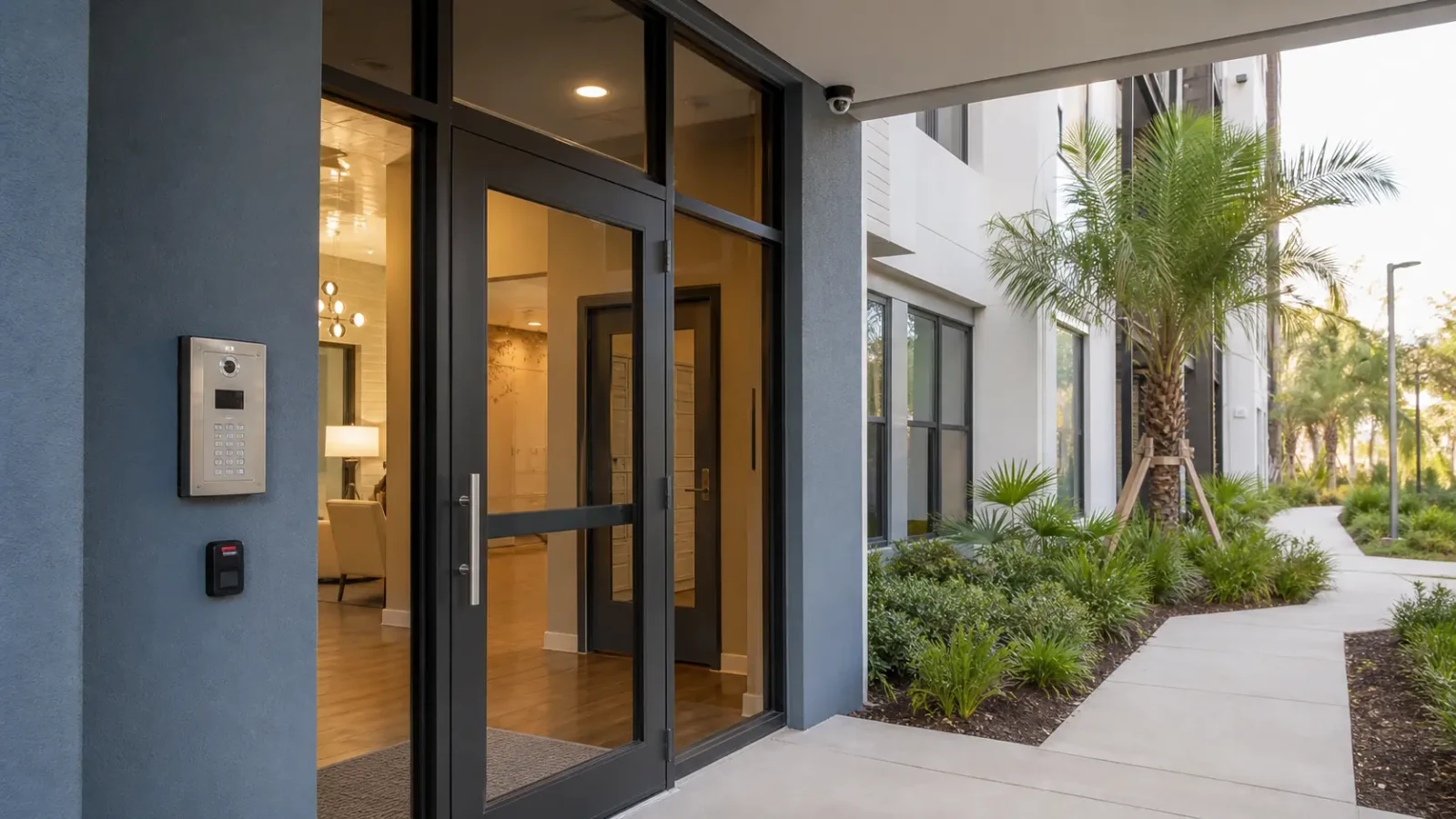
Intercom planning follows the staffed response for owner or manager privacy, visitor entry, authorized service access and activity along long landscaped approaches; call routing and fallback are documented before activation.
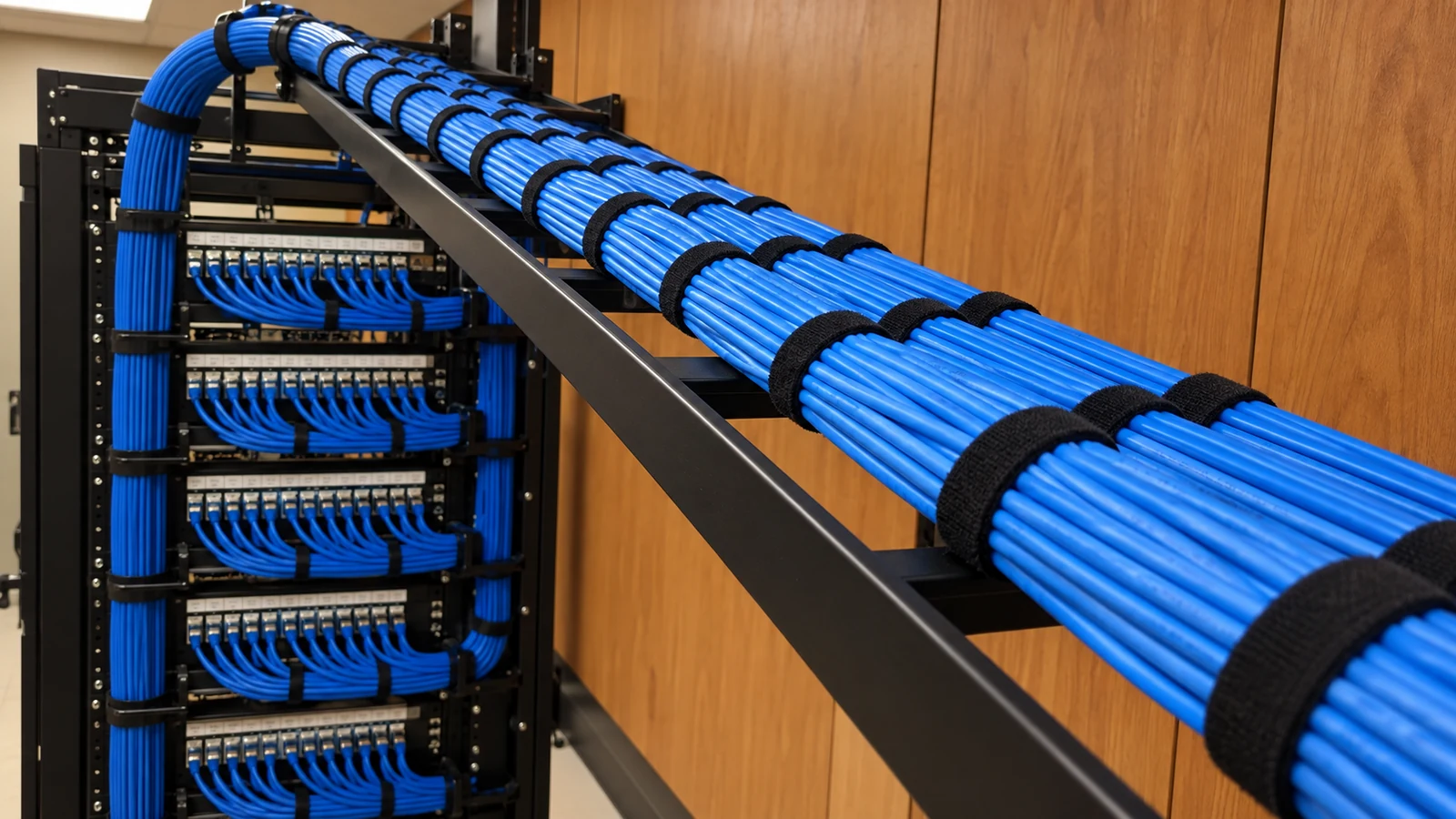
Remote gates, detached structures or support buildings receive fiber or supported backhaul when appropriate; the chosen link must fit long drives, gates, finished interiors and detached structures require early choices for pathway, power, surge protection, fiber and maintenance access.
PROJECT DETAILS
Nearby service contexts include Doctor Phillips, Bay Hill, Horizon West and Winter Garden. Windermere planning emphasizes privacy, gated access, detached structures and finish-sensitive installation for professionally managed larger properties.
PROJECT PROCESS
Confirm privacy, finish and access expectations with the property representative, then survey vehicle gates, visitor call points, owner-approved service routes and detached-building approaches during owner or manager privacy, visitor entry, authorized service access and activity along long landscaped approaches.
Turn those observations into decisions for vehicle gates, visitor call points, owner-approved service routes and detached-building approaches, including pathways, network ownership, recording and response roles.
Build the work sequence around this constraint: protect occupied areas, custom finishes and landscape work while coordinating builder, automation and property-management access. Each completed zone receives its own test and acceptance record.
Deliver a property-specific handoff. The Windermere handoff records privacy decisions, gate workflows, finish-sensitive routes, remote-building links, authorized accounts and low-light acceptance views.
LICENSED PROJECT SUPPORT
Data Pro Communications provides professionally scoped low-voltage planning and installation under FL License #EC13016138. Licensing supports contractor accountability but does not replace property policy, legal review, network ownership or customer acceptance.
FAQ
Start with the operating purpose of each scene. Around Windermere, planning separates the detail needed at managed-community gate approaches from the broader context at professional office entries, then verifies distance, lighting, obstruction and the team expected to respond.
Relevant projects may include professional offices, schools, houses of worship, neighborhood retail, managed communities and selected estate-scale residential projects. The scope is appropriate when property managers, owner representatives and professional facility teams need documented views, infrastructure, network responsibility, testing and handoff rather than a simple device count.
Observe the property during owner or manager privacy, visitor entry, authorized service access and activity along long landscaped approaches. Those conditions show which views are useful, when lighting changes and which authorized team can respond; they also provide the basis for final acceptance testing.
The early infrastructure decision is specific to this page: long drives, gates, finished interiors and detached structures require early choices for pathway, power, surge protection, fiber and maintenance access. Confirm routes, power, equipment locations and service access before selecting remote devices.
The work plan should protect occupied areas, custom finishes and landscape work while coordinating builder, automation and property-management access. Temporary conditions, network impact and the acceptance owner are stated for each zone before the next phase begins.
Existing pathways are reviewed for distance, finish impact, moisture, surge exposure and serviceability; long gate or detached-building links may require fiber instead of reused copper.
The customer-authorized network owner controls switching, segmentation, accounts, cybersecurity and change windows. For this property context, the property manager or owner representative must assign gate, main-building, amenity and detached-structure connectivity to accountable administrators.
Use access or intercom functions only where the approved platform and operating workflow support them. Define users, schedules, call routing, release authority and fallback for vehicle gates, visitor call points, owner-approved service routes and detached-building approaches.
Audio is not assumed. The property owner must define a lawful operating purpose, notice or consent requirements, authorized users, retention and review procedures with appropriate legal guidance before audio is included.
Bring current plans, operating schedules, known concerns, network contacts and information about vehicle gates, visitor call points, owner-approved service routes and detached-building approaches. Identify the people who can approve pathways, accounts, work windows and final testing.
The Windermere handoff records privacy decisions, gate workflows, finish-sensitive routes, remote-building links, authorized accounts and low-light acceptance views.
The Windermere handoff records privacy decisions, gate workflows, finish-sensitive routes, remote-building links, authorized accounts and low-light acceptance views. The final scope also states responsibilities, installation phases, test criteria and unresolved conditions without promising a security outcome.