
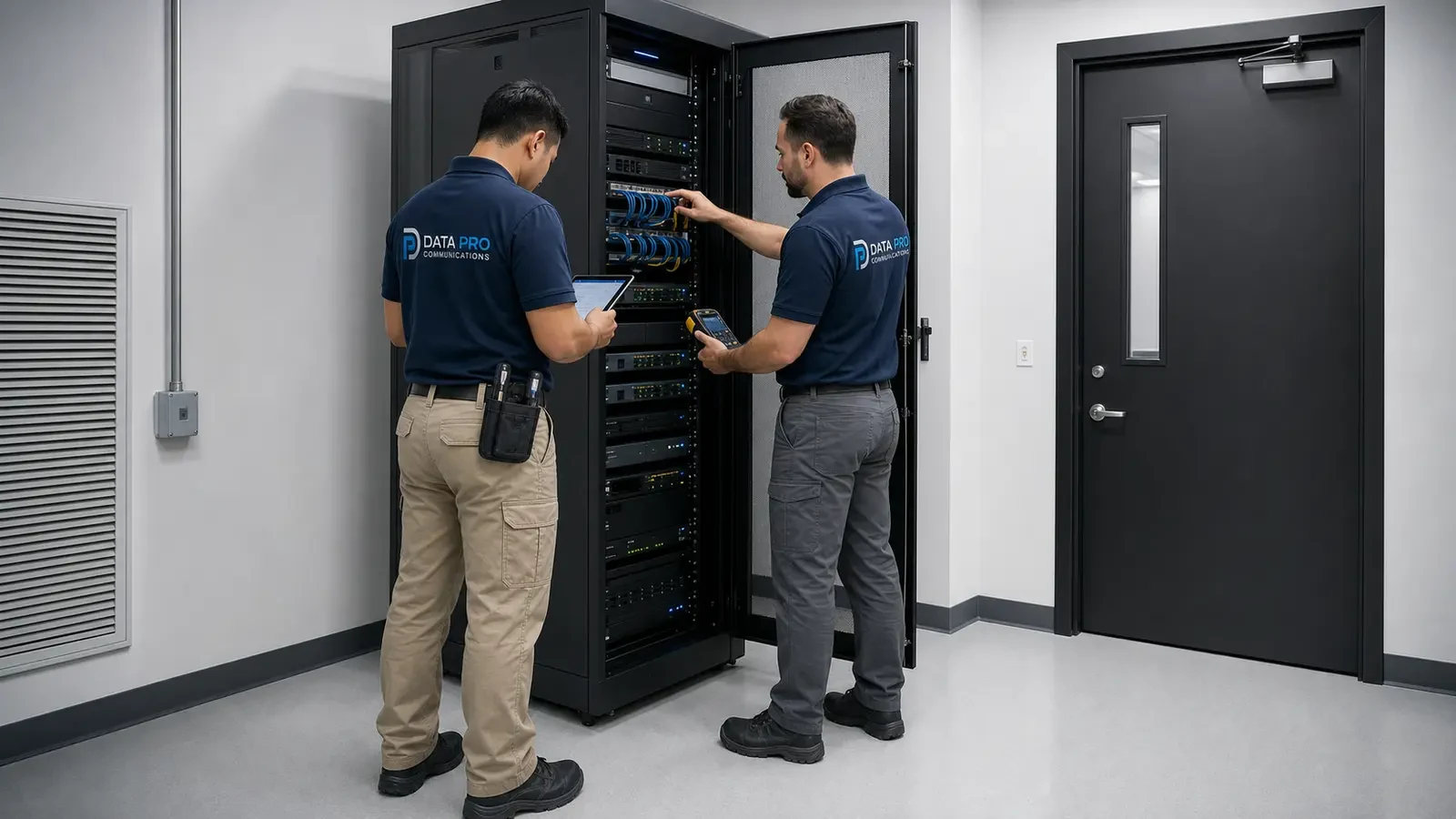
Cable Mapping and Identification
Trace unknown or mislabeled links between outlets, patch panels, telecommunications rooms, equipment locations, and building pathways; then reconcile identifiers in a usable schedule.
DOCUMENTED COPPER AND FIBER LINK VERIFICATION
Network cable testing helps Orlando property teams verify installed links, map unknown cabling, locate faults, reconcile labels, support acceptance, and document remediation needs. Data Pro Communications can perform project-appropriate copper and fiber testing, with certification testing provided only when the contracted method, link definition, limits, instruments, records, and acceptance criteria call for it.
Not every continuity check, cable map, or troubleshooting measurement is a standards certification. The test scope should state the media, link type, endpoints, required measurements, reference or limit set, calibration and reporting expectations, treatment of exceptions, and party authorized to accept results. No specific standard, tester, or passing result should be assumed without that project definition.
PROJECT PLANNING
A testing survey can identify copper and fiber counts, endpoint access, permanent-link or channel boundaries where applicable, existing labels, suspected faults, test documentation, remediation authority, occupied-work constraints, and the exact evidence the owner needs at closeout.
SERVICE OVERVIEW
A testing engagement may include cable mapping, continuity, wiremap, length or distance-to-fault measurements, pair or conductor fault identification, outlet and patch-panel reconciliation, link verification, project-defined copper certification, fiber inspection, polarity or continuity, optical loss testing or reflectometry where appropriate, labeling, exception logs, remediation findings, retesting, and closeout records. Methods and acceptance criteria must match the installed media and contract.

CORE CAPABILITIES
Trace unknown or mislabeled links between outlets, patch panels, telecommunications rooms, equipment locations, and building pathways; then reconcile identifiers in a usable schedule.
Check continuity, wiremap, opens, shorts, reversals, split pairs where the method supports it, length indications, and fault distance to support diagnosis and basic acceptance.
Test defined permanent links or channels against the project-specified category, limit, adapter configuration, calibration requirements, and report format when certification is explicitly included.
Apply project-appropriate inspection, continuity, polarity, optical-loss, and reflectometry methods where contracted, with wavelength, reference, direction, launch or receive treatment, and limits defined in advance.
Document failed or questionable links, probable fault location, connector or termination observations, pathway damage, label conflicts, corrective work, and retest status without overstating causation.
Deliver owner-ready test files or reports, cable and port schedules, exception lists, label changes, retest records, scope notes, test dates, and traceability to the agreed link identifiers.
COMMERCIAL USE CASES

Verify defined copper and fiber links before closeout, identify exceptions, track remediation, and deliver acceptance records tied to drawings, outlets, panels, and rooms.
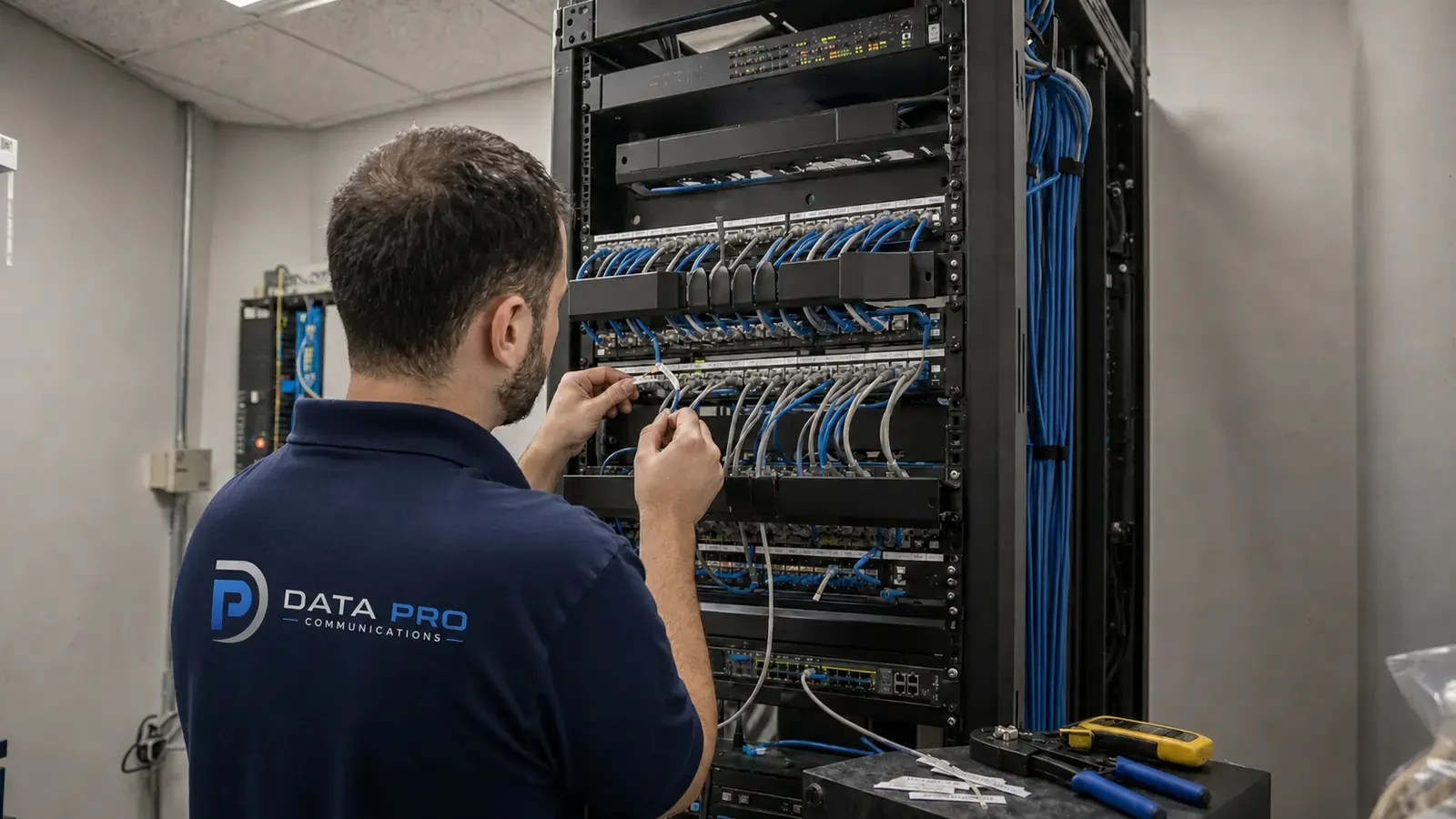
Map retained cabling, confirm active and spare outlets, identify damaged or mislabeled links, and document which runs are suitable for the planned network use.
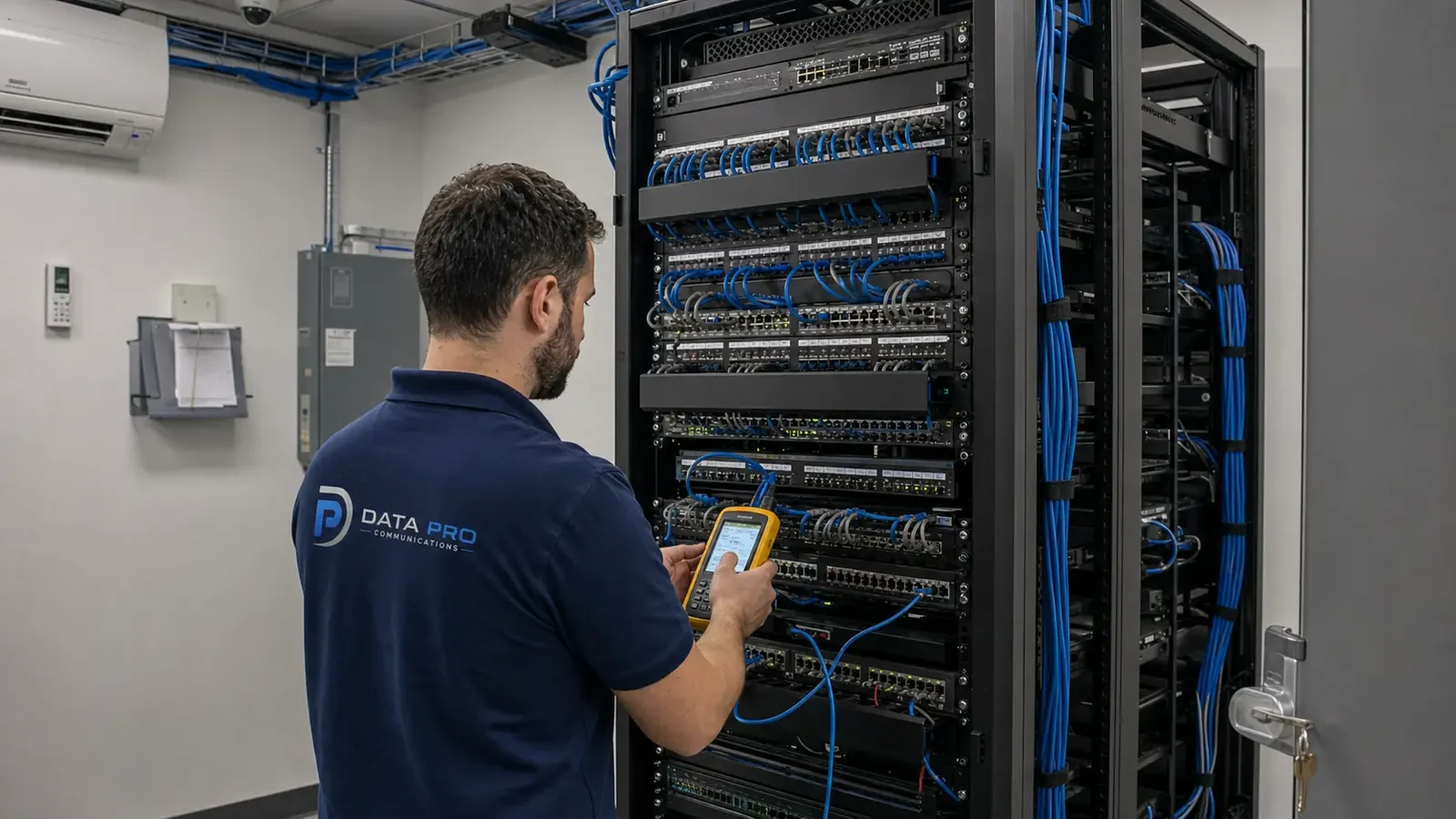
Test guest-support, office, back-of-house, camera, wireless, access, and building links around occupied areas, distributed closets, phased work, and property records.
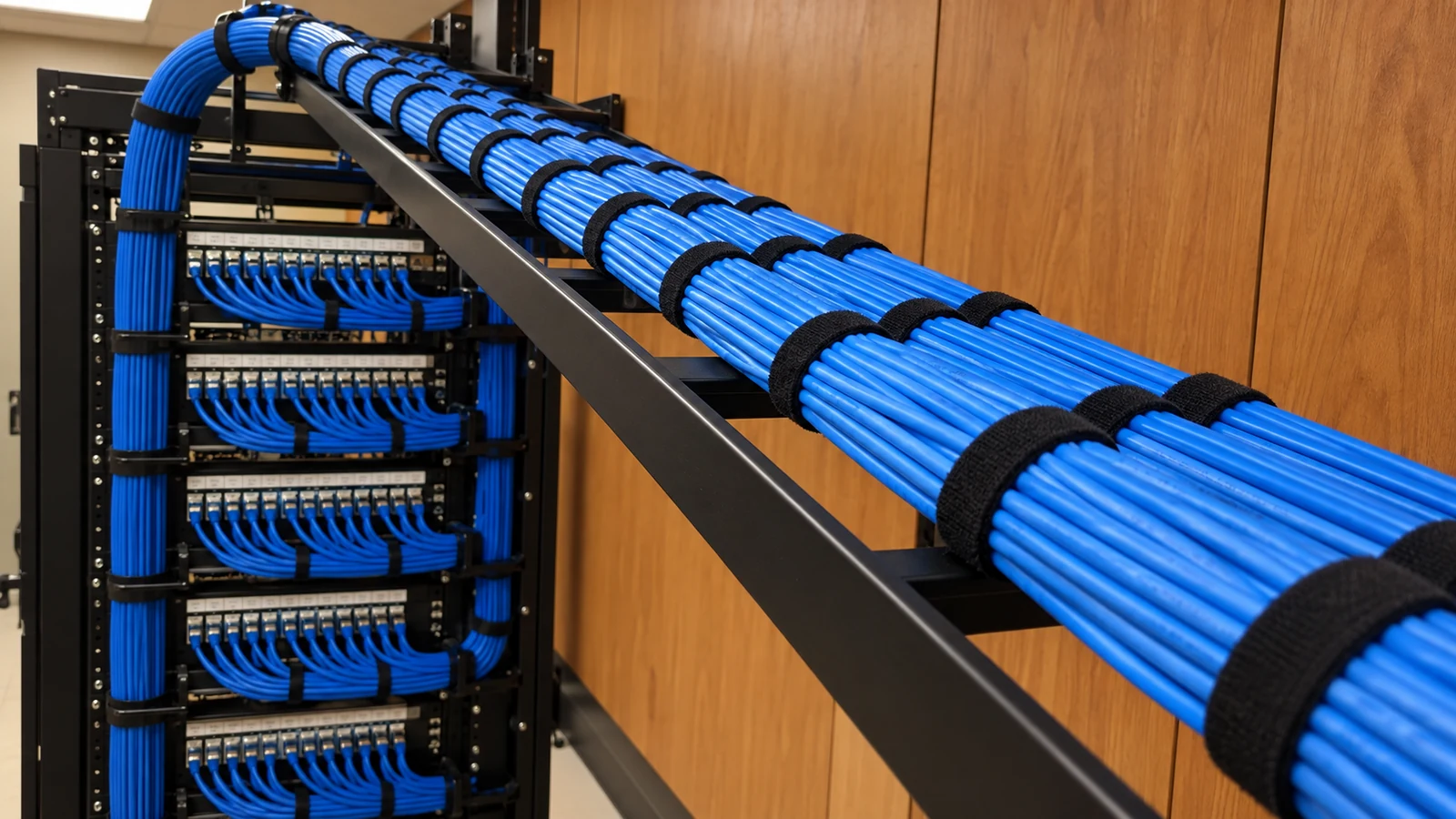
Locate faults across long horizontal routes, high device locations, equipment areas, exposed pathways, remote rooms, cameras, access points, and operational work zones.
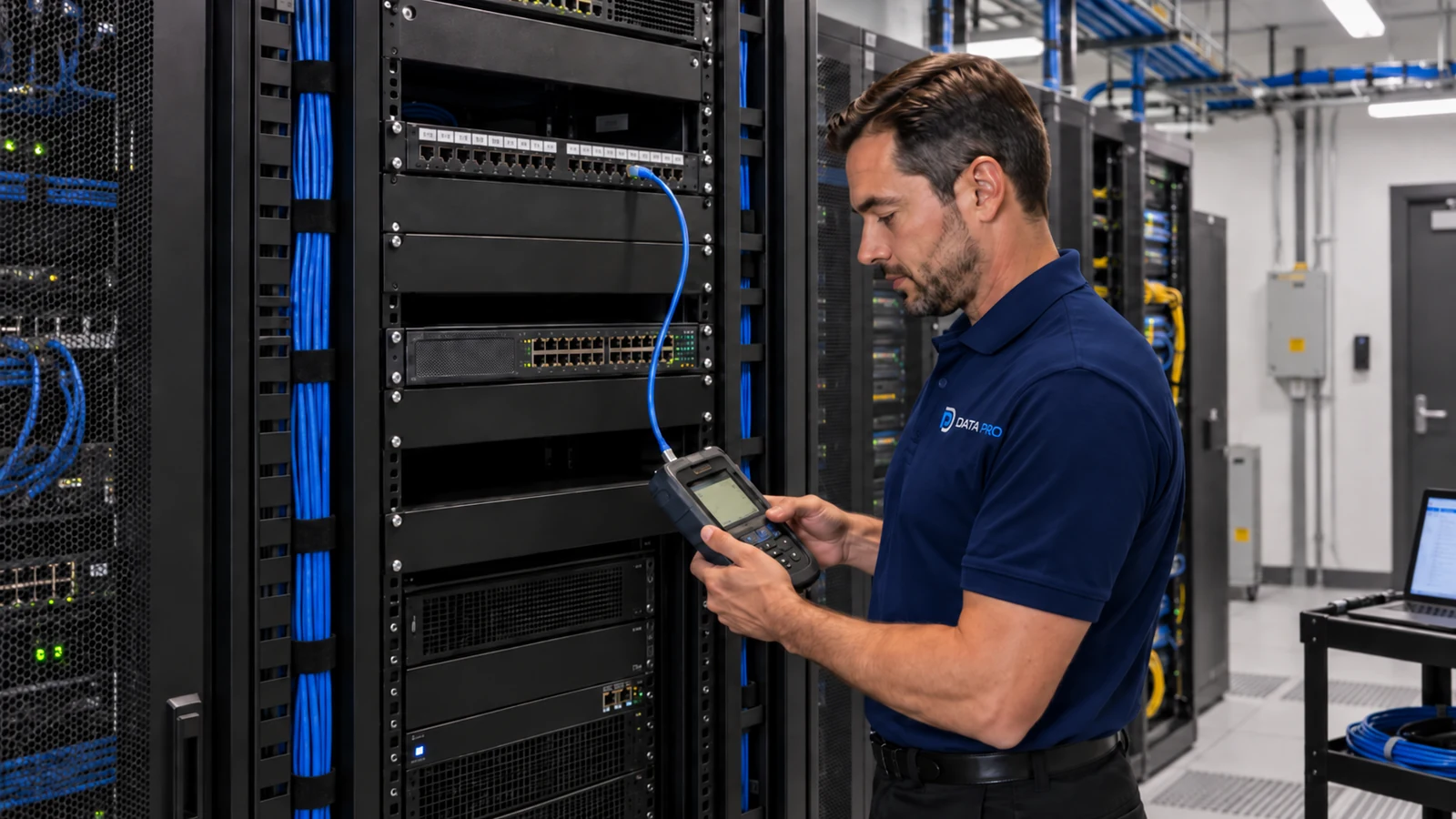
Separate physical-link evidence from switch, PoE, addressing, device, recorder, controller, or application problems before unnecessary cable replacement.
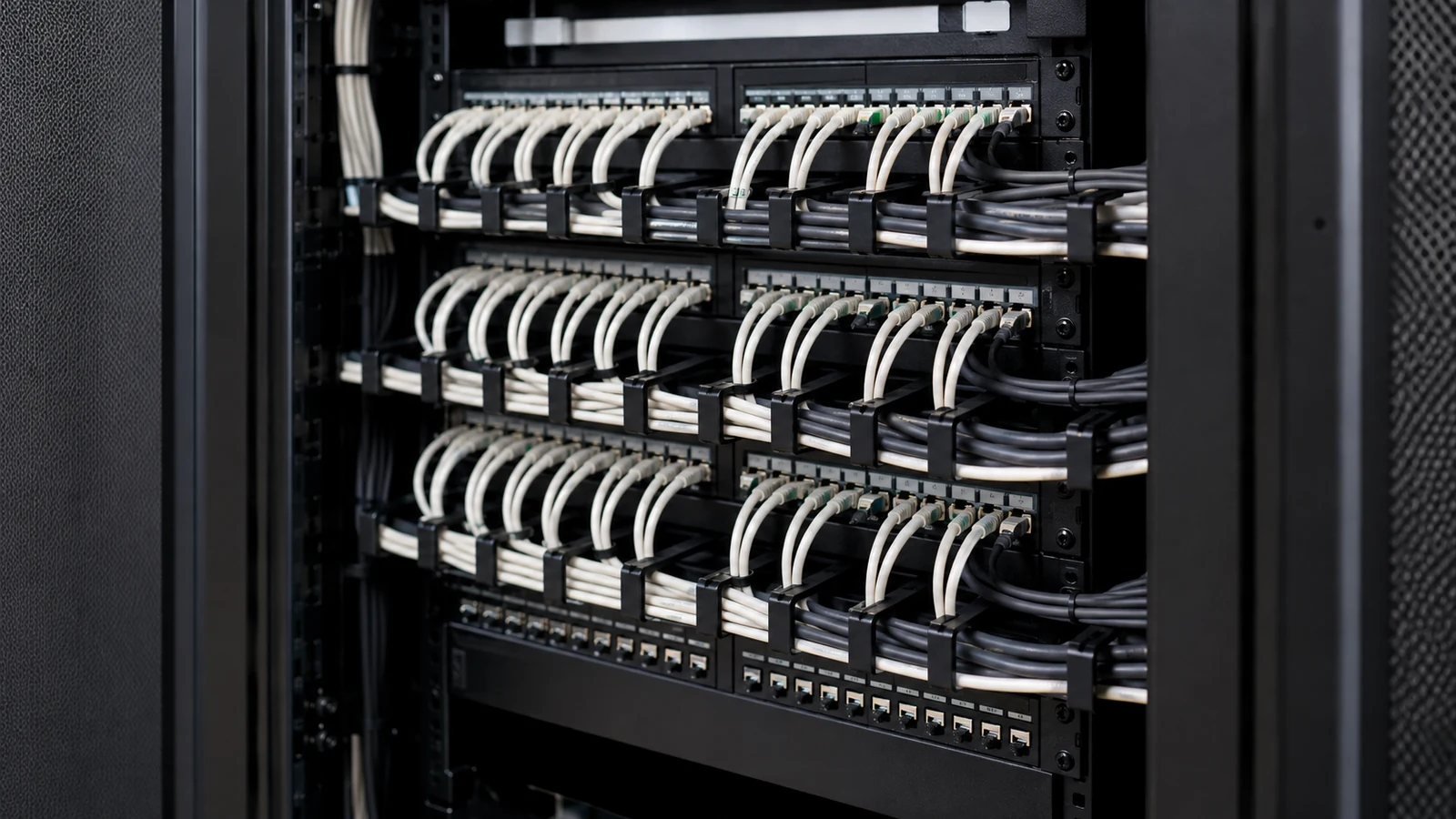
Create a consistent labeling, mapping, test-file, exception, and closeout structure across multiple buildings while preserving site-specific link definitions.
TECHNICAL PLANNING
Assign a unique identifier to every tested link before field work and define how panel, outlet, room, device, strand, direction, and retest records will match. Agree on who may authorize remediation and who accepts exceptions.
Reliable testing depends on access to both endpoints, correct adapters and reference cords, clean fiber interfaces, suitable instruments, current calibration where required, accurate link type and media, stable labels, agreed limits, safe work access, and project records.
A cable map, continuity test, qualifier, certification test, optical-loss test, and reflectometry trace answer different questions. Results apply to the defined link and test conditions; they do not guarantee active-network performance, device behavior, future changes, code compliance, or universal suitability.
CONNECTED SYSTEMS
Testing confirms defined physical-link attributes and creates closeout evidence, while the Structured Cabling page owns pathway, cable, termination, distribution, installation, and overall system design.
Fiber testing should align with media, connectors, splices, wavelengths, optics, link direction, reference method, loss budget or project limits, and the documentation requirements established for the backbone.
Physical-link results can inform switch, PoE, VLAN, uplink, camera, access-point, controller, or recorder diagnosis, but testing alone does not validate every active-network or endpoint function.
ORLANDO SERVICE CONTEXT
Lakehurst and International Drive projects include renovated hotels, offices, retail and entertainment spaces, warehouses, managed communities, healthcare facilities, and multi-building properties where cabling may span occupied rooms, back-of-house pathways, high ceilings, distributed closets, and phased construction. A useful Orlando testing plan coordinates endpoint access, work windows, labels, floor or room references, remediation authority, and records that facilities and IT teams can understand after contractors leave.
RELATED SERVICES
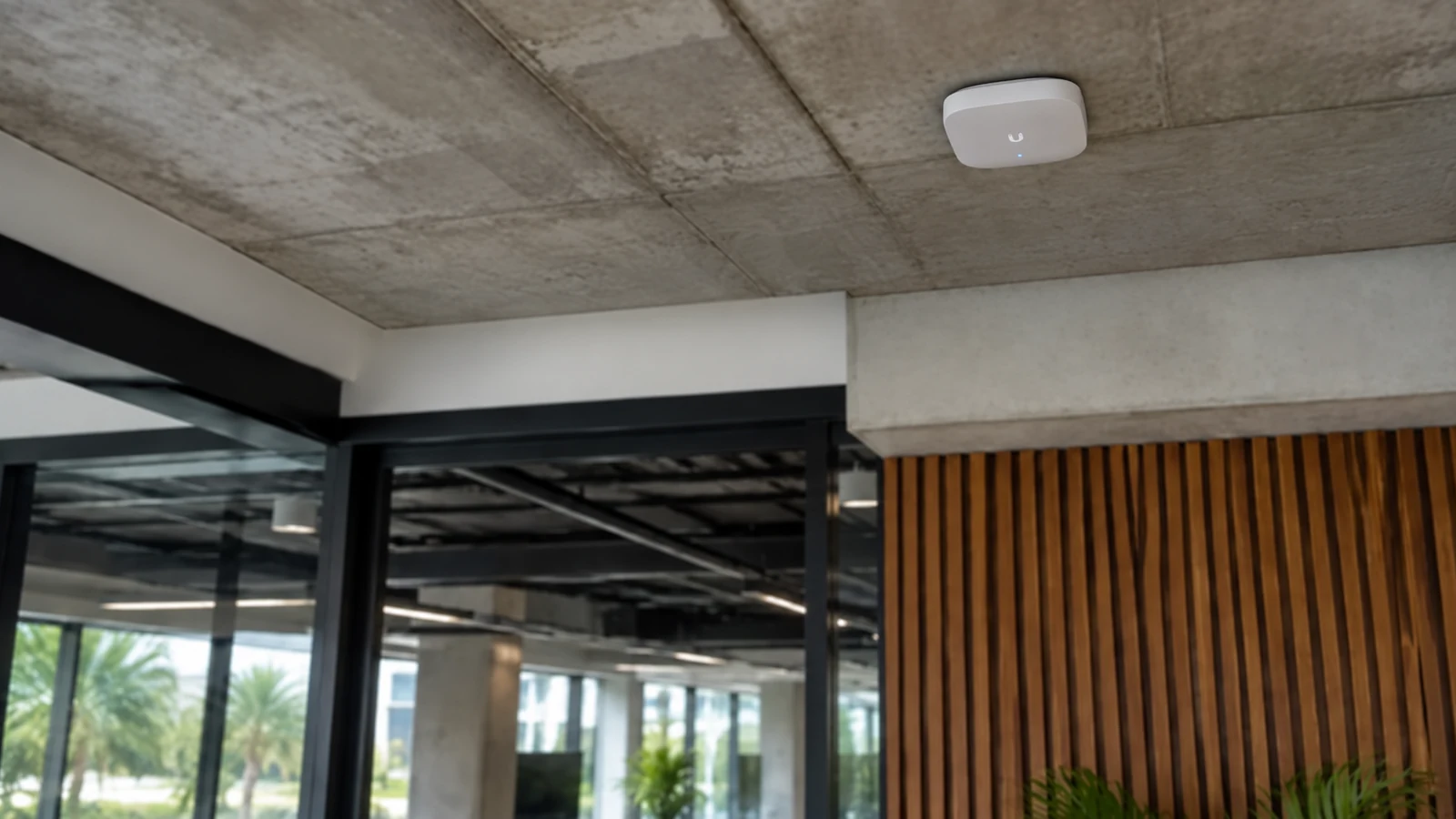
The installation service owns cable pathways, media, terminations, labels, racks, and new or retrofit cabling design that testing can verify.
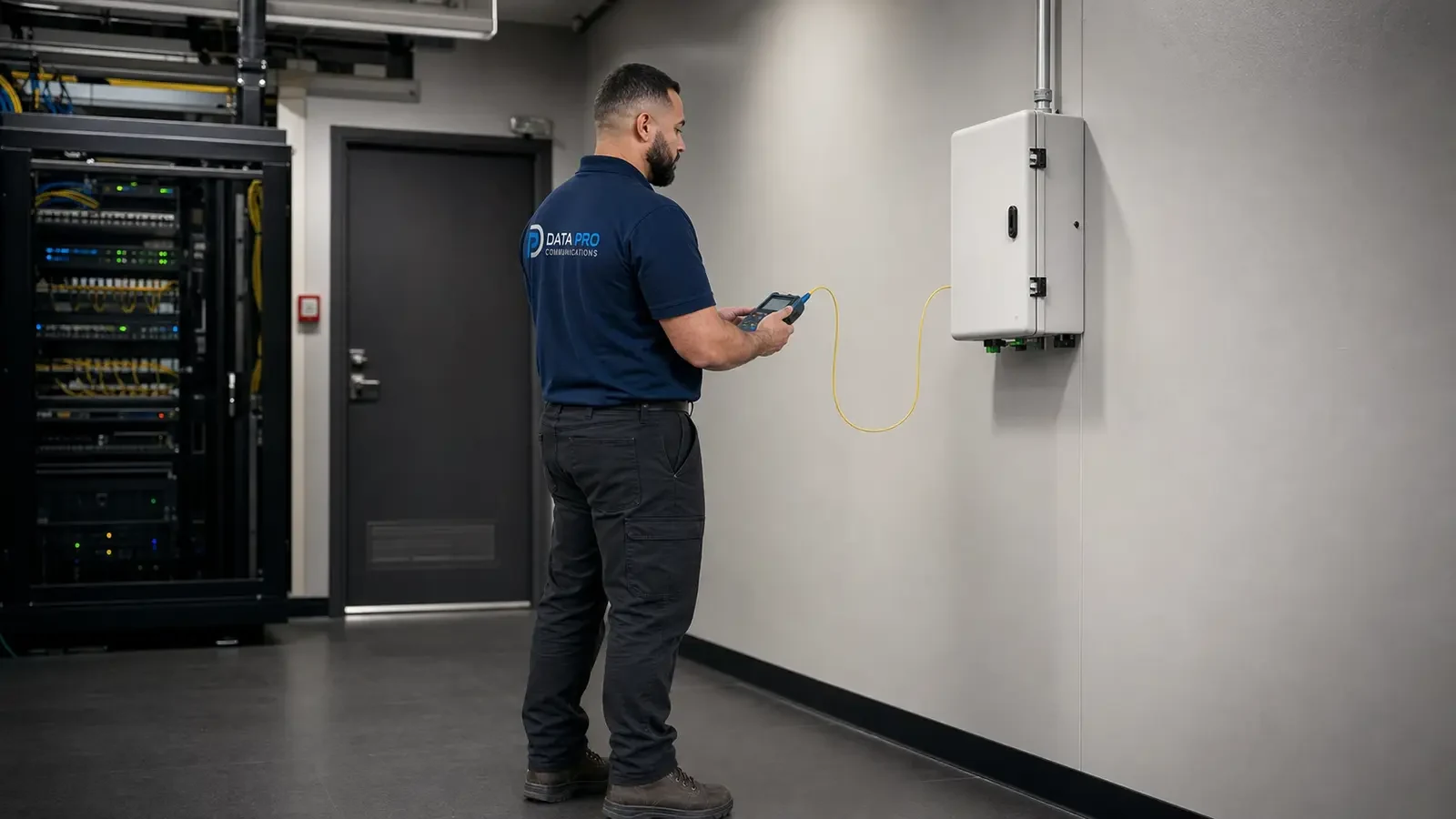
Fiber routes, enclosures, splicing, patching, strand records, and optical requirements establish the links and acceptance criteria for fiber testing.
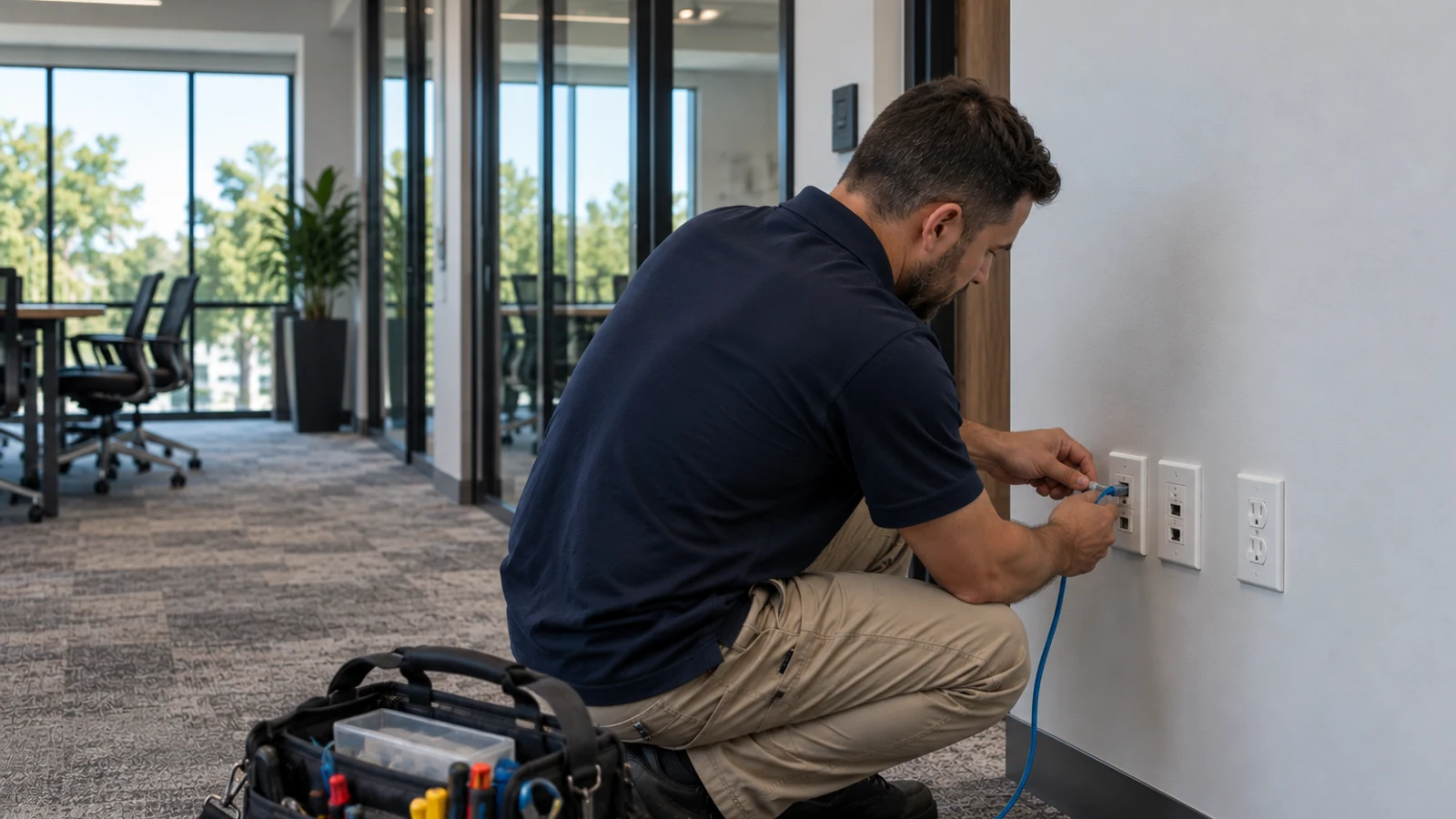
Broader multi-system diagnosis may use cable-test evidence.
INDUSTRIES SERVED
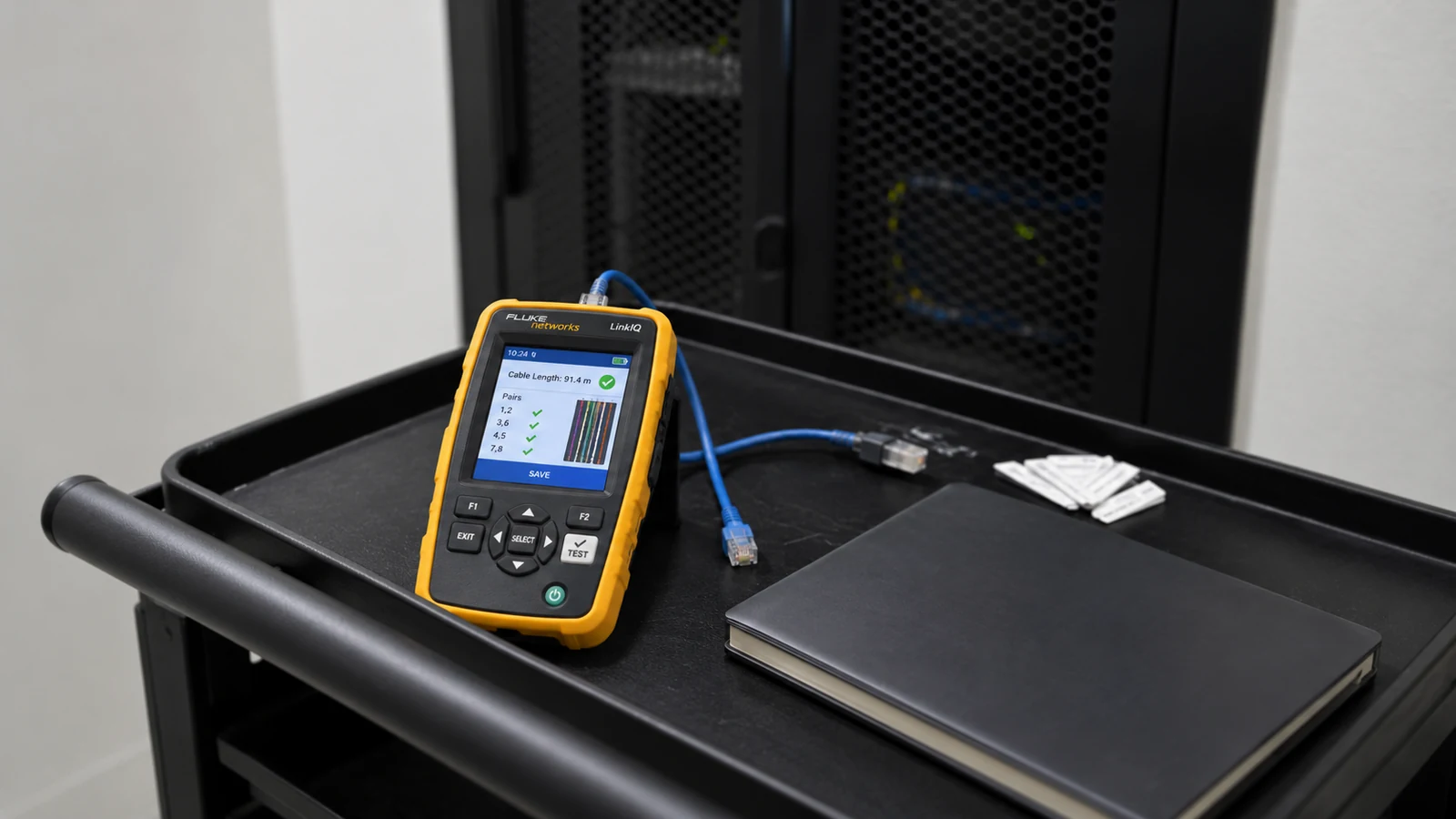
Turnover testing, renovation mapping, exceptions, remediation, and acceptance records.
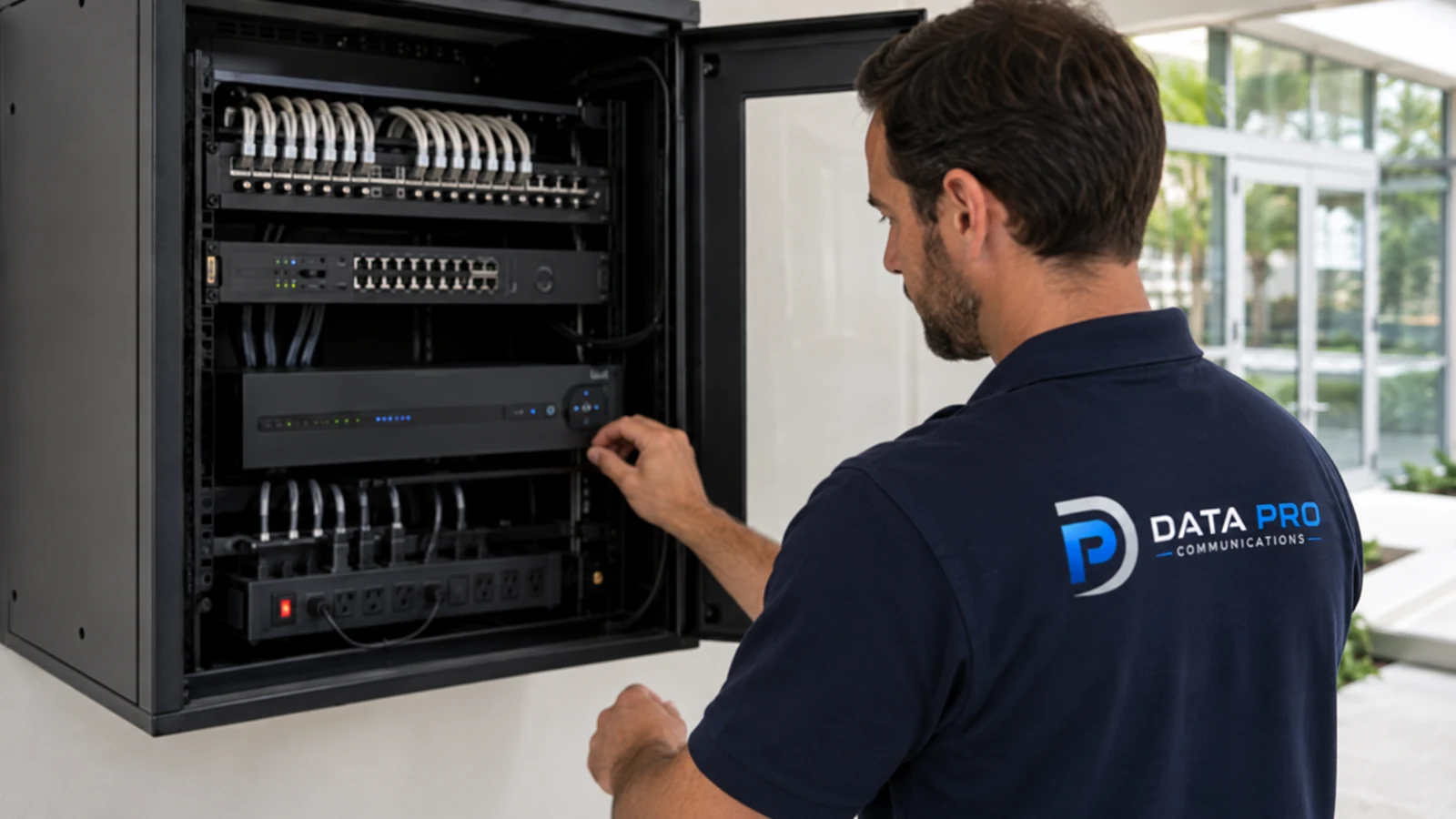
Occupied-room coordination, distributed closets, phased testing, and facility-ready documentation.

Long routes, remote endpoints, high devices, backbone links, and repeatable identifiers.
PROJECT PROCESS
Confirm media, counts, endpoints, link boundaries, labels, required measurements, limits, adapters, report format, access, work windows, remediation authority, and acceptance owner.
Map and label links, inspect accessible conditions, perform the agreed copper or fiber methods, preserve raw results where required, and record environmental or access exceptions.
Separate labeling issues, workmanship faults, damaged media, adapter or reference concerns, scope gaps, and active-equipment symptoms; authorize corrective work before changes are made.
Retest corrected links under the same defined method, reconcile reports to final identifiers, document unresolved exceptions, and deliver owner-ready schedules and files.
LICENSED PROJECT SUPPORT
Data Pro Communications - West Orlando is a regional website of Data Pro Communications. Commercial projects are coordinated through the West Orlando / Lakehurst Branch at 5950 Lakehurst Dr, #234, Orlando, FL 32819; (407) 994-3227; FL License #EC13016138. Project requirements, access, schedule, connected systems, and responsibility boundaries are reviewed before the final scope is established.
FAQ
Testing is a broad term that can include mapping, continuity, wiremap, fault location, qualification, optical loss, or other measurements. Certification is a defined test against specified limits for a stated link configuration using an agreed method and report. Not every test is certification.
Depending on the method, testing can identify opens, shorts, reversals, miswires, split pairs, length indications, distance to some faults, excessive performance parameters, label conflicts, or endpoint mismatches. The scope should state which measurements are required.
A permanent link generally covers installed horizontal cabling and its fixed terminations, while a channel includes specified patch cords or equipment connections. Exact boundaries and adapters should follow the contracted test definition rather than assumption.
Often, yes. Mapping may require access to outlets, patch panels, closets, devices, both ends of suspected links, and occupied areas. Concealed splices, damaged conductors, shared pathways, active equipment, or missing endpoint access can limit certainty.
No. Active performance also depends on switches, interfaces, transceivers, patch cords, configuration, PoE, congestion, applications, devices, and environmental conditions. A result applies to the defined physical link and test criteria.
Depending on the scope, fiber work may include connector inspection, continuity, polarity, optical-loss testing, and reflectometry. Wavelengths, direction, reference method, launch and receive cords, link limits, cleaning, and record format should be defined before testing.
Some intermittent faults may be reproduced or indicated, but movement, temperature, power, connectors, active equipment, timing, or network conditions can complicate diagnosis. Symptoms and test conditions should be documented, and no universal detection guarantee applies.
The report should identify the link, failed parameter, measurement context, probable fault area where supported, visual findings, label status, and recommended next step. Remediation should be authorized, documented, and followed by retesting under the agreed method.
Useful closeout records include link identifiers, locations, panel and outlet references, media and test type, date, instrument and calibration information where required, configured limits, results, raw files or reports, exceptions, remediation, retests, and acceptance notes.
Prepare floor and site plans, link counts, media types, room and endpoint access, panel and outlet labels, project specifications, desired test method and limits, existing records, work windows, network contacts, remediation authority, and required closeout format.
Share your copper and fiber counts, endpoint locations, labels, suspected faults, project specifications, required test method, acceptance limits, work windows, and closeout format. The Lakehurst team can define the survey, testing, remediation, and reporting scope.