
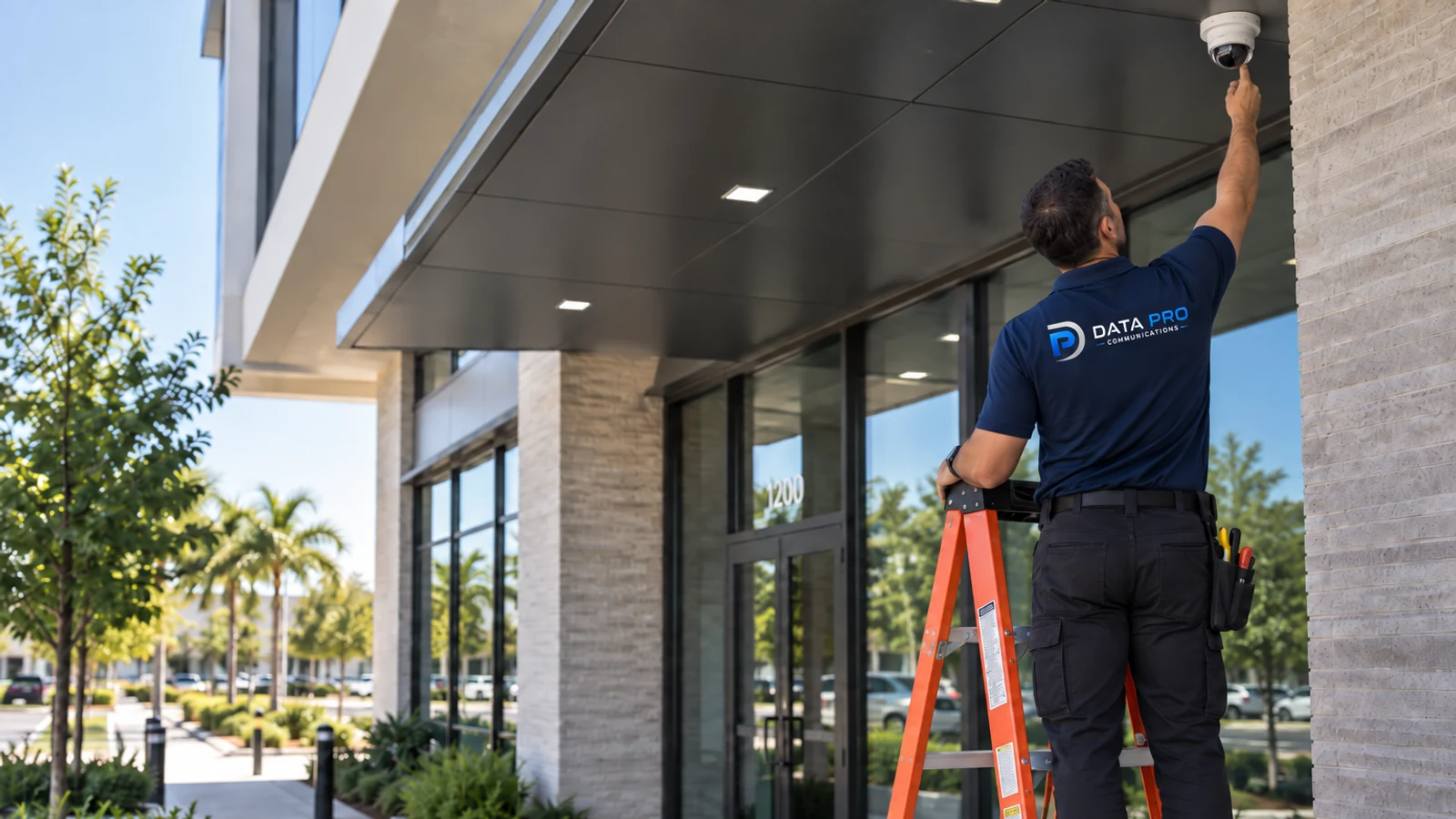
Site-Specific Planning
Views and pathways are selected around the technical decision and the actual commercial property, not a generic device count.
COMMERCIAL SECURITY AND LOW-VOLTAGE RESOURCE
Choose a CCTV installer by comparing how each contractor defines camera purpose, surveys the property, coordinates cabling and networks, proves performance, and documents handoff. Camera count and brand names matter only after those responsibilities are clear.
This guide explains the technical variables, tradeoffs, failure modes, and contractor questions that matter for how to choose a cctv installer. Use it to prepare a scope, then verify property-specific conditions before implementation.
PROJECT DETAILS
Views and pathways are selected around the technical decision and the actual commercial property, not a generic device count.
Cameras, recording, cabling, network, access and related dependencies are reviewed as one operating system.
Work zones and cutovers are organized around approved access, occupancy and network windows.
Labels, device schedules, test results, user ownership and exceptions support ongoing service.
Commercial low-voltage work is provided under FL License #EC13016138.
SERVICE OVERVIEW
Choose a CCTV installer by comparing how each contractor defines camera purpose, surveys the property, coordinates cabling and networks, proves performance, and documents handoff. Camera count and brand names matter only after those responsibilities are clear.
The decision is complete only when the required outcome, field conditions, infrastructure, operating owner, limitations, and acceptance method agree with one another.
CORE CAPABILITIES
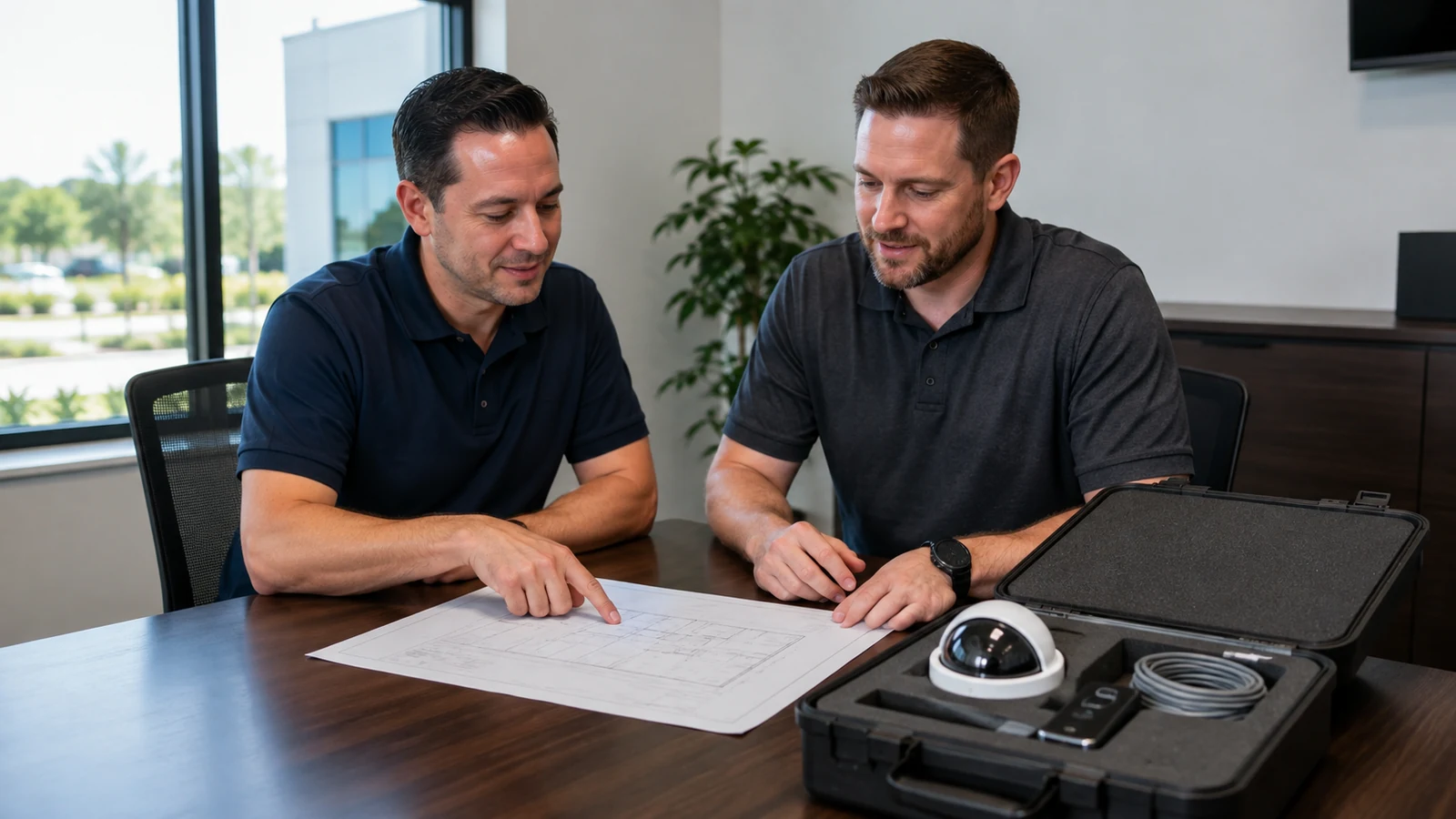
A credible survey walks each required scene, measures distance and mounting conditions, checks lighting and pathways, and records access constraints instead of estimating the project from a floor plan alone.
The proposal should state what each view must accomplish, such as doorway identification, vehicle context, dock activity, or general awareness.
Confirm the contracting entity, responsible license information, insurance requested by the customer, and who will perform or supervise the permitted low-voltage scope.
The installer should identify cable routes, PoE demand, switch responsibility, recorder or server location, remote access ownership, and any electrical or construction work assigned to others.
Acceptance should include agreed day and night views, recording and export checks, time accuracy, user access, device status, and documented exceptions.
Final records should identify devices, labels, ports, credentials ownership, warranties supplied, configuration responsibility, and the service contact.
ORLANDO SERVICE CONTEXT
Western Greater Orlando properties range from visitor-facing hospitality and retail to offices, healthcare, warehouses, managed communities and active construction. The correct answer changes with occupancy, work windows, weather exposure, network ownership and the physical distances at the actual site.
For Orlando commercial properties, contractor evaluation should reflect occupied work windows, exterior weather exposure, existing telecom conditions, and the party that owns the network. A useful proposal separates known field conditions from allowances and identifies what will be tested before acceptance.
TECHNICAL PLANNING
Commercial site-survey discipline
A credible survey walks each required scene, measures distance and mounting conditions, checks lighting and pathways, and records access constraints instead of estimating the project from a floor plan alone.
Useful camera-view definitions
The proposal should state what each view must accomplish, such as doorway identification, vehicle context, dock activity, or general awareness. Without that purpose, two bids with the same camera count are not comparable.
Florida licensing and accountable contracting
Confirm the contracting entity, responsible license information, insurance requested by the customer, and who will perform or supervise the permitted low-voltage scope. Marketing names and subcontractor relationships should not obscure accountability.
Network, power and pathway coordination
The installer should identify cable routes, PoE demand, switch responsibility, recorder or server location, remote access ownership, and any electrical or construction work assigned to others.
Testing and acceptance criteria
Acceptance should include agreed day and night views, recording and export checks, time accuracy, user access, device status, and documented exceptions. A live image alone is not a complete test.
Documentation and service ownership
Final records should identify devices, labels, ports, credentials ownership, warranties supplied, configuration responsibility, and the service contact. The customer should know what information is retained by each party.
PROJECT DETAILS
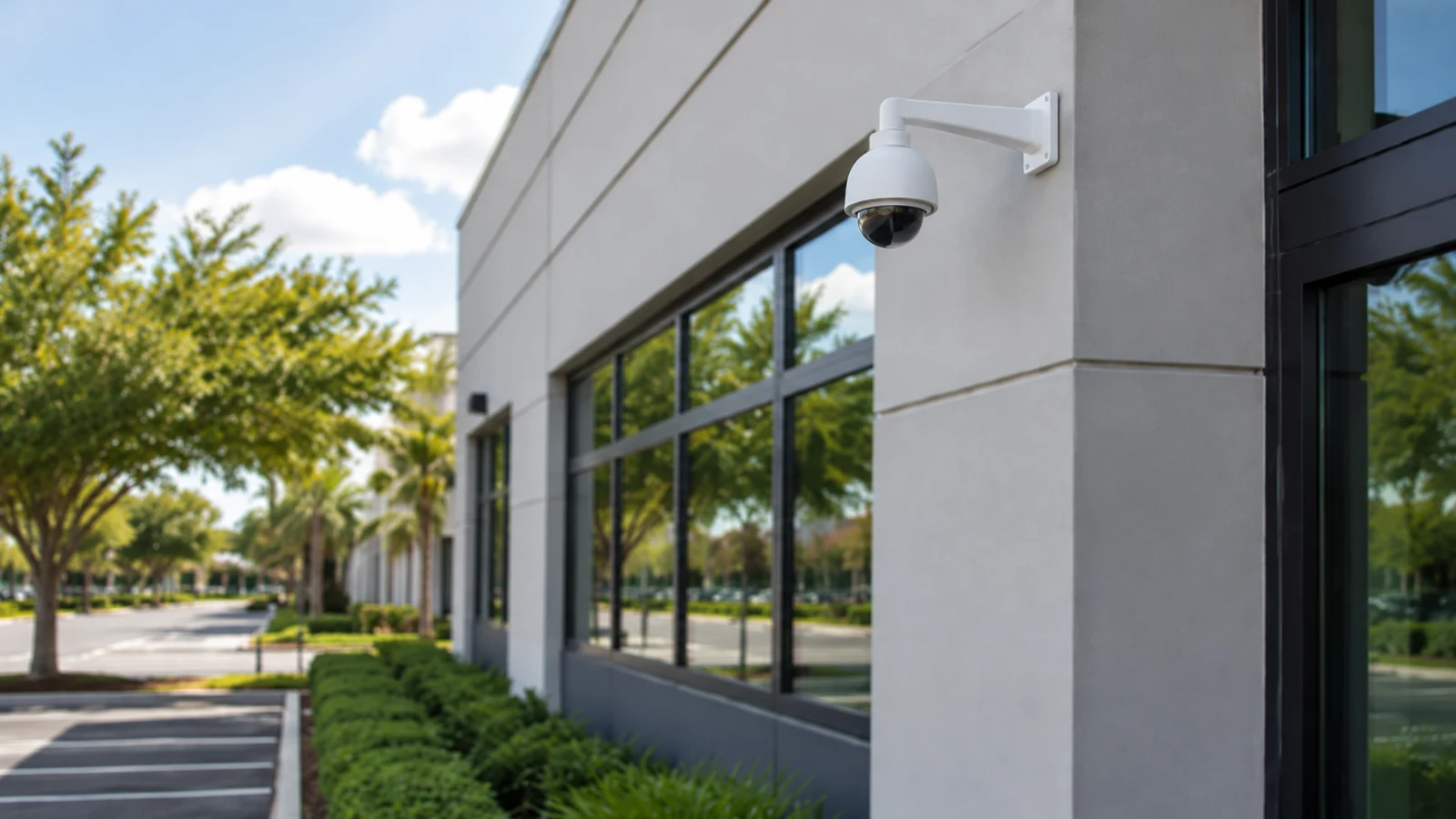
One proposal may use fewer purpose-selected views while another lists more cameras without defining doorway detail or retention. Compare the accepted scenes, infrastructure, storage assumptions, and test plan before comparing totals.

Dock doors, trailer lanes, yard lighting, long cable routes, and after-hours response roles should be surveyed separately. The installer should explain which views provide overview and which are intended for closer operational detail.
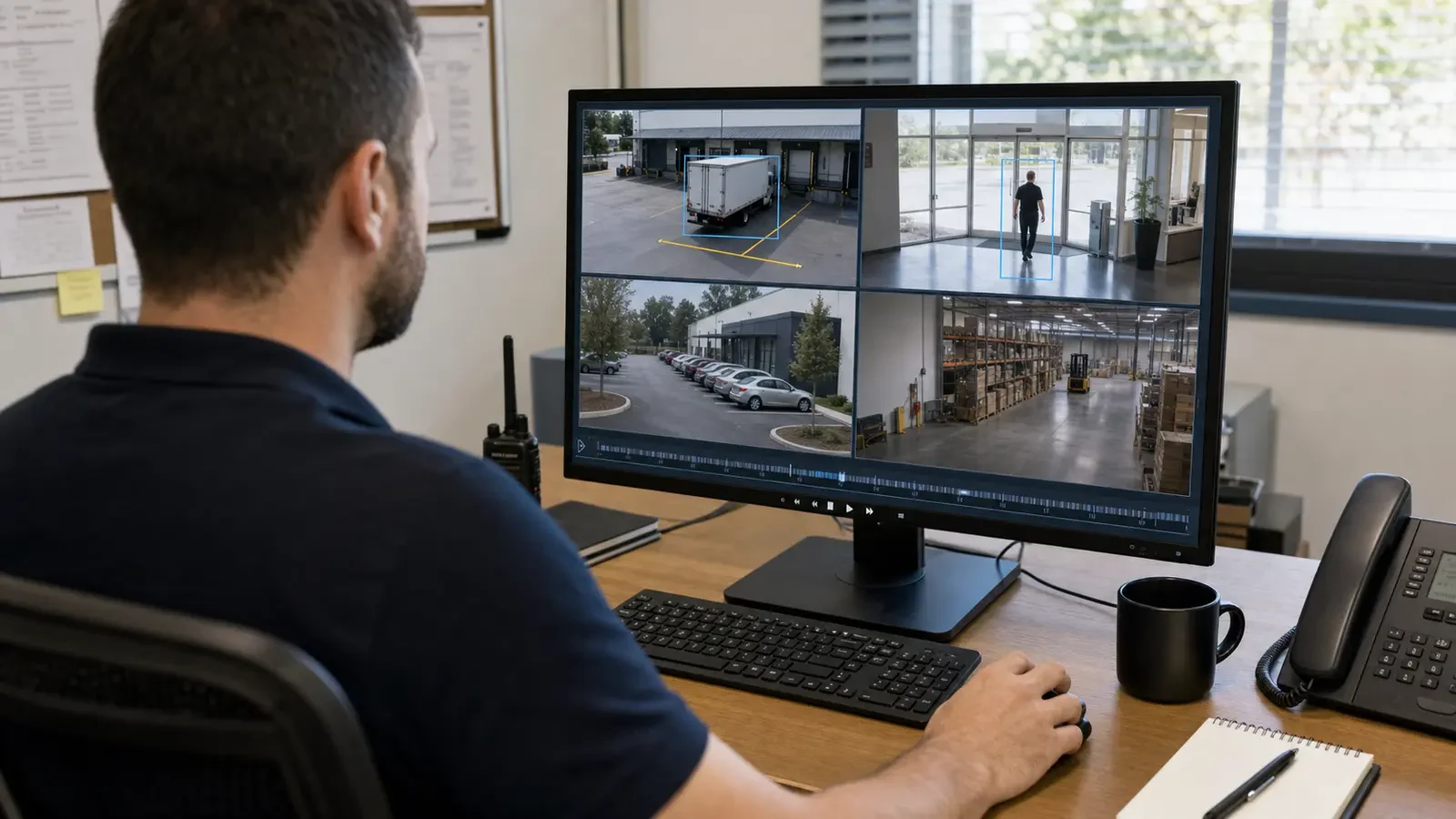
Before replacing the recorder, inventory camera compatibility, resolution and bitrate, network addresses, retention needs, exports, user accounts, and whether existing cabling passes testing.
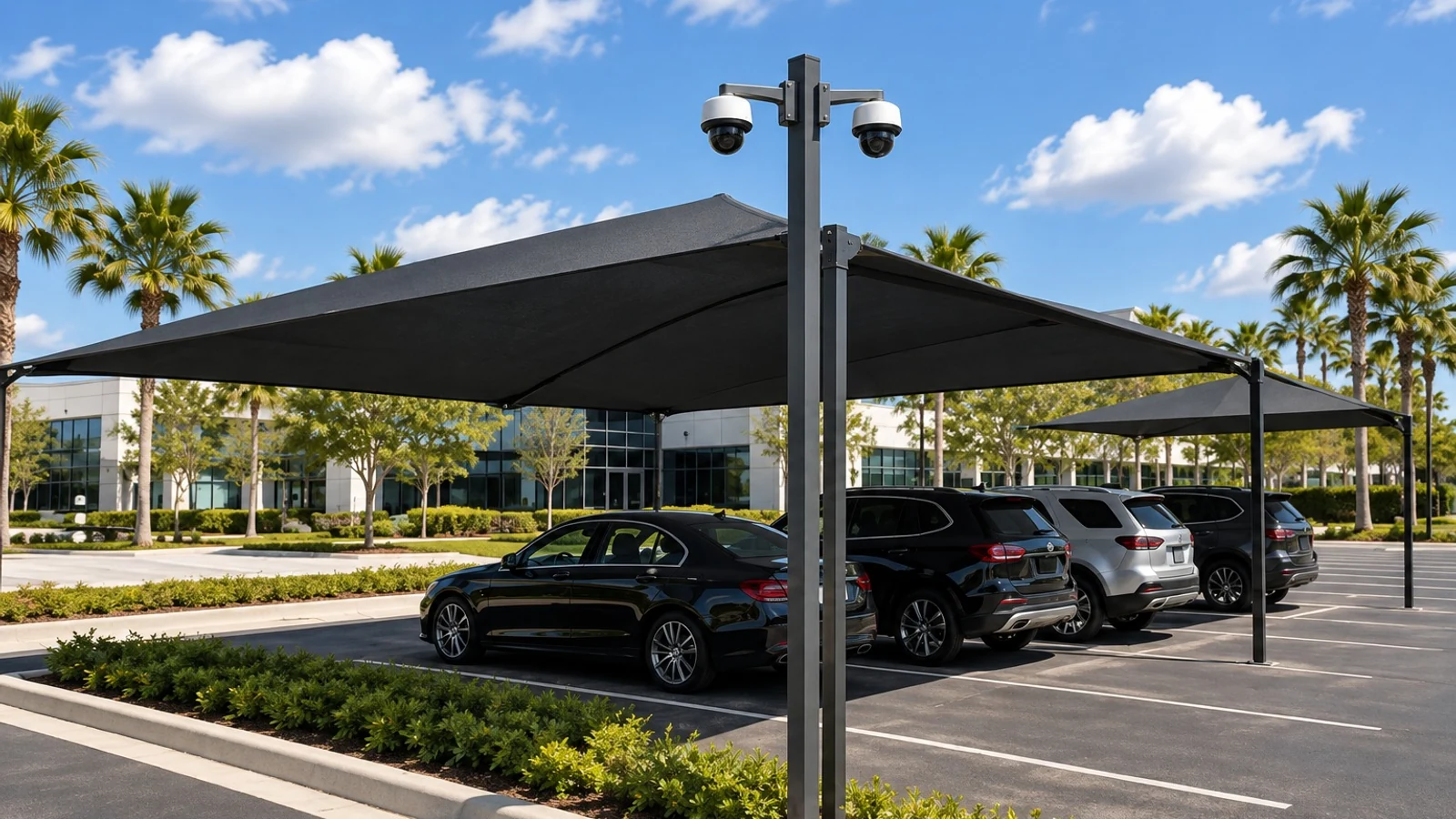
The owner, property manager, IT provider, gate vendor, and installer may control different parts of the system. The proposal should assign approvals, access windows, network changes, testing, and ongoing support by role.
PROJECT DETAILS
Operational Recommendations
Give bidders the same scene list, retention objective, network constraints, and acceptance expectations.
Separate verified conditions, customer-provided items, allowances, exclusions, and change-control triggers.
Schedule acceptance when relevant entrances, parking areas, loading zones, and night lighting can actually be evaluated.
Define required labels, schedules, account ownership, exports, test results, and service contacts in the proposal.
PROJECT DETAILS
This article helps commercial teams understand how to choose a cctv installer as a technical and operational decision. It provides a common vocabulary for comparing alternatives before a property-specific design is approved.
A detailed proposal cannot remove every concealed pathway condition; it should state how discoveries and changes will be handled.
Licensing and insurance support accountability but do not prove that a proposed view, network design, or support model fits the property.
References are useful only when their project type, scope, and contracting relationship are relevant and independently verified by the customer.
PROJECT DETAILS
Megapixels do not establish scene purpose, lens choice, lighting, retention, or support quality.
Unclear cable, lift, patching, storage, or network allowances make bids appear comparable when they are not.
Unassigned switching, addressing, remote access, and cybersecurity work can delay activation or leave unsupported accounts.
A system can record video yet still fail the customer if authorized users cannot find, export, or retain the required event.
Unlabeled devices, unknown passwords, inaccessible mounts, and missing configuration records raise the cost of future service.
TECHNICAL PLANNING
Use a scene-by-scene schedule that states purpose, approximate location, infrastructure assumption, and acceptance test.
Verify ceiling access, exterior routes, firestopping responsibility, lifts, restoration, and work by other trades.
Assign switching, PoE, addressing, storage, user accounts, remote access, monitoring, and update responsibility.
Define day and night view checks, recording, export, time, failure reporting, and the person authorized to accept results.
Require device and port labels, account ownership, configuration custody, supplied warranties, exceptions, and service contacts.
PROJECT DETAILS
RELATED SERVICES
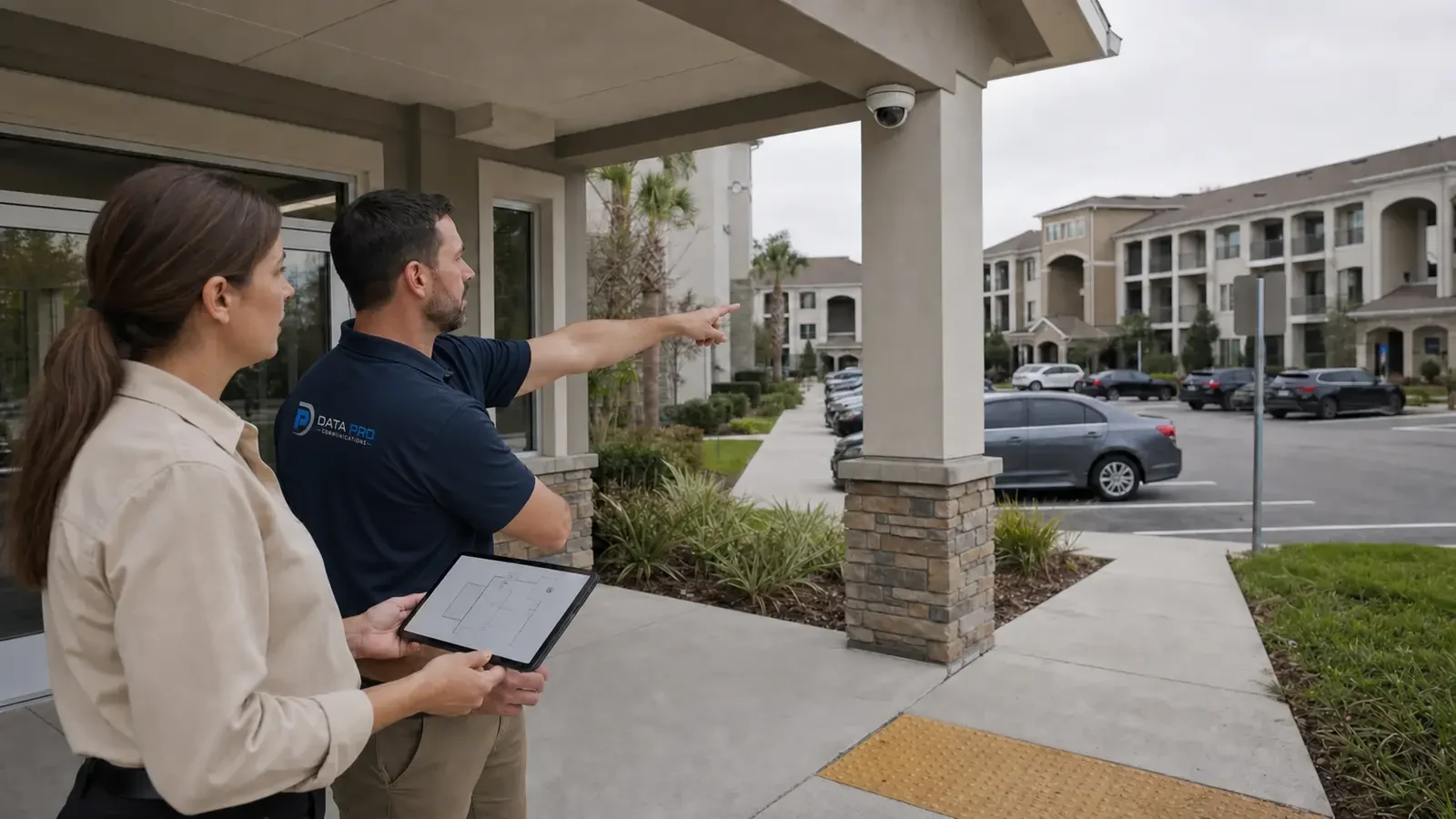
Security Camera Installation is the primary implementation path when the article findings require a property-specific scope for commercial site-survey discipline and useful camera-view definitions.
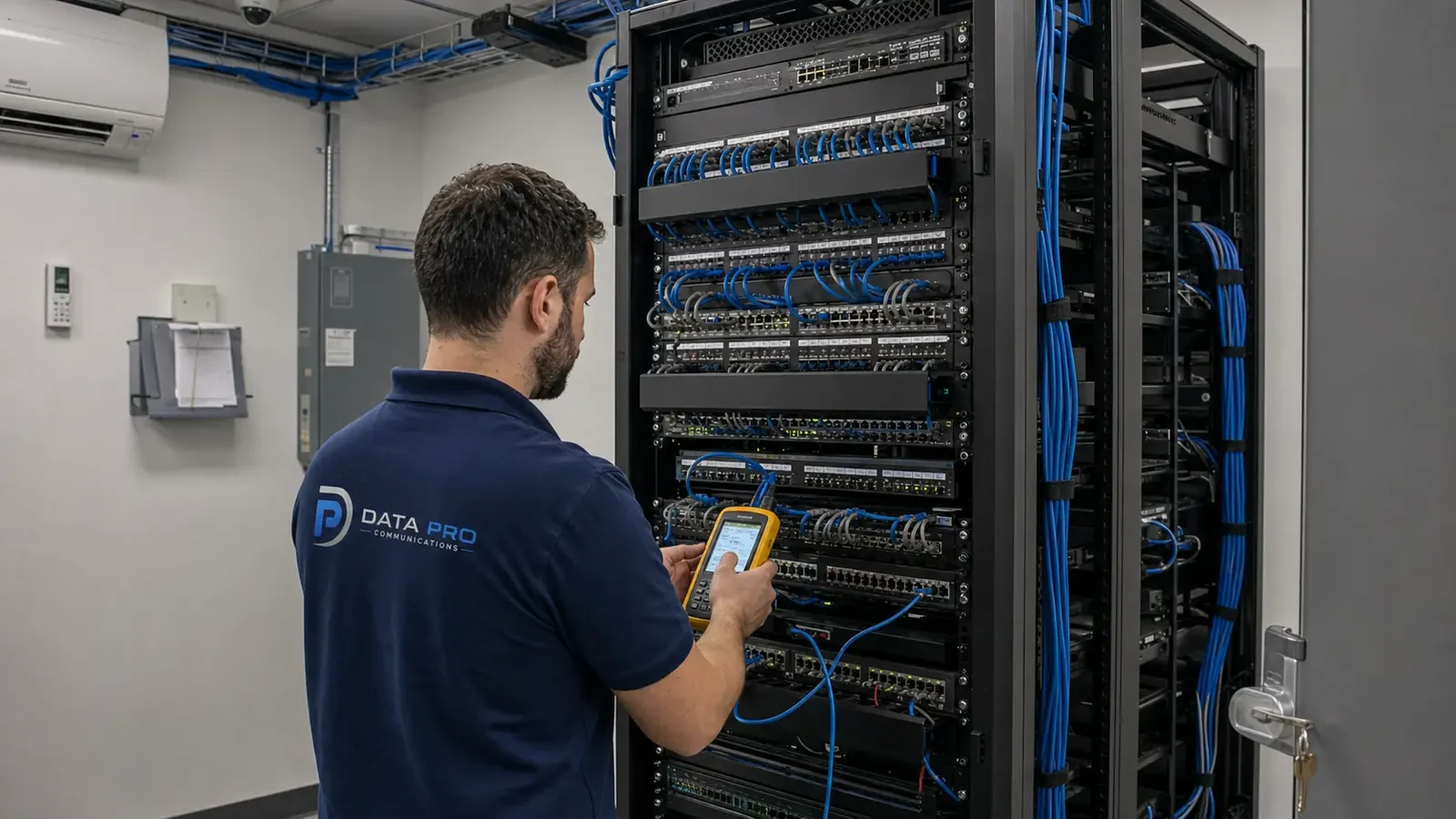
Structured Cabling supports the pathways, labels, and tested physical links involved in proposal and scene schedule and pathway and construction coordination.
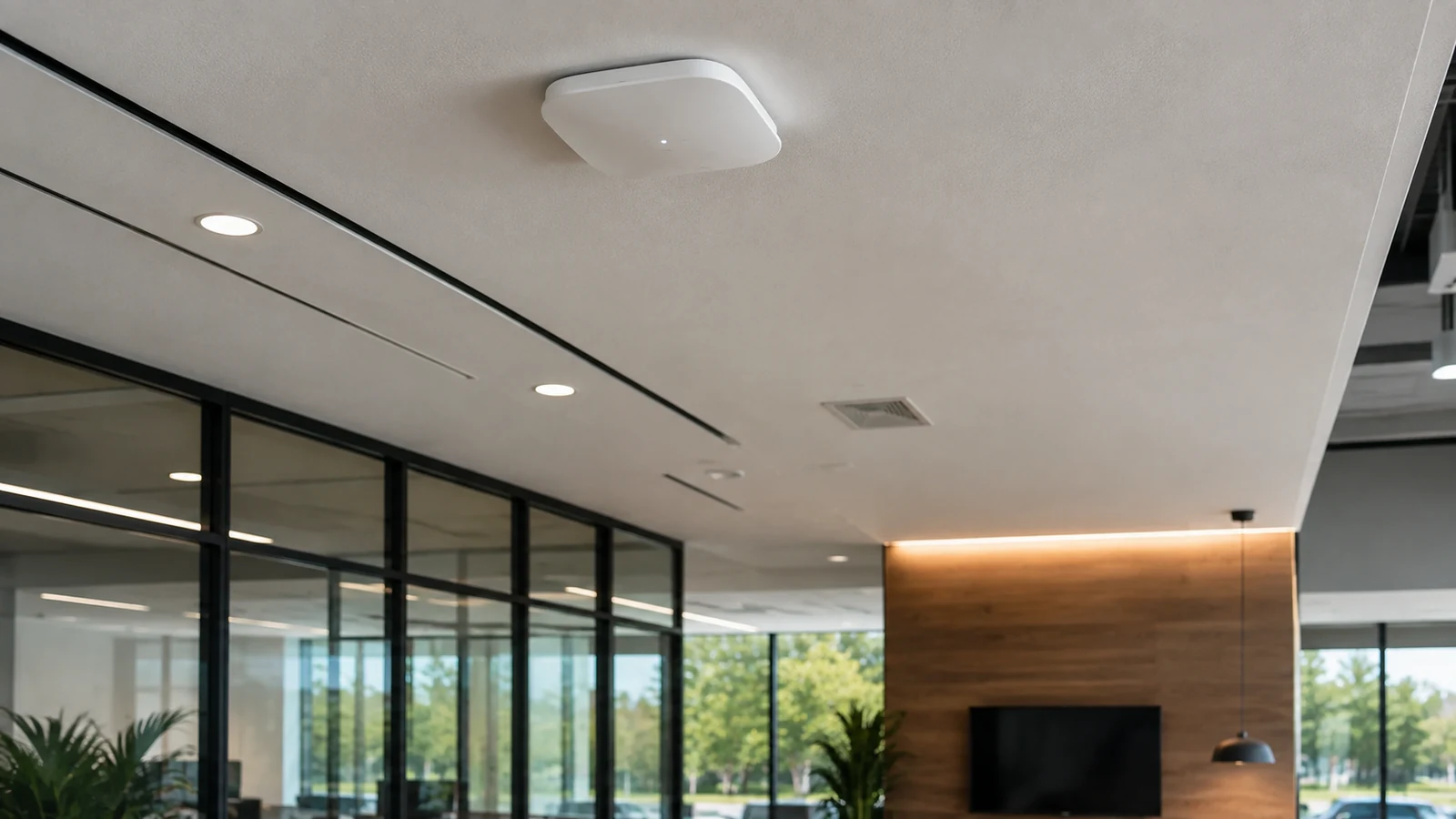
Network Infrastructure addresses switching, power, segmentation, uplinks, accounts, and monitoring where network and recording ownership affects the article decision.
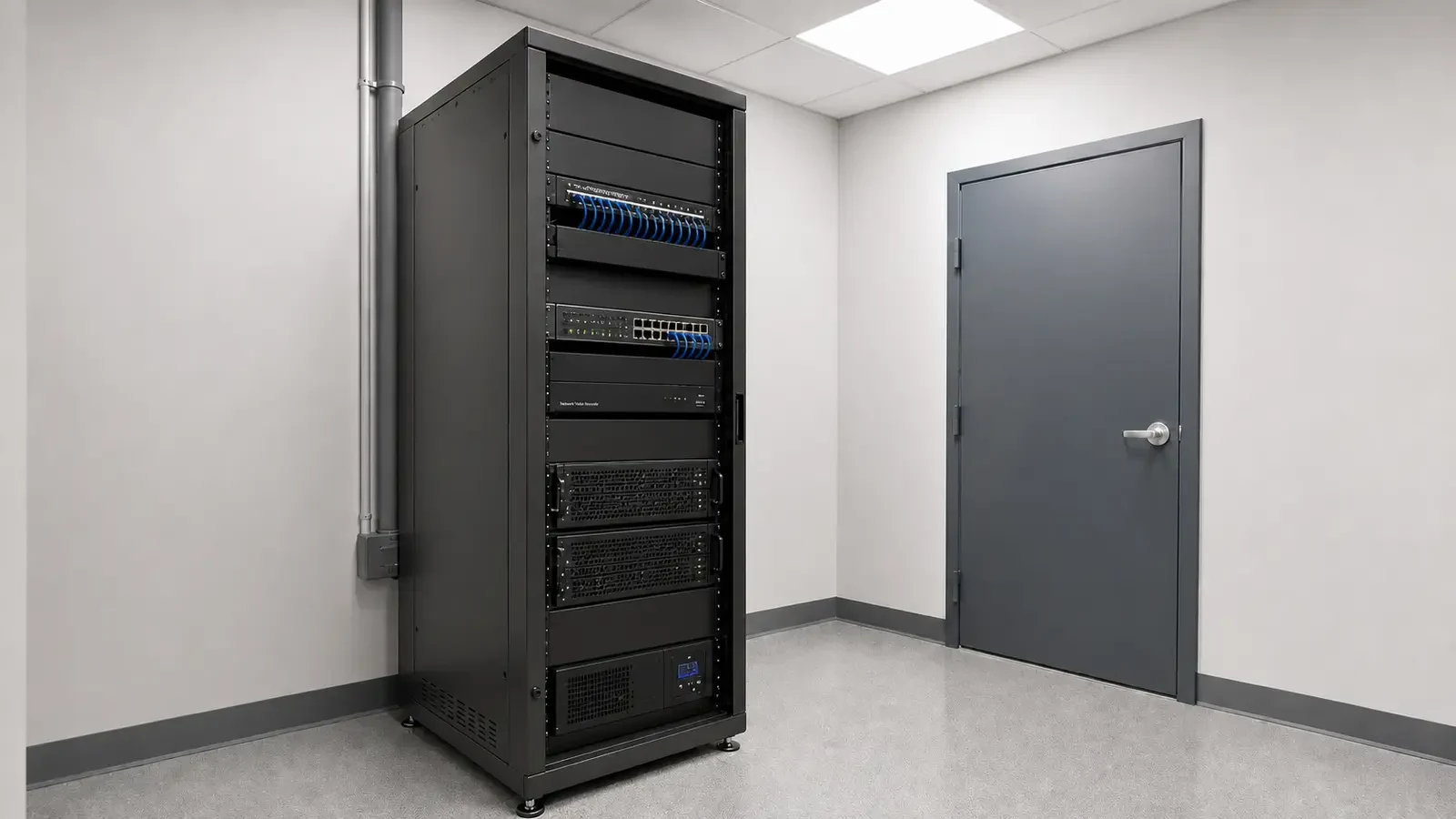
Camera System Upgrades applies when existing equipment must be evaluated against the new requirements for commercial site-survey discipline and the stated limitations.

Camera Troubleshooting & Repair uses the documented tests and dependencies in this guide to isolate faults involving handoff and support records or existing system behavior.
PROJECT PROCESS
Identify the article question, intended users, operating scenario, and the decision the property needs to make about how to choose a cctv installer.
Inspect the relevant scenes and dependencies, including proposal and scene schedule, pathway and construction coordination, and network and recording ownership.
Compare alternatives against the six topic-specific concepts, document limitations, and assign implementation and network responsibilities.
Perform the acceptance checks described in the scope and deliver settings, labels, test results, exceptions, authorized ownership, and service information.
FAQ
Choose a CCTV installer by comparing how each contractor defines camera purpose, surveys the property, coordinates cabling and networks, proves performance, and documents handoff. Camera count and brand names matter only after those responsibilities are clear.
A credible survey walks each required scene, measures distance and mounting conditions, checks lighting and pathways, and records access constraints instead of estimating the project from a floor plan alone.
The proposal should state what each view must accomplish, such as doorway identification, vehicle context, dock activity, or general awareness. Without that purpose, two bids with the same camera count are not comparable.
Confirm the contracting entity, responsible license information, insurance requested by the customer, and who will perform or supervise the permitted low-voltage scope. Marketing names and subcontractor relationships should not obscure accountability.
The installer should identify cable routes, PoE demand, switch responsibility, recorder or server location, remote access ownership, and any electrical or construction work assigned to others.
Acceptance should include agreed day and night views, recording and export checks, time accuracy, user access, device status, and documented exceptions. A live image alone is not a complete test.
Final records should identify devices, labels, ports, credentials ownership, warranties supplied, configuration responsibility, and the service contact. The customer should know what information is retained by each party.
The most common errors include selecting by megapixels alone and accepting undefined allowances. Megapixels do not establish scene purpose, lens choice, lighting, retention, or support quality.
Give bidders the same scene list, retention objective, network constraints, and acceptance expectations. Separate verified conditions, customer-provided items, allowances, exclusions, and change-control triggers.
Require device and port labels, account ownership, configuration custody, supplied warranties, exceptions, and service contacts.
A detailed proposal cannot remove every concealed pathway condition; it should state how discoveries and changes will be handled. Licensing and insurance support accountability but do not prove that a proposed view, network design, or support model fits the property.
Request a survey when scene purpose, pathways, existing equipment, network ownership, storage, work windows, or acceptance tests cannot be confirmed from reliable records.
Request a survey when scene purpose, pathways, existing equipment, network ownership, storage, work windows, or acceptance tests cannot be confirmed from reliable records. The resulting scope should state technical criteria, limitations, responsibilities, and acceptance tests before installation begins.