
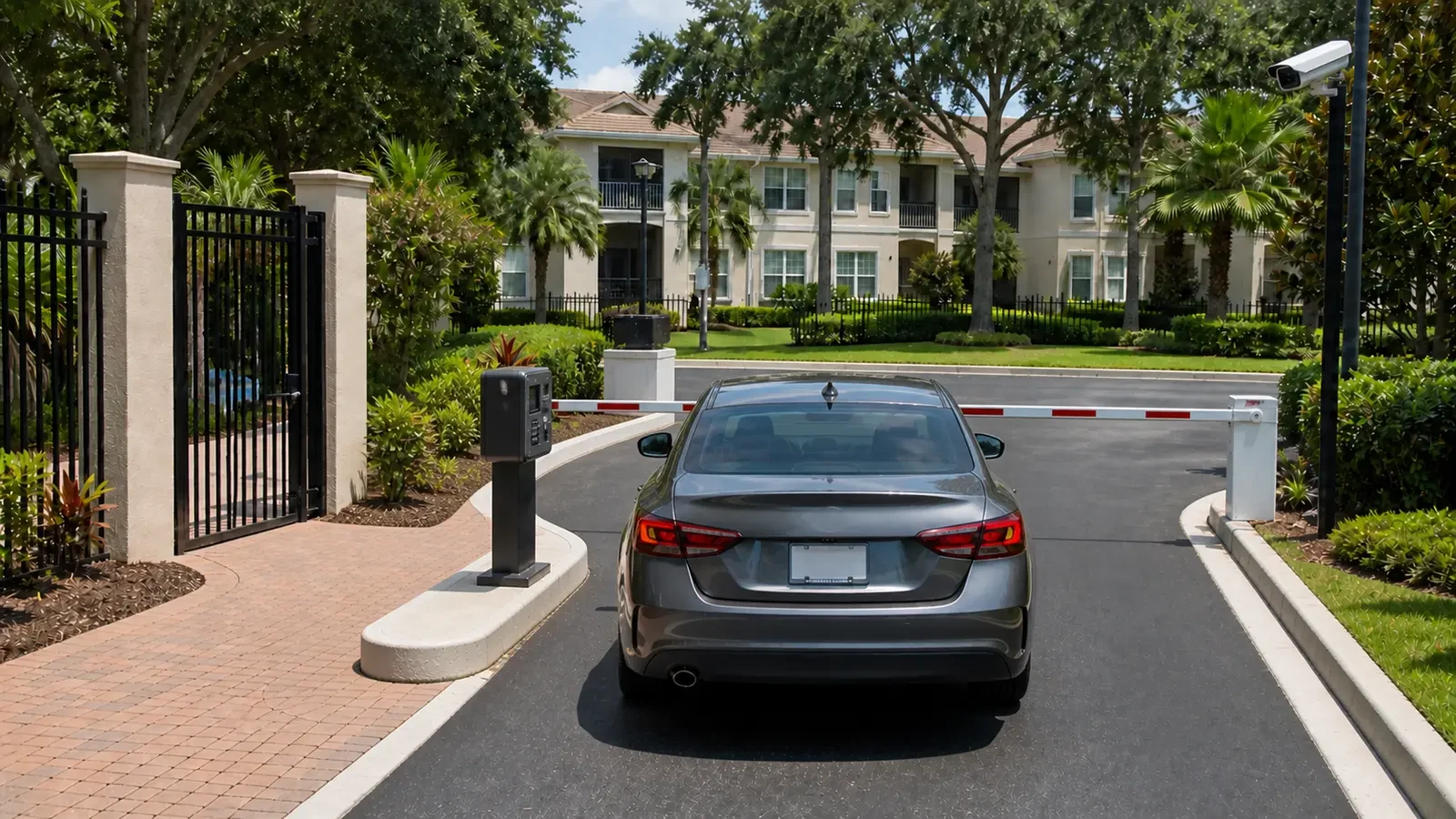
Entrance-Specific Assessment
Document operator, controls, safety interfaces, lane conditions, pathways, distances, power, network, credential and visitor workflows at each included entrance.
Commercial vehicular and perimeter entry planning
Commercial gate entry systems coordinate credential access, visitor communication, gate controls, entry cameras, networks, cabling, and operating procedures at vehicular or perimeter entrances. Data Pro Communications plans and integrates the low-voltage controls and connected systems within a clearly documented commercial scope.
Every entrance has different operator, safety-device, power, pathway, distance, traffic, drainage, exposure, and connectivity conditions. Equipment selection follows a site survey and coordination with the responsible gate, electrical, civil, mechanical, hardware, network, and property teams where their work affects the approved sequence.
PROJECT PLANNING
A useful gate-entry plan begins before a reader or intercom is selected. The site survey documents the gate and operator, lane geometry, visitor and credential workflow, safety-device interfaces, network and power dependencies, pathway distances, camera views, operating hours, release procedures, and responsibility boundaries.
That information helps identify what can be integrated, what needs another responsible trade, how outages affect operation, and what the property team must administer after commissioning.
Document operator, controls, safety interfaces, lane conditions, pathways, distances, power, network, credential and visitor workflows at each included entrance.
Evaluate cards, fobs, keypads, supported mobile credentials, telephone or video intercoms, directories, call routing, and authorized release workflows.
Plan copper, fiber, managed wireless, or cellular dependencies according to distance, pathway, bandwidth, power, environmental, and reliability conditions.
Verify approved control responses, credential decisions, visitor calls, gate-position inputs, camera context, events, labels, and operating documentation within scope.
Commercial low-voltage work uses the approved Data Pro Communications identity and FL License #EC13016138 without universal compliance, safety, or security claims.
SERVICE OVERVIEW
A gate entry system is the low-voltage control and communications layer at a vehicular or perimeter entrance. Depending on the approved scope, it can coordinate credential readers, keypads, visitor intercoms, control interfaces, gate-position monitoring, access-control platforms, entry cameras, network connections, fiber or wireless backhaul, remote release where supported, events, schedules, and operating records.
The gate assembly and site conditions determine what is feasible. Operator type and condition, safety devices, lane geometry, power, conduit, long-distance pathways, weather exposure, drainage, equipment access, traffic flow, connectivity, and the intended operating sequence all affect the design. Low-voltage integration does not automatically include gate fabrication, mechanical repair, civil work, line-voltage power, or every operator modification.
Gate Entry Systems is distinct from Access Control Systems, which owns broader credential, permission, controller, and administrative architecture; Door Access Control, which owns controlled building openings; Intercom Systems, which owns visitor communication; and Security Camera Installation, which owns surveillance coverage and recording.
CORE CAPABILITIES
Identify the gate type, operator, documented control inputs, current condition, safety-device relationships, manual operation, service access, and limits that affect low-voltage integration.
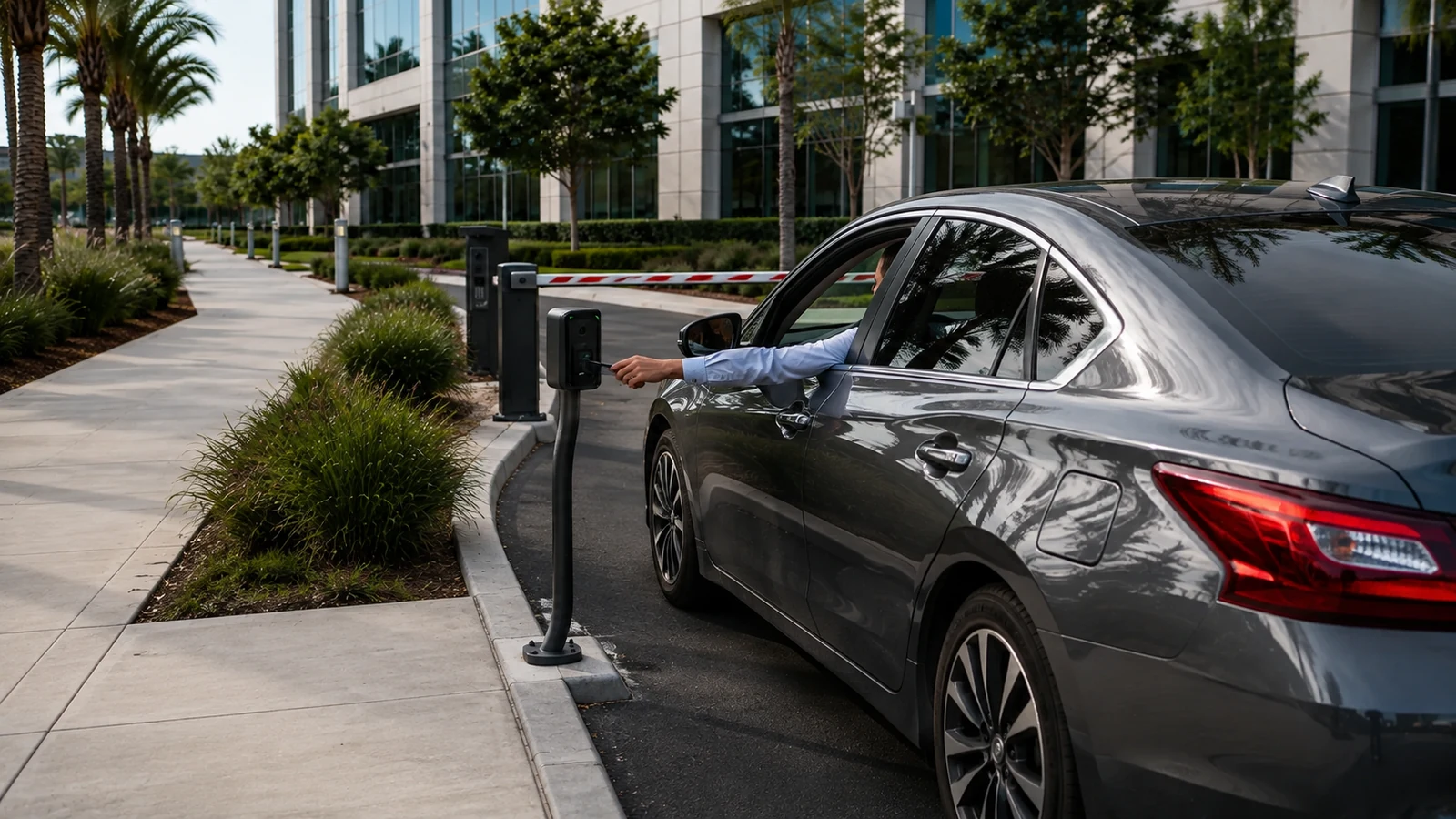
Plan supported card, fob, keypad, PIN, or mobile-reader workflows with mounting, pedestal location, vehicle approach, accessibility, platform compatibility, and user administration in view.
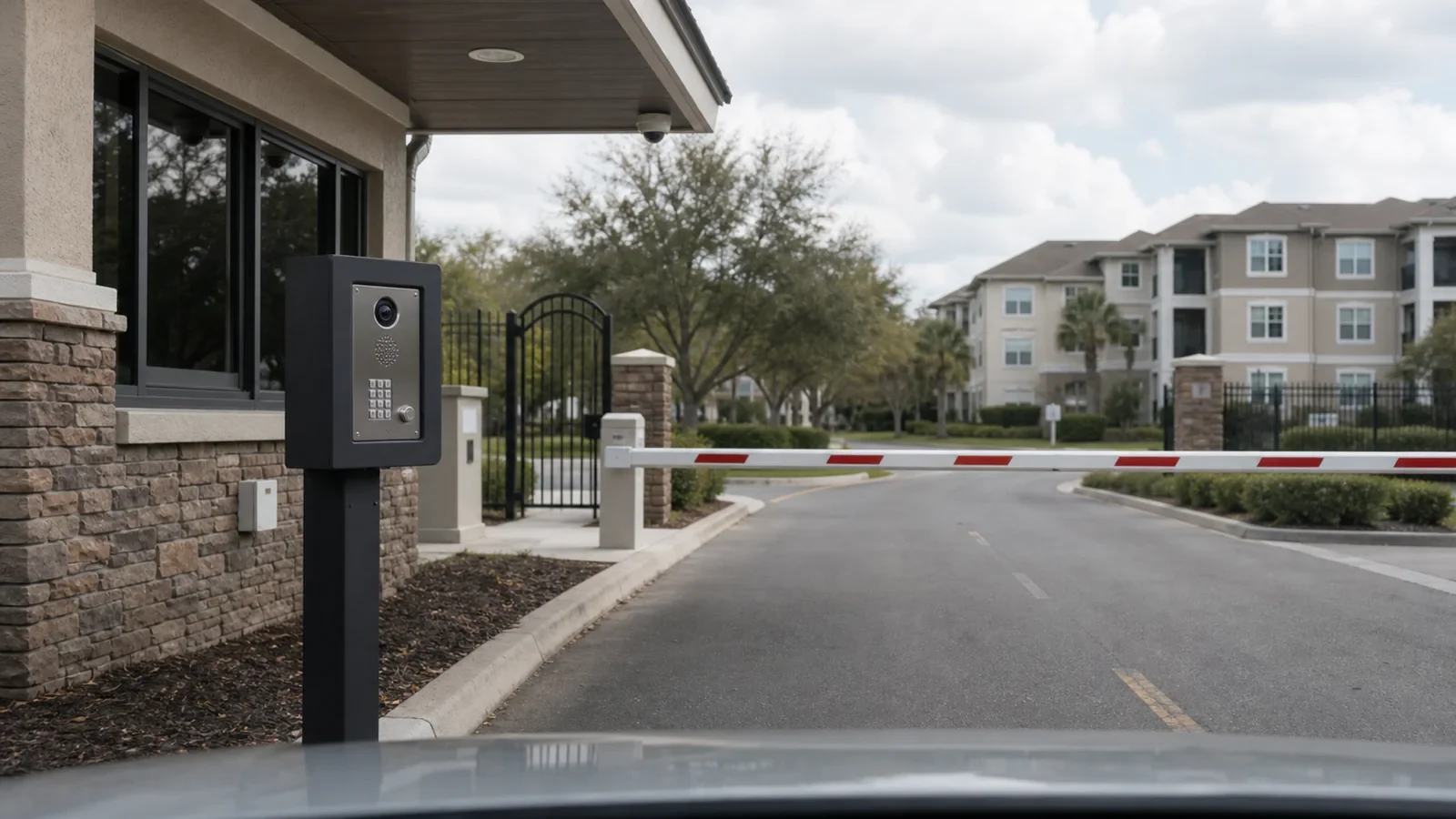
Coordinate supported telephone or video intercom stations, directories, call routing, after-hours workflows, network or cellular dependencies, and authorized release paths.
Define approved gate-open requests, relay or interface relationships, gate-position contacts, event inputs, schedules, and status monitoring without representing one control sequence as universal.
Plan camera viewpoints, network bandwidth, copper-distance limits, fiber or wireless backhaul, surge strategy, enclosures, power dependencies, and protected pathways for entrance equipment.
Test the approved credential, visitor, release, position, event, camera, and outage-related sequences; label field connections; and deliver records for property operations and future service.
COMMERCIAL USE CASES
Coordinate resident credentials, visitor calls, property-management workflows, vendor access, entry cameras, and multiple entrances without treating gate entry as a building-door installation.
Plan board- or management-controlled credentials, visitor directories, schedules, event review, camera context, phased upgrades, and clear responsibility for operator and property hardware.
Manage tenant, employee, delivery, vendor, and after-hours vehicle entry with durable outdoor devices, documented schedules, long pathways, and serviceable equipment locations.
Coordinate employee, fleet, contractor, loading, delivery, and restricted-lane workflows across one or more gates while preserving separate administrative roles and event records.
Support staff, vendor, service, guest, or managed-parking workflows where call routing, entry validation, cameras, operating hours, and property procedures are carefully defined.
Reserve controller capacity, connectivity, pathways, power, credential governance, naming, and documentation conventions so later entrances can join a planned system rather than an improvised collection.
TECHNICAL PLANNING
The gate operator, control board, documented inputs, safety devices, physical gate condition, travel path, manual operation, and responsible service contractor determine which low-voltage interfaces are appropriate. Access equipment does not replace operator safety requirements or mechanical maintenance.
Gate controls, intercoms, readers, cameras, network equipment, heaters or cooling where specified, and enclosures depend on responsible power, conduit, grounding or surge strategy, drainage, weather protection, equipment access, and cable pathways suited to the site.
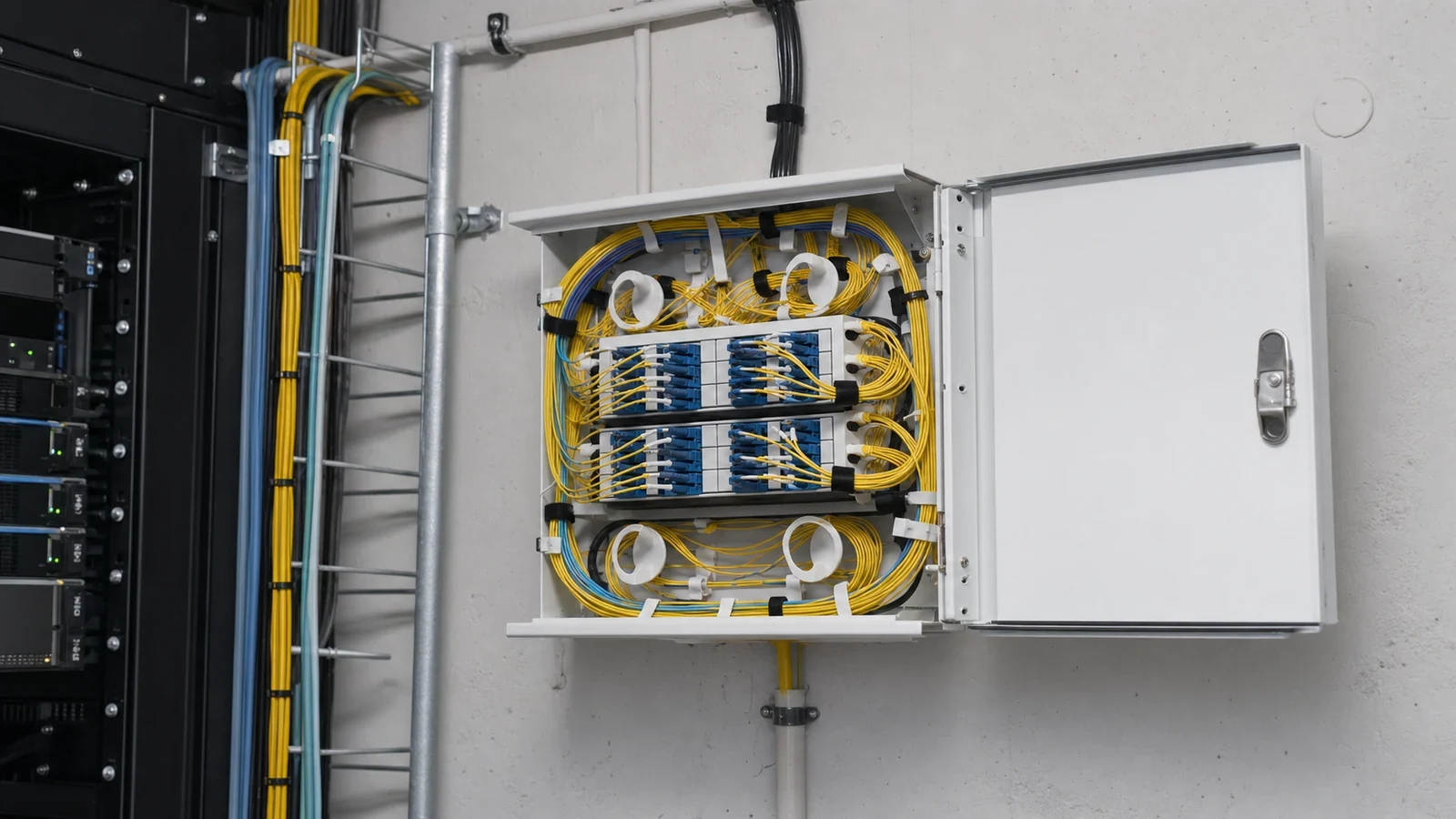
Long driveways and perimeter entrances may exceed copper Ethernet limits or present electrical and pathway challenges. Fiber, managed wireless, cellular, or local control can be evaluated according to bandwidth, latency, reliability, power, environmental, cybersecurity, and maintenance needs.
Credential decisions, visitor calls, remote release, schedules, gate-position events, camera workflows, internet outages, power loss, manual operation, and after-hours escalation need documented behavior and named business owners before commissioning is complete.
Document the approved operating sequence before equipment selection, including who may admit vehicles, how visitors are verified, which events are recorded, what remains available during a network outage, and who owns credential and directory changes.
Keep gate-operator service, low-voltage controls, network support, property operations, and emergency or manual procedures in one responsibility matrix so future service does not rely on assumptions about another contractor's scope.
CONNECTED SYSTEMS
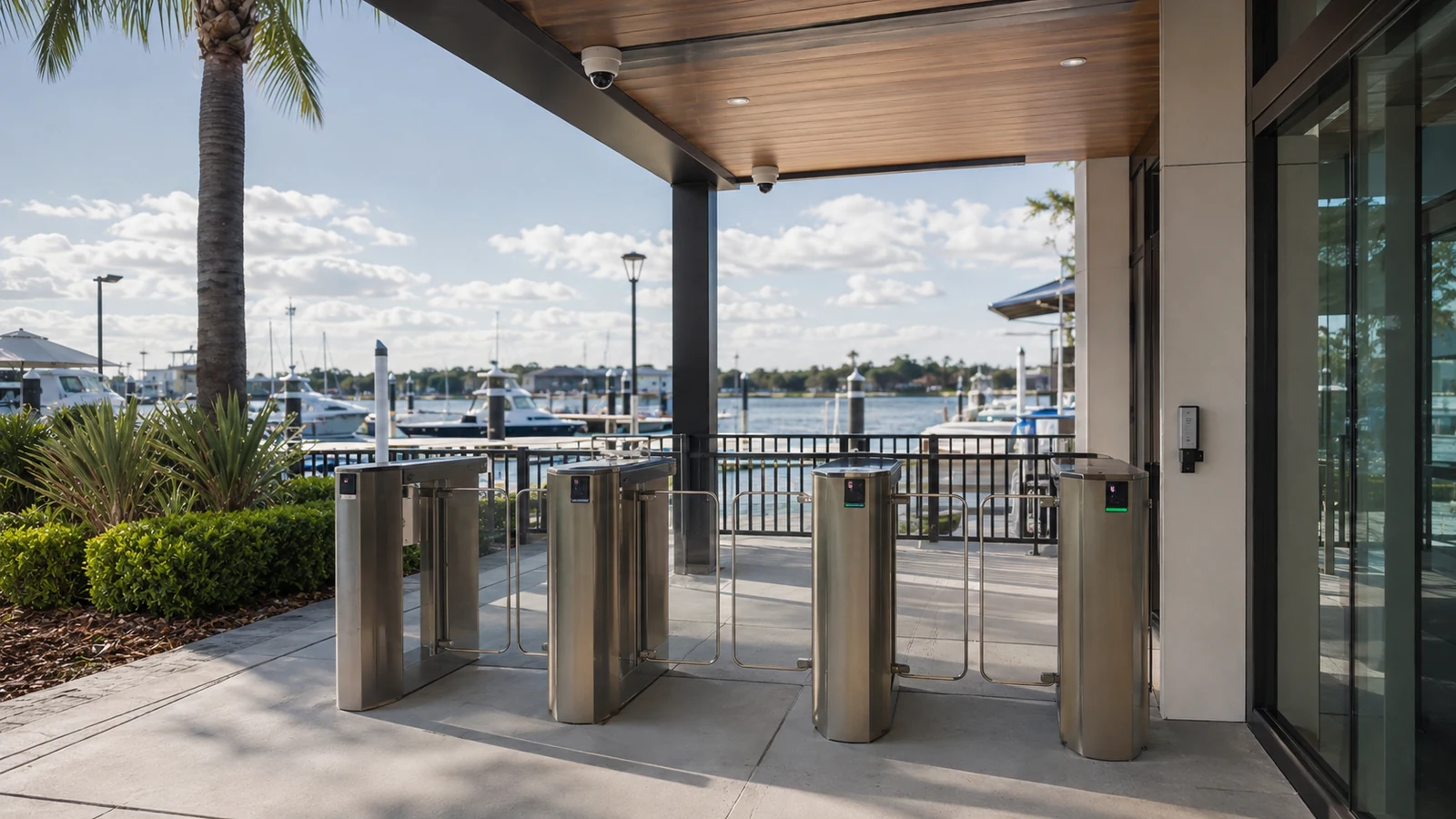
Supported gates can use shared credentials, permissions, schedules, events, controller architecture, and administrative tools. The broader platform design remains governed by Access Control Systems, while this page focuses on entrance-specific implementation and dependencies.
Supported intercoms may route audio or video calls and initiate an authorized release through approved interfaces. Intercom call quality, directories, licenses, network or cellular service, user verification, and release policy remain separately defined requirements.
Cameras can provide lane, vehicle, credential-station, or visitor context and may associate video with access events when supported. Camera placement, recording, retention, lighting, bandwidth, privacy, and evidence expectations require separate surveillance planning.
Controllers, intercoms, cameras, mobile credentials, remote administration, and notifications may rely on network segmentation, addressing, uplinks, fiber equipment, wireless links, cellular plans, licenses, cybersecurity policy, and stable power at the entrance.
ORLANDO SERVICE CONTEXT
Hotels, managed parking areas, multifamily properties, service entrances, commercial venues, and mixed-use operations around International Drive and west Orlando can have high visitor turnover, shift changes, deliveries, vendors, and after-hours entry. Gate workflows should match the actual property operation rather than forcing every user through one credential or call path.
Commercial campuses, communities, storage facilities, industrial properties, and perimeter entrances may place gate equipment far from the MDF, IDF, management office, or recording system. The survey should measure real routes and evaluate pathway, fiber, wireless, cellular, local-control, power, and service-access options.
Gate work affects traffic, deliveries, staff, residents, guests, and emergency or manual procedures. Phasing, lane access, temporary workflows, contractor coordination, cutover windows, validation, and user communication should be planned before controls are moved or replaced.
RELATED SERVICES
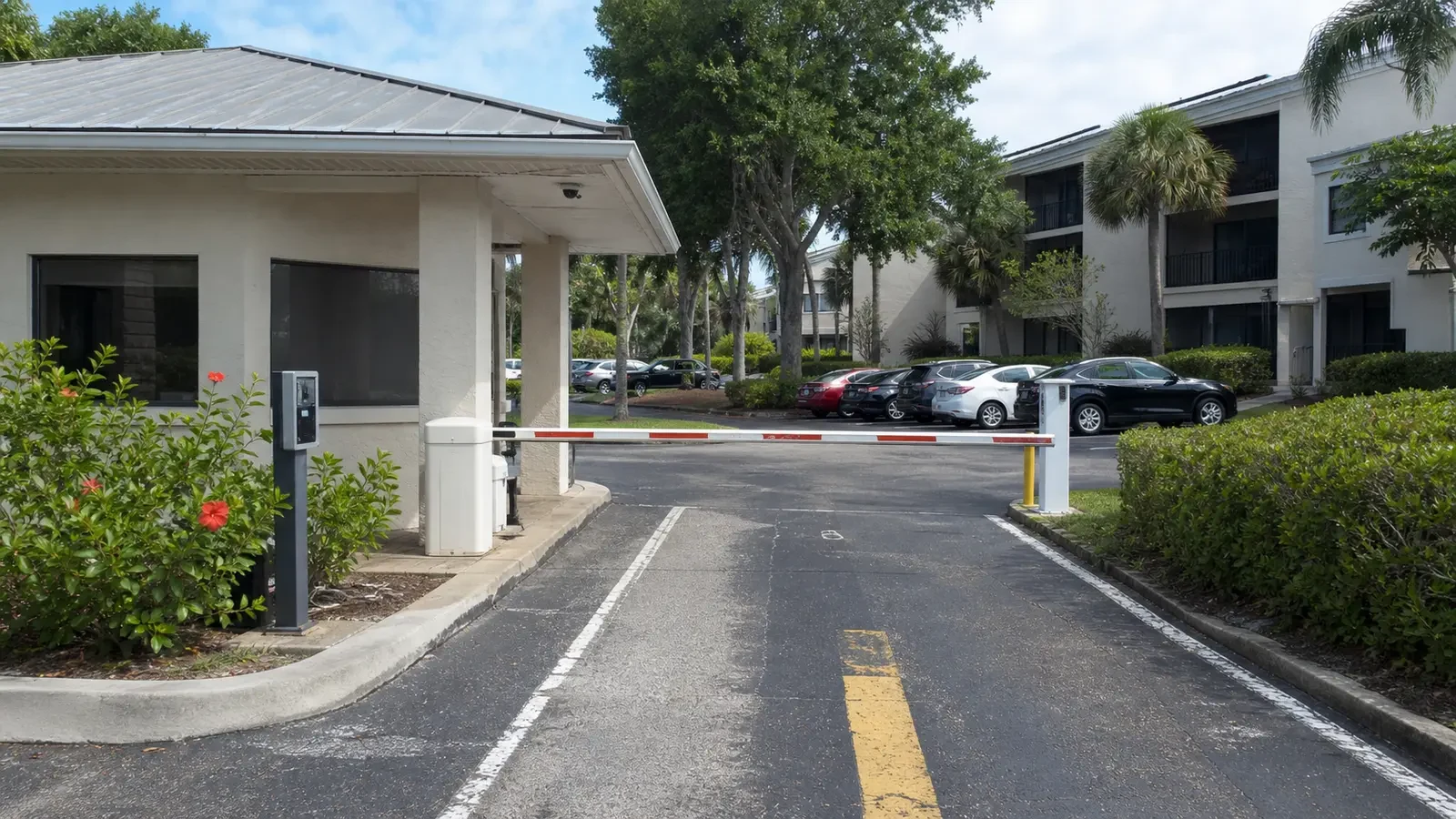
Coordinate shared credentials, permissions, controller architecture, schedules, events, administration, and supported platform integrations across the property.
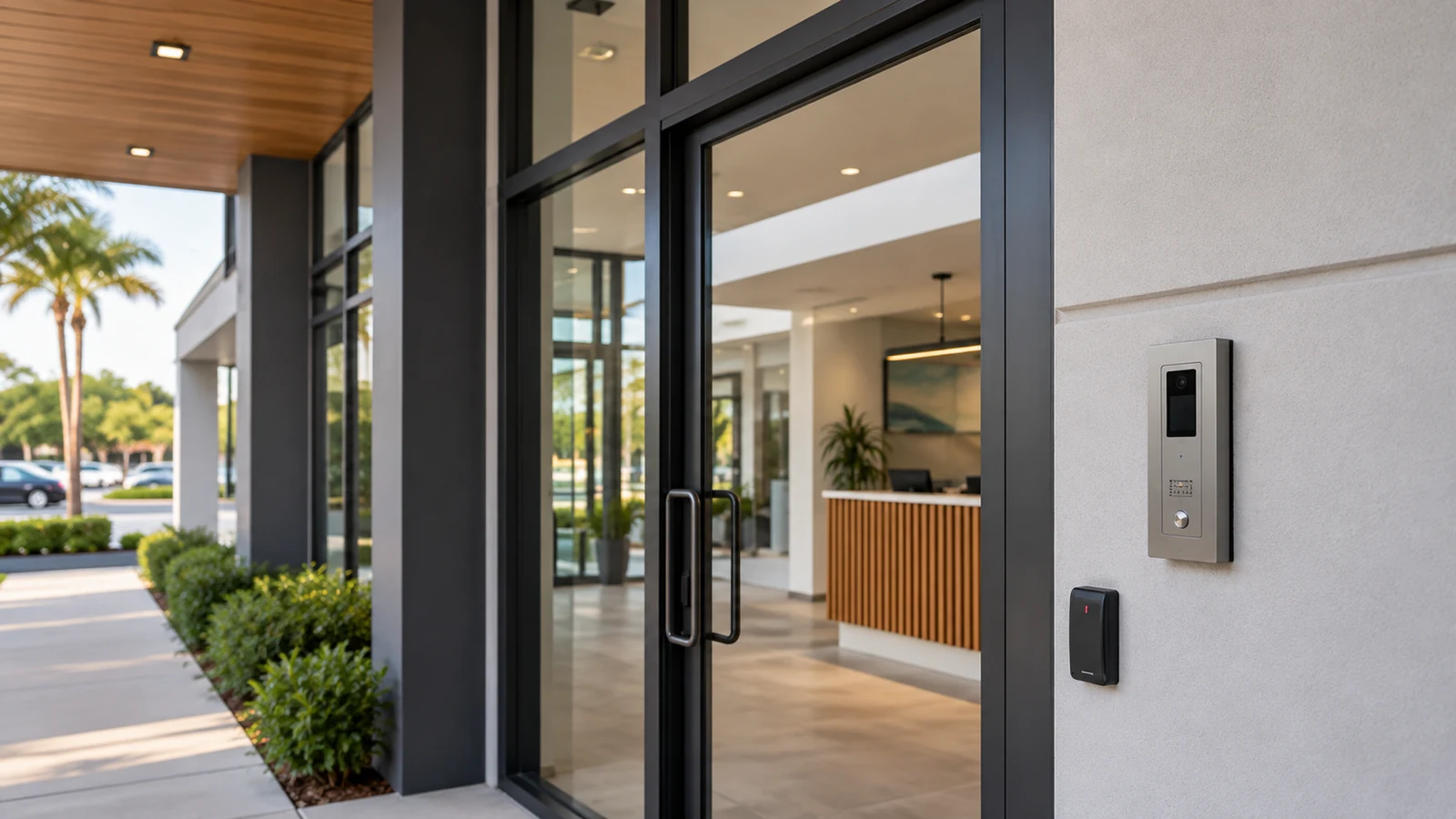
Plan visitor audio or video communication, directories, call routing, endpoint behavior, network or cellular dependencies, and supported release workflows.
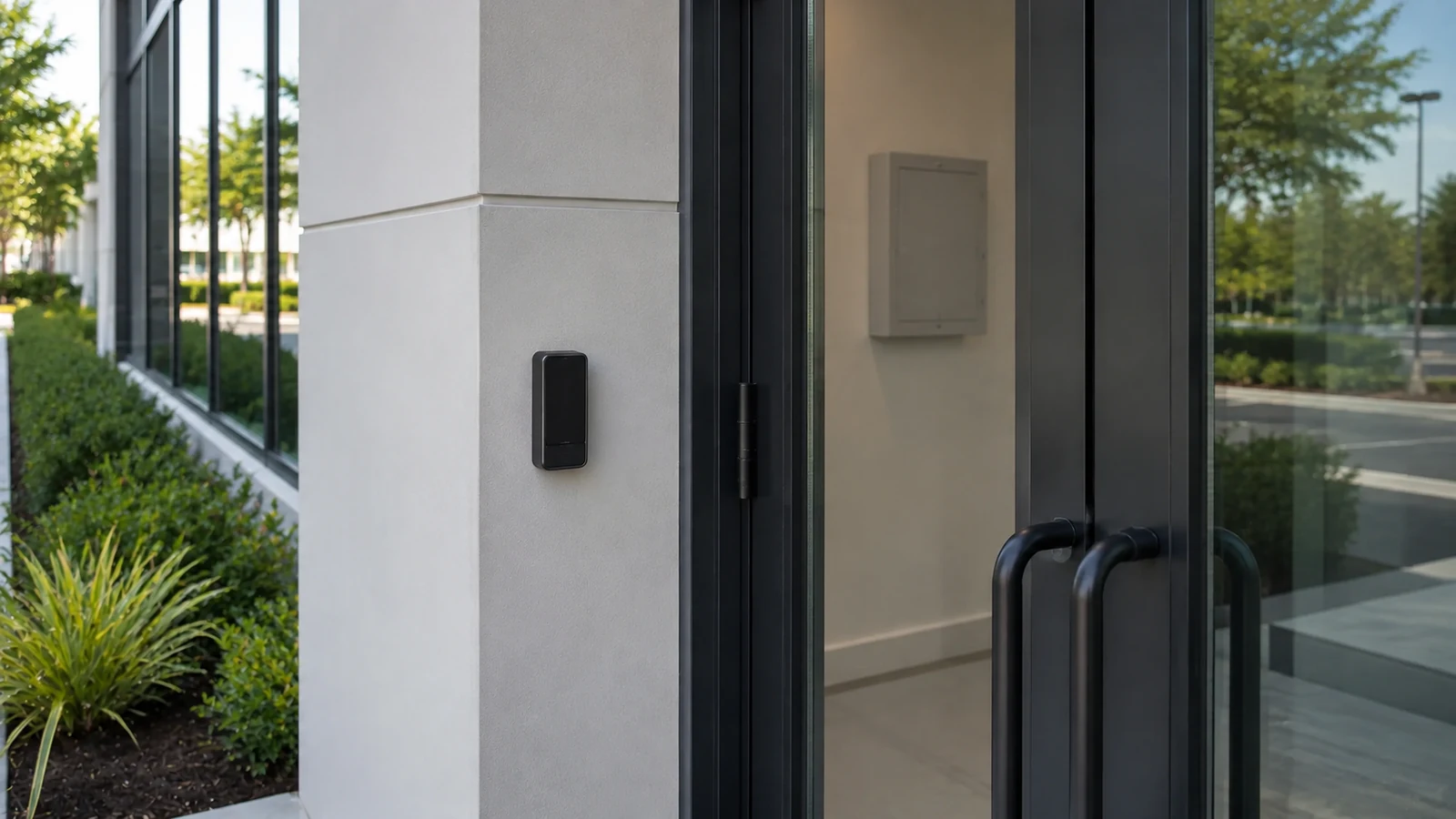
Coordinate controlled building openings separately from vehicular gates, including readers, strikes or suitable locks, door contacts, REX, egress, and door hardware.
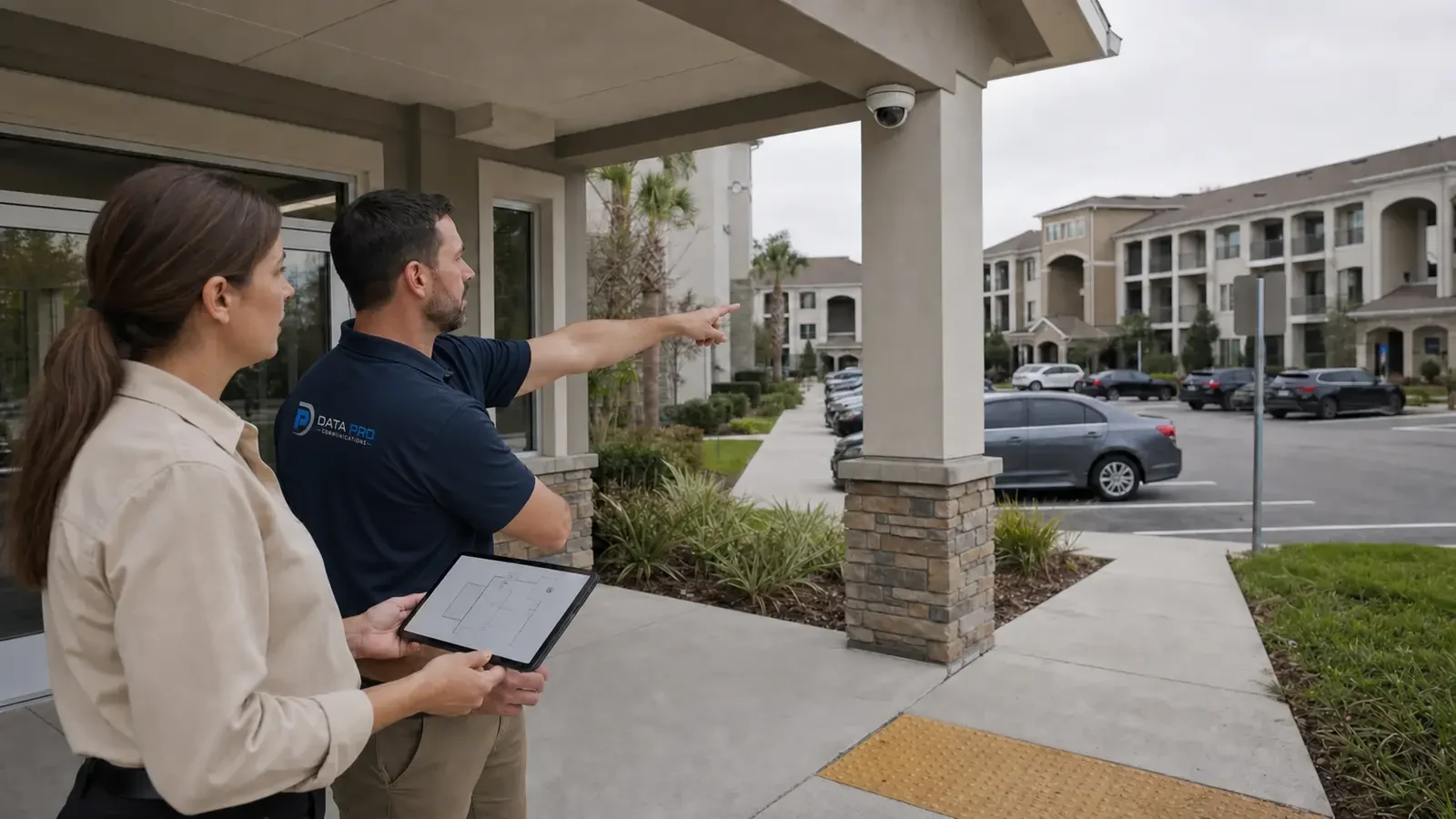
Design entrance views, vehicle and lane context, credential-station coverage, lighting, recording, retention, and network requirements as a distinct surveillance scope.
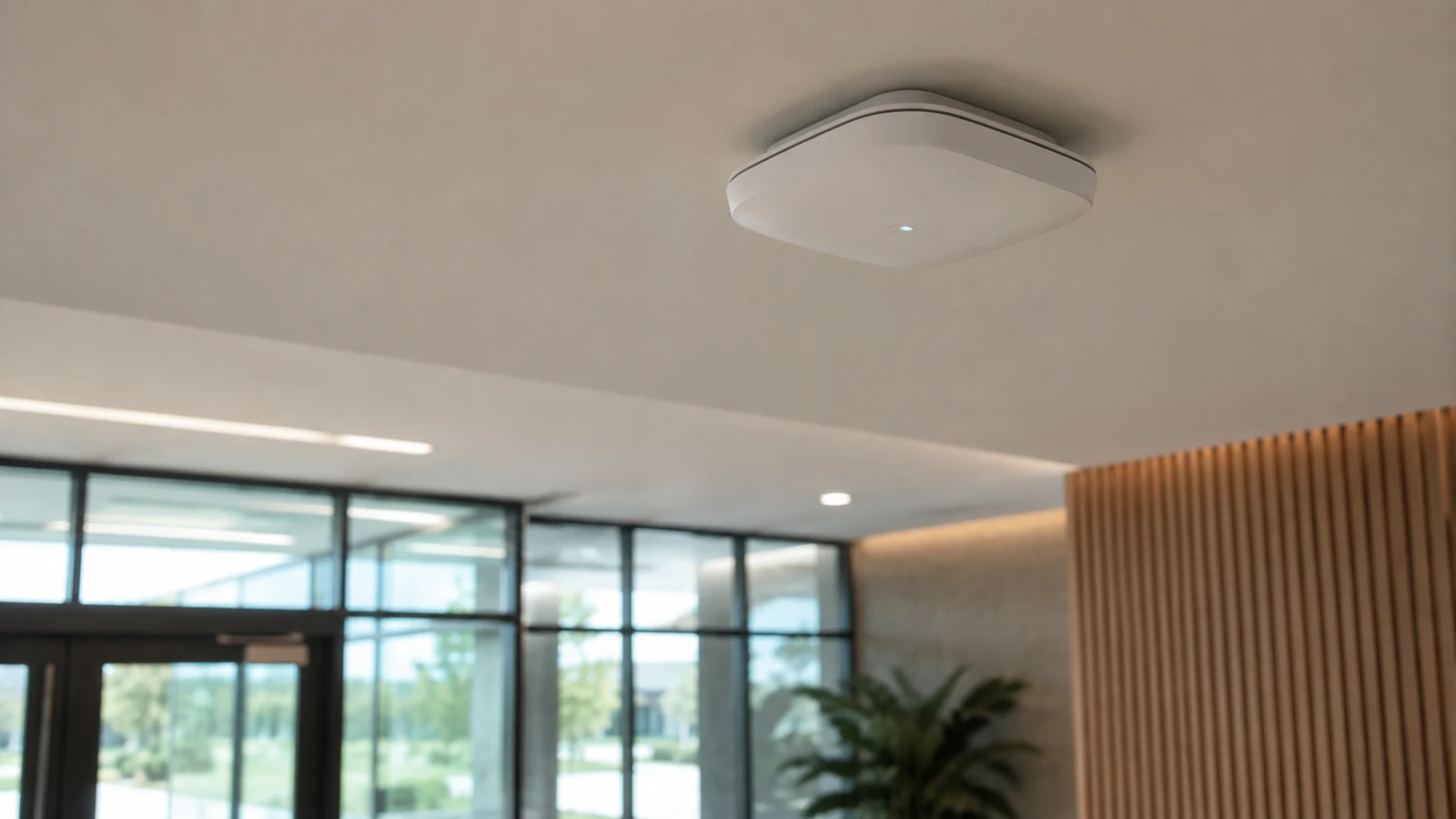
Plan switching, VLANs, addressing, uplinks, segmentation, bandwidth, management, and protected connections for gate controllers, intercoms, and cameras.
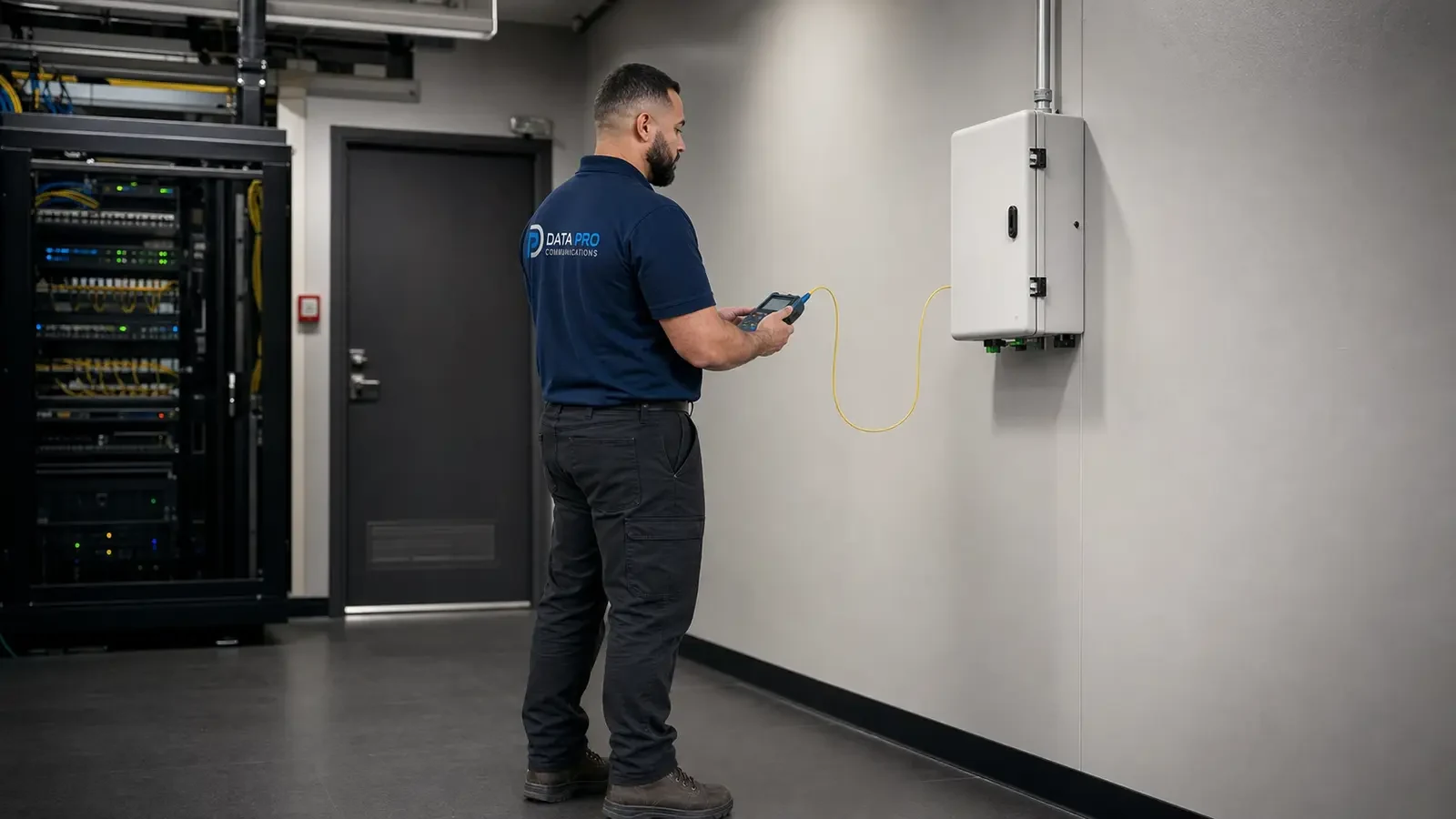
Support long-distance or electrically isolated gate connectivity with pathway planning, fiber selection, protected terminations, testing, labels, and documentation.
INDUSTRIES SERVED
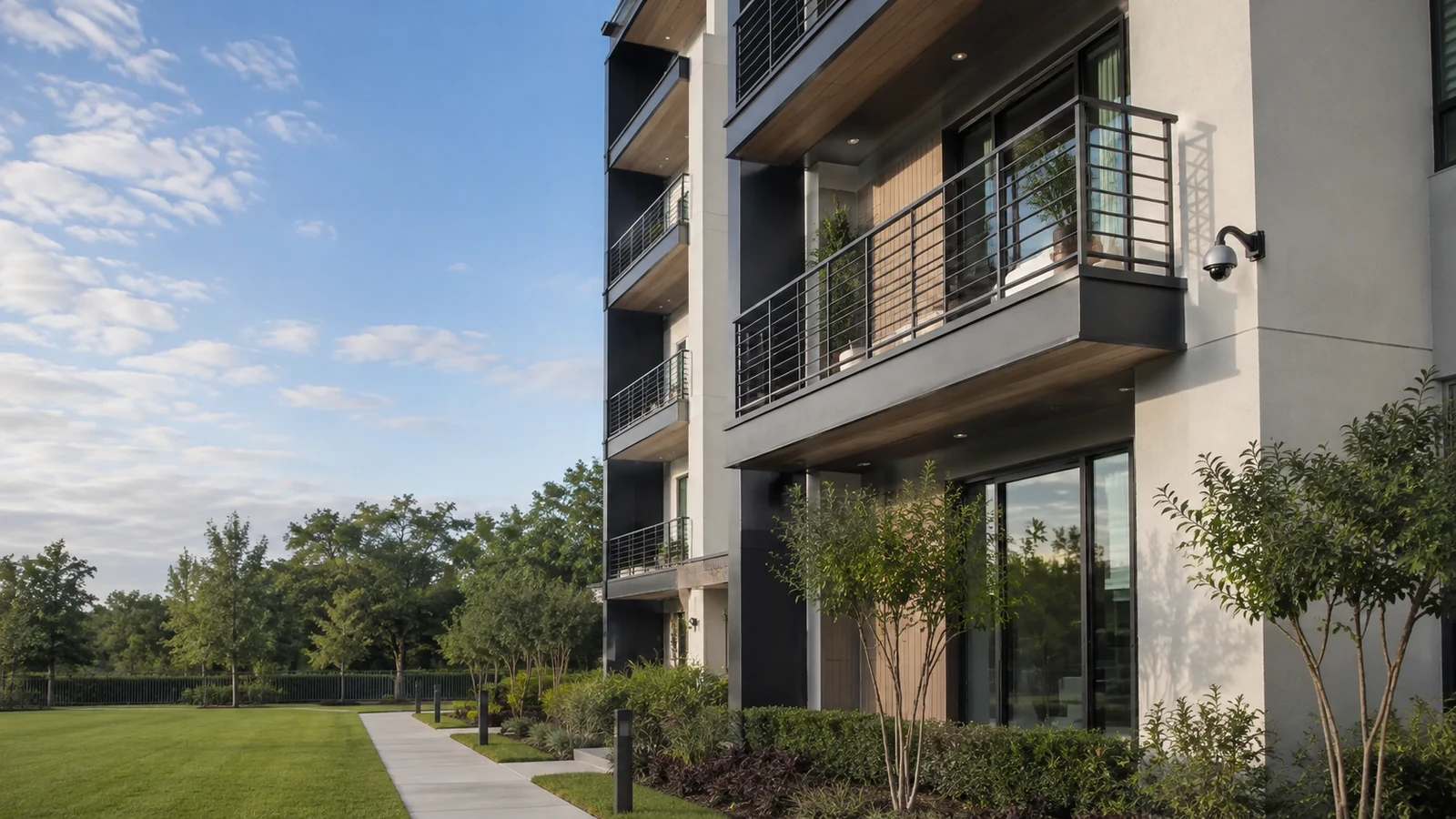
Resident, visitor, vendor, management, service, and after-hours vehicle access across occupied communities.
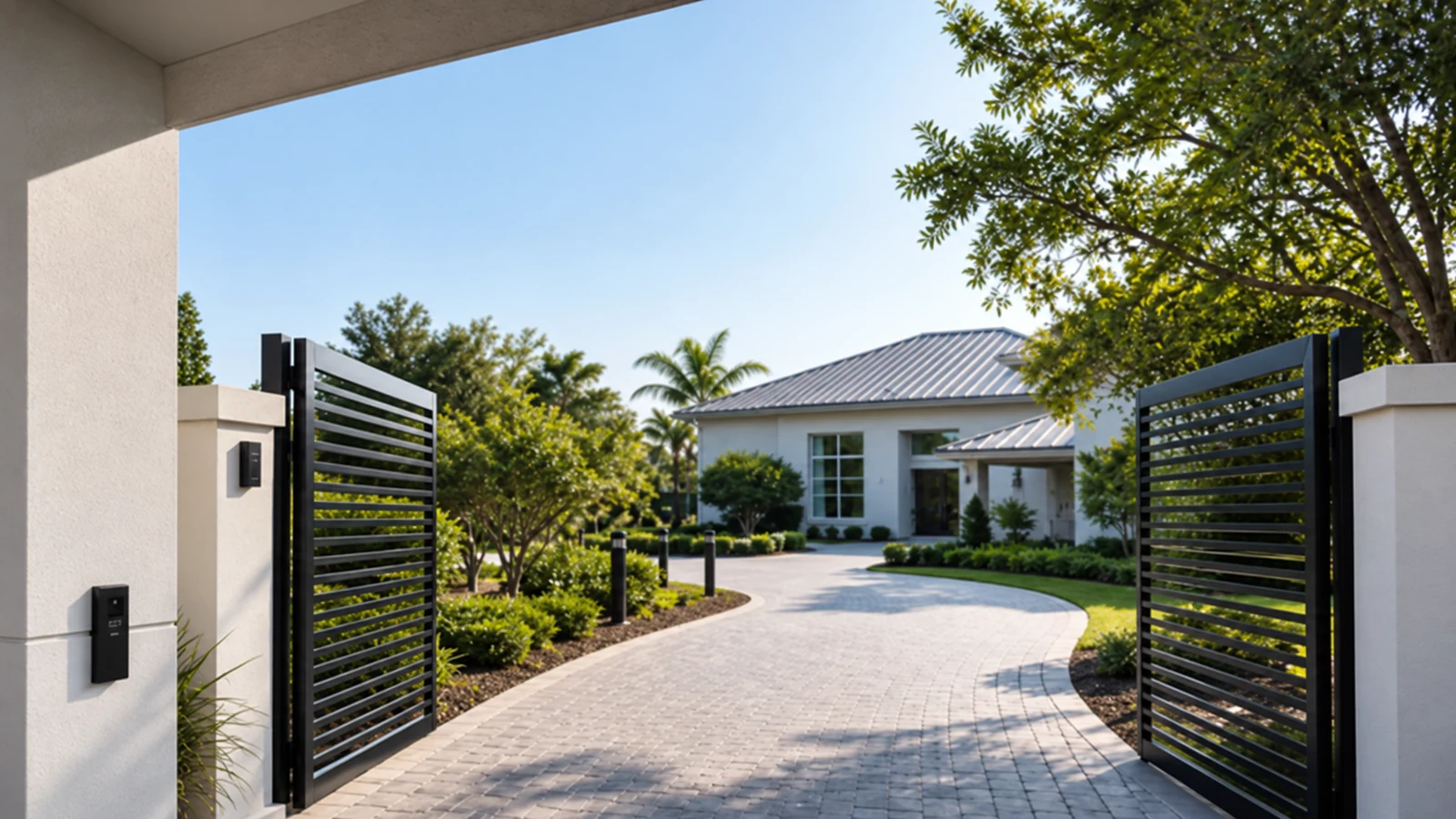
Community credential management, visitor directories, board or management workflows, cameras, and phased entrance upgrades.

Tenant codes or credentials, operating schedules, vehicle lanes, after-hours controls, cameras, and durable outdoor equipment.
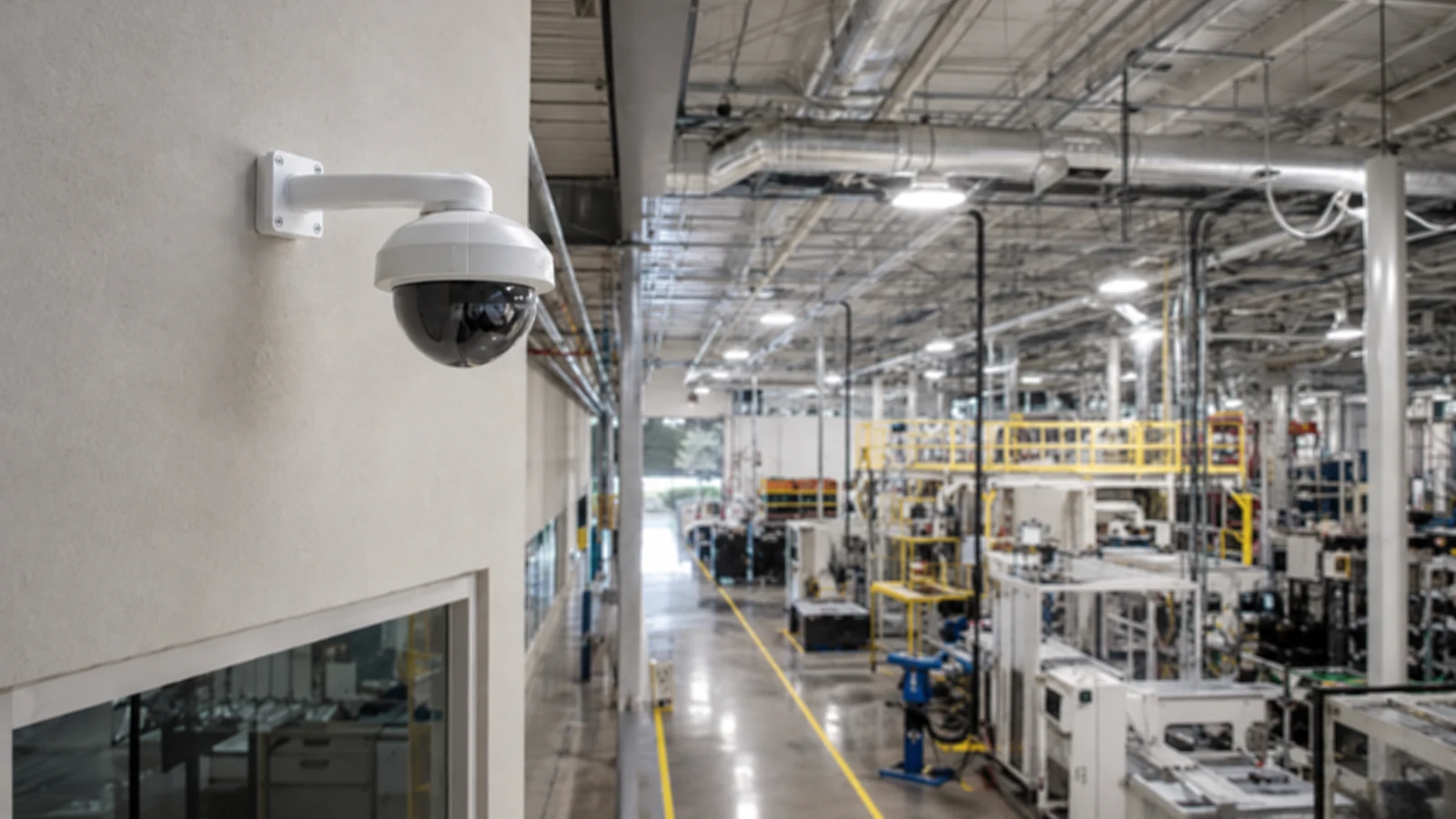
Employee, fleet, contractor, delivery, loading, restricted-lane, and perimeter workflows across large or distributed sites.
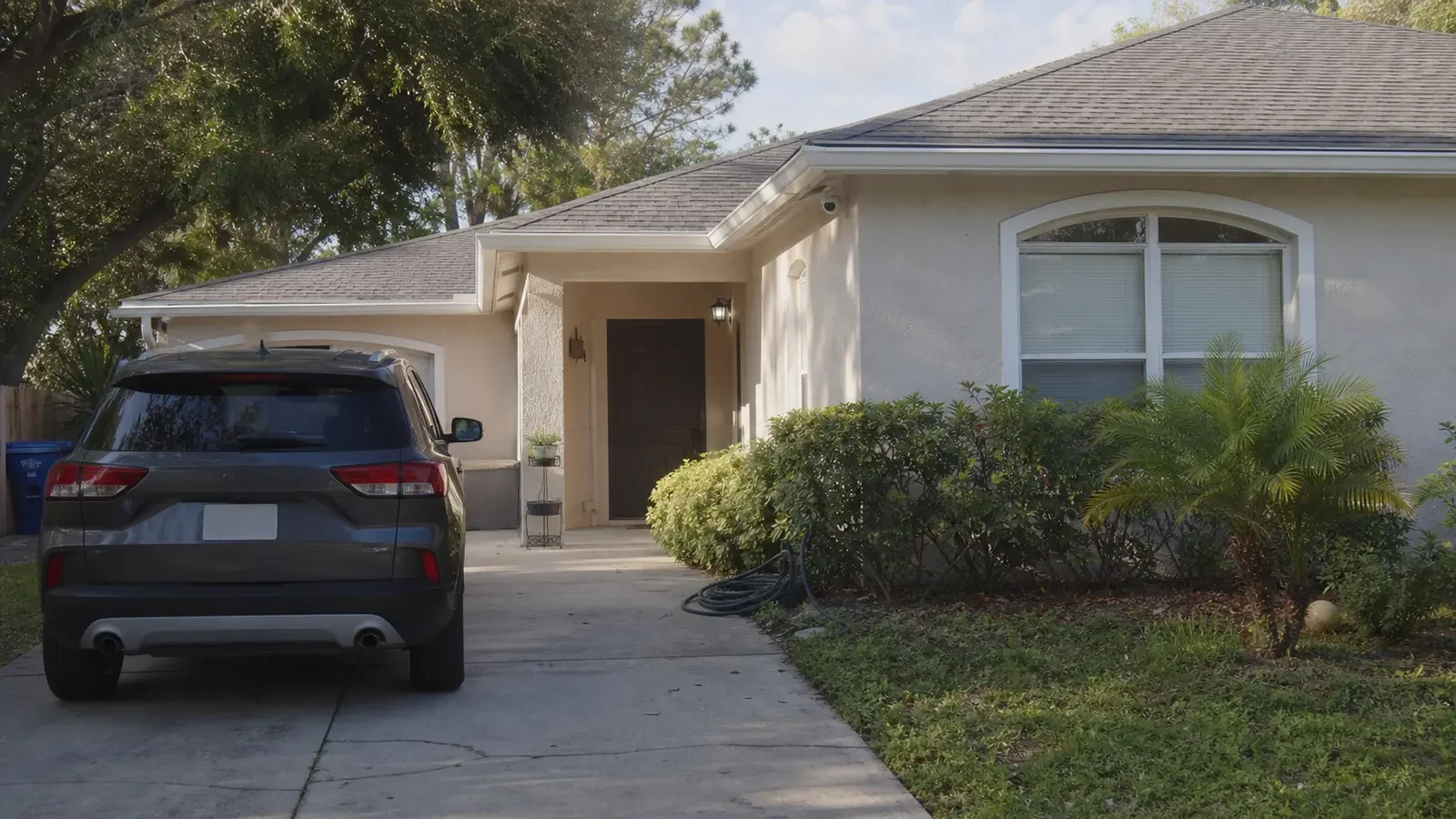
Guest, staff, vendor, service, event, and parking workflows with visitor communication and property operations in view.
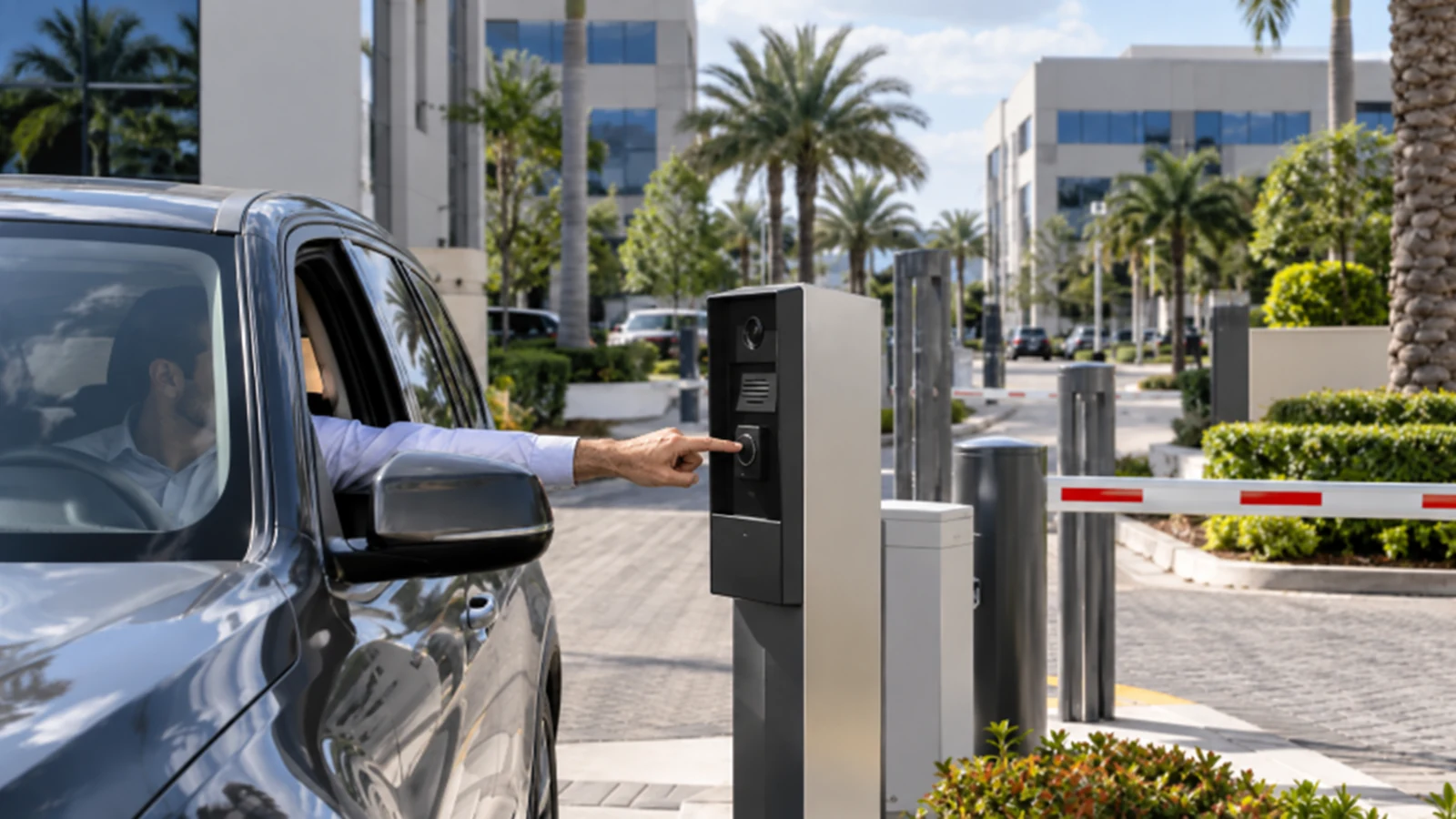
Multiple entrances, shared credentials, administration, long pathways, network dependencies, and phased expansion across a managed property.
PROJECT PROCESS
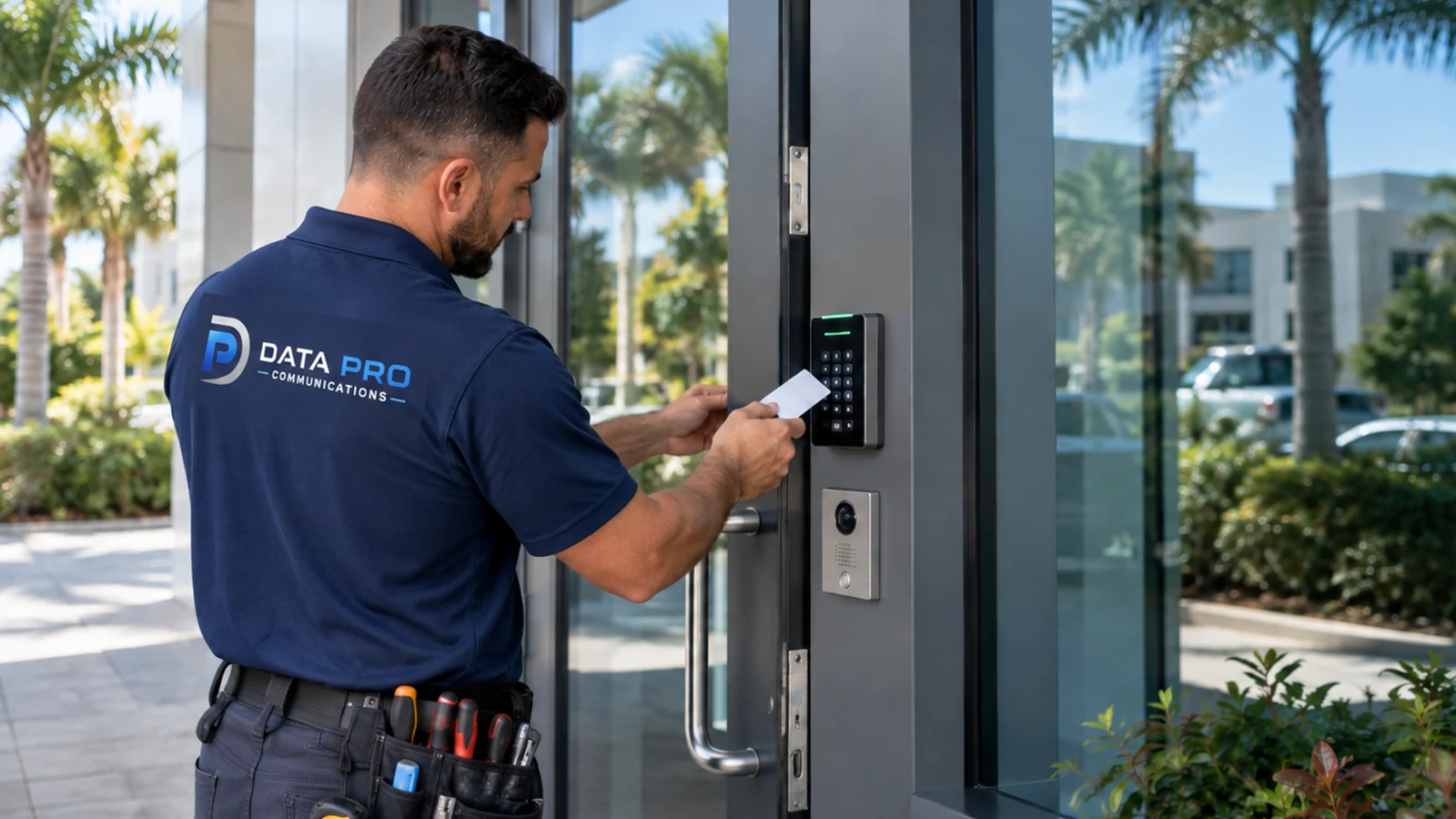
Document gate and operator conditions, controls, safety interfaces, lanes, credential and visitor locations, cameras, power, pathways, distances, connectivity, environment, equipment access, and responsible contractors.
Confirm who enters, how visitors are verified, which credentials are supported, when release is allowed, how outages are handled, what is logged, who administers the system, and which work belongs to each trade.
Install low-voltage cabling, readers, keypads, intercoms, control interfaces, monitoring inputs, network components, camera connections, labels, and enclosures according to the approved design and coordinated site conditions.
Test approved credential, visitor, release, position, event, camera, network, outage, and manual-operation relationships; record limitations; deliver labels and closeout documentation; and review operational ownership.
LICENSED PROJECT SUPPORT
Data Pro Communications - West Orlando is operated by Data Pro Communications for the West Orlando / Lakehurst Branch context. Commercial low-voltage work is represented under FL License #EC13016138. Project scope is confirmed against the actual entrance, equipment, contracts, responsible trades, and approved design.
Gate operators, safety devices, mechanical assemblies, line-voltage power, civil work, access hardware, fire or life-safety review, network administration, cellular service, and manufacturer-specific service may require other qualified parties. No page copy guarantees code compliance, gate safety, security outcomes, vehicle detection, remote release, operator compatibility, or uninterrupted connectivity.
FAQ
Gate entry systems manage vehicular or perimeter entrances, where operators, gate controls, credential stations, visitor communication, long pathways, and outdoor conditions shape the design. Door access control focuses on building openings, including readers, strikes or other suitable locking hardware, door contacts, request-to-exit devices, and door-specific egress coordination.
An existing gate may be integrated when the operator, control inputs, safety devices, power, hardware condition, and supported interfaces are suitable. A site survey is required because an access credential system cannot correct an unsafe, damaged, incompatible, or improperly configured gate assembly.
Supported systems may use cards, fobs, keypads, PINs, or mobile credentials. The practical choice depends on the access-control platform, reader compatibility, network or cellular availability, licensing, user administration, visitor workflow, and the operating environment at the entrance.
Supported telephone or video intercom stations may call designated staff, tenants, residents, or a managed answering workflow. Call routing, directories, remote release, internet or cellular dependencies, licenses, and after-hours procedures must be confirmed for the selected platform.
Cameras can provide vehicle, lane, credential-station, or visitor context when coverage, lighting, mounting, network, recording, retention, and privacy requirements are separately planned. Camera visibility does not replace gate safety devices or access-control event records.
Requirements vary by controller, intercom, camera, credential technology, and management platform. A gate may use copper Ethernet within supported distance, fiber for longer or electrically challenging routes, a managed wireless bridge, cellular service, or a combination, subject to pathway, power, environmental, bandwidth, and reliability conditions.
Yes, fiber can be appropriate for long runs, electrical isolation, bandwidth, or future expansion. The design still needs suitable pathways, handholes or enclosures, media conversion or network equipment, surge strategy, power at the gate, termination protection, testing, labeling, and documentation.
Reuse depends on the operator's condition, serviceability, control inputs, safety-device configuration, documentation, power, and compatibility with the intended access workflow. Gate-operator or mechanical repairs may require the responsible gate, electrical, civil, or hardware contractor outside Data Pro Communications' low-voltage scope.
The survey should document entrance geometry, lanes, operator and control equipment, safety devices, credential and visitor locations, camera views, conduit and pathway conditions, distances, power sources, network options, drainage or exposure concerns, equipment access, user volumes, release procedures, and responsibility boundaries.
Multiple entrances may share credentials, permissions, schedules, event reporting, visitor workflows, and administrative tools when the selected platform and network architecture support them. Each gate still needs its own field-condition review, operating sequence, connectivity, power, safety coordination, and commissioning record.
Behavior depends on the system design. Some controllers can continue approved local credential decisions while cloud administration, remote video, mobile credentials, notifications, or visitor calls may be limited. Offline expectations, local processing, backup power, cellular options, and manual operating procedures should be defined before installation.
No. Loops, photo eyes, edge devices, monitored contacts, operator inputs, or other detection and safety methods serve different purposes and depend on the gate type, operator, site geometry, traffic flow, manufacturer requirements, and responsible safety review. No single method is suitable for every entrance.
Remote release may be available through a supported intercom, access-control platform, managed application, or approved control interface. It is not guaranteed for every operator or network condition, and the release workflow must account for user authorization, event records, connectivity, visitor verification, and operating policy.
Useful closeout records identify device names, locations, panel and interface relationships, cable labels, network dependencies, credential and schedule ownership, tested sequences, known limitations, responsible contractor boundaries, and approved operating procedures. Documentation should be updated when the entrance or platform changes.
Expansion planning should reserve controller capacity, network addressing, power and enclosure space, pathway capacity, credential governance, directory or tenant capacity, licensing, camera coverage, and documentation conventions. Future phases still require verification against the conditions and products present when the work occurs.
Start with the entrance, gate and operator, credential or visitor workflow, distances, pathways, connectivity, cameras, operating sequence, outage expectations, and contractor boundaries. A documented site survey gives the project team a practical basis for selecting compatible low-voltage controls and planning commissioning.